
Ingredients
Meat
- 2 tinscorned beef, about 340 g each
Fried version
- 2onions, sliced
- 3garlic cloves, crushed
- 2tomatoes, chopped
- 2 tbspoil
- black pepper
- a handful of spring onions
Baked in leaves
- 20young taro leaves
- 400 mlcoconut cream
- 1onion, finely chopped
To serve
- taro
- breadfruit
- rice
- boiled green banana
Note
- taro leaves must be cooked thoroughly, since raw leaves are an irritant
Directions
- Break it up roughly with a fork. It comes out as a solid block and needs separating. Heat the oil in a wide frying pan over a medium heat. Add the sliced onions and cook them for eight minutes.
- Let them soften and begin to colour. Add the crushed garlic and cook for another minute. Add the chopped tomatoes and cook them down for five minutes.
- Add the broken-up corned beef to the pan. Break it down further with the back of a spoon. Turn it through the onion and tomato. Cook it for eight to ten minutes.
- Let some of it catch and crisp against the pan. Do not add salt, since the meat is already very salty. Grind black pepper over it generously. Stir in the spring onions off the heat. The taro leaves need proper handling before anything else.
- Use young tender leaves and cut out the thick central stem. Wash them well and check for damaged leaves. Building the parcels is done by hand.
- Stack three or four leaves in your palm, forming a cup. Put a spoonful of corned beef in the centre. Add a spoonful of chopped onion. Pour in coconut cream to fill the cup. Do not overfill, since it will leak. Fold the leaves over the filling to close it.
- Wrap the whole parcel in a further leaf or in foil. Cooking them needs long slow heat. Bake them at 180C for at least ninety minutes. That length is not about the meat but about the leaves. Serve the fried version with rice or boiled taro. Serve the parcels whole and let each person open their own.
Technique
- Taro leaves must be cooked long and thoroughly, since the raw leaf causes burning and itching.
- Do not add salt, as tinned corned beef is already very salty.
- Let some of the meat catch and crisp in the pan, which is the best part.
Substitutions
- Spinach in place of taro leaves, though it is not the same dish.
- Any tinned corned beef.
Variations
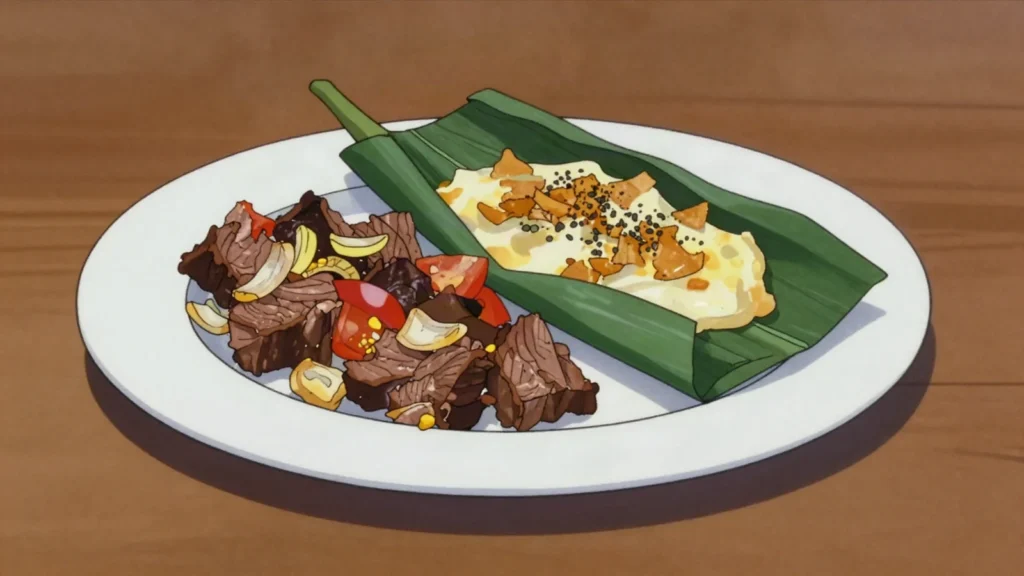
- Fried with onion and tomato, as an everyday dish.
- Baked in taro leaves with coconut cream.
- Cooked with cabbage, which is a common variation.
History
The word comes from pea soup, the first canned food traders sold in Samoa; today it means corned beef and is stacked at weddings and funerals.
Frequently asked questions
What is Pisupo?
Pisupo is a main from Samoa: tinned corned beef fried with onion or baked in taro leaves, gifted by the case. The word comes from pea soup, the first canned food traders sold in Samoa; today it means corned beef and is stacked at weddings and funerals.
How long does Pisupo take to make?
Pisupo takes 15 min of preparation and 25 min of cooking. The recipe makes 6 servings. It is rated easy to make.
What can I substitute in Pisupo?
Yes, within limits. Spinach in place of taro leaves, though it is not the same dish. Any tinned corned beef.
What is the most important thing to get right in Pisupo?
Let some of it catch and crisp against the pan. Do not add salt, since the meat is already very salty. Grind black pepper over it generously. Stir in the spring onions off the heat. The taro leaves need proper handling before anything else.