
Ingredients
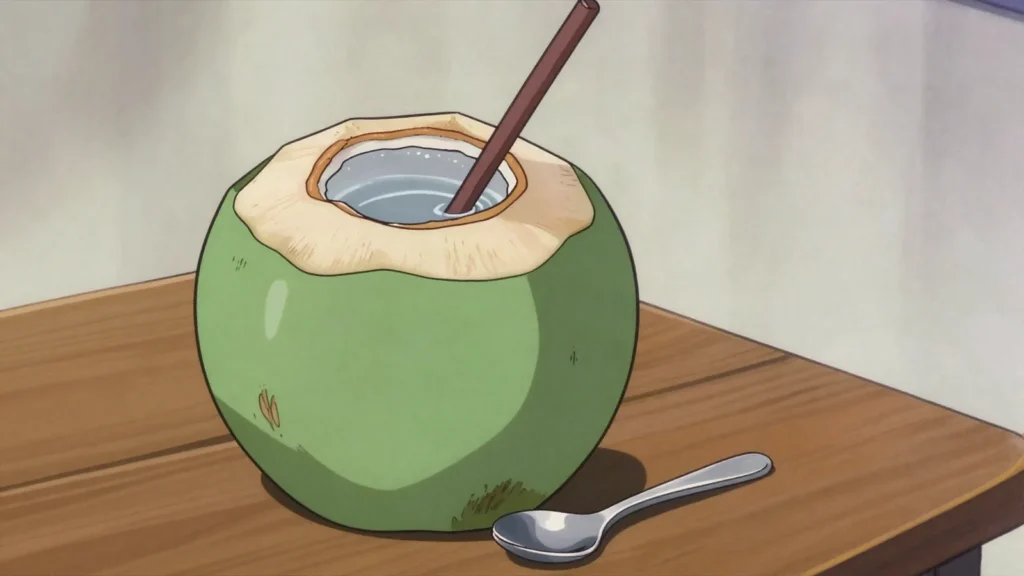
The coconut
- 1young green coconut
- niu, still on the husk
- heavy for its size
- or 1 trimmed young coconut
- from a shop
- or 1 mature coconut
- for a different, sharper water
Tools
- a heavy sharp knife
- or a machete, used carefully
- or a coconut opening tool
- a straw, optional
- a spoon, for the soft flesh
Sometimes added
- nothing at all, ideally
- a squeeze of lime
- a pinch of salt
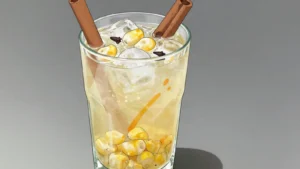
- ice, if serving in a glass
To serve
- straight from the shell
- or poured into a glass
- the soft flesh, scooped out
Directions
- Set it on a solid stable surface. Keep your other hand well away from the blade.
- Keep bystanders away from the swing. Use a heavy sharp knife, not a light one. Do not attempt it casually at home.
- Set it on a board, pointed end up. Use a heavy knife or a cleaver. Make three or four cuts in a square. They are worth buying if you do this often.
- Pierce two of the three soft eyes. Use a clean screwdriver or a skewer. It should smell clean and slightly nutty.
- Discard it if it smells sour or fermented. Discard it if it smells at all soapy. The water should be clear or slightly cloudy.
- Chill the whole nut before opening it. Neither is traditional and both help.
- Cut a piece of the shell into a scoop. It is done immediately on arrival. Keep it somewhere cool and dry. Shake it and listen for water inside.
Technique
- Opening the coconut is the real hazard here. They are hard, round, and they roll, and a knife glancing off one goes somewhere unpredictable. Machete injuries from coconuts are common and happen to experienced people. Never hold one in your hand to cut it, never cut towards yourself, set it on a solid stable surface, keep your other hand and bystanders clear, and use a heavy sharp knife rather than a light or blunt one.
- The safest method for a mature nut is to pierce two of the three soft eyes with a clean screwdriver and drain the water out, avoiding cutting entirely. For young nuts, buy the trimmed white ones sold in shops, or use a purpose-made coconut opening tool.
- Coconut water is not coconut milk. The water occurs naturally inside the nut and is clear and thin; the milk is pressed from grated flesh and is a made product. People confuse them constantly.
- Young green coconuts hold the most and the sweetest water. As the nut matures the water converts to flesh, so mature nuts have less and sharper water and are used for their flesh instead.
- Coconut water is not sterile once opened and it ferments readily in warm air. Smell it first — clean and faintly sweet is right, sour, fermented or soapy means discard it. Drink it within a few hours or refrigerate it.
- Chill the whole nut before opening rather than trying to chill the water afterwards.
- It is often said that coconut water can be used intravenously in emergencies. There are a very small number of documented cases under genuine emergency conditions. That is not a reason to rely on it and the atlas makes no medical claim — it is a refreshing drink, which is enough.
- On coral atolls and small islands where groundwater is brackish or absent, an intact coconut is a sealed container of clean liquid that keeps for weeks on the tree. That kept people alive through droughts, which is not a picturesque detail.
Substitutions
- Trimmed young coconuts sold in supermarkets replace whole husked nuts and are far easier and safer to open.
- Bottled or tinned coconut water replaces fresh; look for one with no added sugar, and accept that it is not the same drink.
- A mature brown coconut gives a smaller quantity of sharper, less sweet water, drained through the pierced eyes.
- A squeeze of lime or a pinch of salt lifts a bland nut, though neither is traditional.
- A coconut opening tool is worth buying if you do this regularly and removes most of the risk.
Variations
- The soft jelly-like flesh of a young nut is scooped out and eaten after the water, using a scoop cut from the shell itself.
- Coconut water blended with the young flesh makes a thicker drink sold across the Pacific and Southeast Asia.
- Fermented coconut water becomes a lightly alcoholic drink and eventually vinegar.
- Coconut toddy, tapped from the flower stalk rather than taken from the nut, is a separate drink entirely.
- Coconut water is drunk the same way across the whole tropical world, from the Caribbean to Southeast Asia.
- Some Samoan households serve it over ice with a little lime as a longer drink.
History
Cut for visitors as an immediate gesture of hospitality, and long used in Samoa when clean water was scarce.
Frequently asked questions
What is Vai Niu?
Vai Niu is a drink from Samoa: water from a young coconut, drunk straight from the shell. Cut for visitors as an immediate gesture of hospitality, and long used in Samoa when clean water was scarce.
How long does Vai Niu take to make?
Vai Niu takes 5 minutes of preparation and none of cooking. The recipe makes serves 1 per nut. It is rated medium to make.
What can I substitute in Vai Niu?
Yes, within limits. Trimmed young coconuts sold in supermarkets replace whole husked nuts and are far easier and safer to open. Bottled or tinned coconut water replaces fresh; look for one with no added sugar, and accept that it is not the same drink. A mature brown coconut gives a smaller quantity of sharper, less sweet water, drained through the pierced eyes. A squeeze of lime or a pinch of salt lifts a bland nut, though neither is traditional. A coconut opening tool is worth buying if you do this regularly and removes most of the risk.
What is the most important thing to get right in Vai Niu?
Keep bystanders away from the swing. Use a heavy sharp knife, not a light one. Do not attempt it casually at home.