
Ingredients
Brittle
- 500 graw shelled peanuts
- 400 grapadura, grated, or 400 g brown sugar
- 100 mlwater
- 1 tbspbutter
- ½ tspsalt
- ¼ tspbicarbonate of soda
Optional
- 1 tbsphoney or golden syrup
- a pinch of cinnamon
Equipment
- a sugar thermometer
- a greased marble slab or tray
Directions
- Roast the raw peanuts in a dry pan or a 160°C oven for 15 to 20 minutes until golden and fragrant. Roast them yourself. Rub the skins off between your palms or in a cloth while they are still warm.
- Take the skins off properly, because they are bitter and they burn in the hot sugar. Keep the peanuts warm in a low oven while you make the caramel. Warm nuts are important. Cold peanuts dropped into molten sugar cool it instantly and it seizes before you can spread it.
- Grease a marble slab or a large tray and have it ready beside the stove. Have everything laid out before you start, because from the moment the sugar is ready you have under a minute. Put the grated rapadura, water and salt in a heavy pan and heat gently until dissolved. Do not stir once it is boiling, which encourages the sugar to crystallise into grains.
- Use a thermometer. Watch it constantly from about 140°C, because the last ten degrees arrive very fast. Take it off the heat and immediately beat in the butter and the bicarbonate of soda. The bicarbonate foams up dramatically, which is exactly what should happen.
- Work fast now and stir hard, because it sets within seconds. Tip in the warm peanuts and stir once or twice to coat them. Pour the mixture onto the greased slab and spread it quickly with a greased spatula or the back of an oiled spoon.
- Spread it fast and thin, because it stops moving almost immediately. Keep children well away from the pan, however much this is a children’s sweet. Let it cool for 5 minutes, then score it into squares or rectangles with a greased knife. Score it while it is still warm and pliable.
- Cool it completely, then snap it along the scored lines. Store it in an airtight tin away from damp, because sugar brittle goes sticky in humid air within hours.
Technique
- The softer version made with condensed milk is called pé de moleque de leite and is a different texture entirely.
- Minas Gerais is particularly associated with it and with rapadura generally.
- It keeps a month in a sealed tin in dry conditions.
Substitutions
- Dark muscovado or panela in place of rapadura.
- Cashews or Brazil nuts in place of peanuts.
Variations
- The soft version made with condensed milk.
- With cashews, as pé de moleque de castanha.
- Made thicker and chunkier, as the roadside stalls do.
History
Sold at June festivals and roadside stalls; the name means urchin’s foot.
Frequently asked questions
What is Pé de moleque?
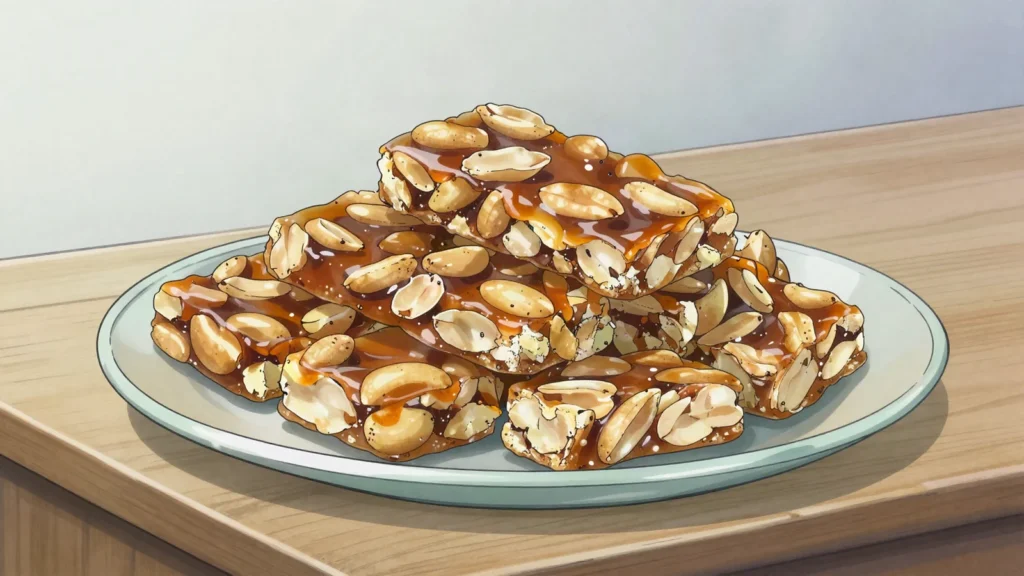
Pé de moleque is a dessert from Brazil: brittle of peanuts set in melted rapadura or sugar. Sold at June festivals and roadside stalls; the name means urchin’s foot.
How long does Pé de moleque take to make?
Pé de moleque takes 15 min of preparation and 20 min of cooking. The recipe makes about 24 pieces. It is rated medium to make.
What can I substitute in Pé de moleque?
Yes, within limits. Dark muscovado or panela in place of rapadura. Cashews or Brazil nuts in place of peanuts.
What is the most important thing to get right in Pé de moleque?
Grease a marble slab or a large tray and have it ready beside the stove. Have everything laid out before you start, because from the moment the sugar is ready you have under a minute. Put the grated rapadura, water and salt in a heavy pan and heat gently until dissolved. Do not stir once it is boiling, which encourages the sugar to crystallise into grains.