
Ingredients
Potatoes
- 1 kgfloury potatoes, peeled and cut into 3 cm cubes
- salt
- oil, for deep frying
Salsa brava
- 3 tbspolive oil
- 1onion, chopped
- 2 clovesgarlic
- 1 tbspplain flour
- 2 tbspsweet pimentón
- 1 tsphot pimentón or cayenne
- 400 mlchicken or vegetable stock
- 1 tbspsherry vinegar
- 1 tspsugar
- salt
Aioli, optional
- 2 clovesgarlic
- 1egg
- 200 mlmild olive oil
- a squeeze of lemon
- salt
To serve
- cocktail sticks
Directions
- Cut the potatoes into rough 3 cm cubes rather than neat ones. Rinse them in cold water to wash off surface starch, then dry them thoroughly. Dry them properly on a cloth. Lift them out and let them cool and steam dry for at least 15 minutes. Meanwhile make the sauce: fry the onion and garlic slowly in olive oil for 10 minutes until soft.
- Stir in the flour and cook 2 minutes. Now take the pan off the heat before the pimentón goes in. Stir both paprikas into the hot oil, then add the stock straight away, whisking.
- Simmer 15 minutes, then add the vinegar and sugar and blend it smooth. The sauce should be a deep brick red, thick enough to coat but still pourable, and clearly warm with paprika heat.
- Taste and balance the vinegar against the sugar until it is sharp rather than flat. For the aioli, blend the garlic, egg and a little oil with a stick blender, then add the rest of the oil in a slow stream until it emulsifies.
- Keep the blender still at the bottom of the jug until the emulsion takes, then lift it slowly. Now raise the frying oil to 190°C (375°F) and fry the potatoes again for 3 to 4 minutes.
- Fry them hard the second time until they are deep golden and audibly crisp. Do not crowd the pan at either stage, which drops the temperature and gives soft greasy potatoes.
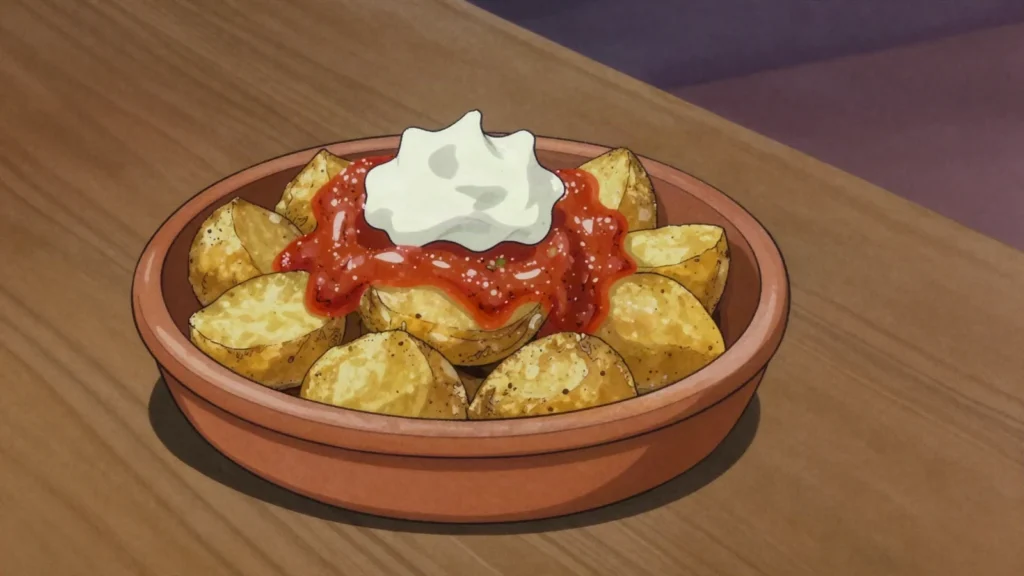
- Drain them on a rack and salt them immediately while they are hot enough for the salt to stick. Serve them at once in a bowl or on a plate, with the sauce spooned over or striped across. Serve them the moment they are dressed. Sauce on crisp potatoes softens them within minutes, which is why bars sauce them as they go out.
Technique
- It is a Madrid tapa of the mid-twentieth century and every bar claims its own sauce recipe.
- Some bars serve the sauce underneath rather than over, to keep the potatoes crisp.
- Bravas means fierce, and a sauce with no heat at all is not really bravas.
Substitutions
- Smoked paprika for part of the sweet pimentón, which is not traditional but is good.
- Shop-bought aioli, which most bars use anyway.
Variations
- The Barcelona version, with both brava sauce and aioli.
- With a tomato-based sauce, which is common outside Madrid.
- Patatas a lo pobre, slow-fried with onion and pepper instead.
History
Fried potato chunks served with a spicy sauce, most commonly a tomato-and-paprika based salsa brava, though a garlic aioli is served alongside or in place of it in many regions, with Madrid and Catalonia in particular differing over which sauce, or combination, constitutes a properly authentic version. Potatoes themselves only reached Spain after the 1500s as a New World import, meaning the dish is necessarily more recent than many older Spanish tapas, and patatas bravas in something close to its modern bar-food form is generally dated to Madrid in the mid-1900s, closely tied to the city’s tapas bar culture rather than to home cooking. Its name, meaning fierce or brave potatoes, refers to the spiciness of the sauce rather than to any quality of the potato itself.
Frequently asked questions
What is Patatas bravas?
Patatas bravas is a snack from Spain: crisp fried potatoes with spicy tomato sauce, aioli. Fried potato chunks served with a spicy sauce, most commonly a tomato-and-paprika based salsa brava, though a garlic aioli is served alongside or in place of it in many regions, with Madrid and Catalonia in particular differing over which sauce, or combination, constitutes a properly authentic version. Potatoes themselves only reached Spain after the 1500s as a New World import, meaning the dish is necessarily more recent than many older Spanish tapas, and patatas bravas in something close to its modern bar-food form is generally dated to Madrid in the mid-1900s, closely tied to the city’s tapas bar culture rather than to home cooking. Its name, meaning fierce or brave potatoes, refers to the spiciness of the sauce rather than to any quality of the potato itself.
How long does Patatas bravas take to make?
Patatas bravas takes 20 min of preparation and 40 min of cooking. The recipe makes 4 servings. It is rated medium to make.
What can I substitute in Patatas bravas?
Yes, within limits. Smoked paprika for part of the sweet pimentón, which is not traditional but is good. Shop-bought aioli, which most bars use anyway.
What is the most important thing to get right in Patatas bravas?
Cut the potatoes into rough 3 cm cubes rather than neat ones. Rinse them in cold water to wash off surface starch, then dry them thoroughly. Dry them properly on a cloth. Lift them out and let them cool and steam dry for at least 15 minutes. Meanwhile make the sauce: fry the onion and garlic slowly in olive oil for 10 minutes until soft.