
Ingredients
The pastry
- 500 gplain flour
- 300 gcold butter, cubed
- 1egg
- about 100 ml cold water
- 1 teaspoonsalt
- 1 tablespoonsugar
The filling
- 800 gchicken thighs
- boned and diced
- 2onions, chopped
- 2carrots, diced
- 200 gpeas
- 3 tablespoonsbutter
- 3 tablespoonsflour
- 500 mlchicken stock
- 2stock cubes
- salt and white pepper
Sometimes added
- green olives, sliced
- 2boiled eggs, chopped
- a dash of Worcestershire sauce
- chopped celery
To finish
- 1egg, beaten
- to glaze
Directions
- Warm butter blends into the flour. Keep everything as cold as you can. Understanding the thick filling is worth explaining. Butter and flour are cooked together. Cook the flour in the butter first. Two minutes of cooking removes that. Put the flour, salt and sugar in a bowl. Add all the cold cubed butter. Rub it in to a coarse crumb texture.
- Leave visible pieces of butter in it. Do not rub it in completely smooth. Work quickly with cool dry hands. Beat the egg with the cold water. Add it gradually to the flour.
- Add only enough to bring it together. Too much water makes it tough. Add it in just a little at a time. Bring it into a dough with a knife. Stop the moment it holds together. Wrap the dough and refrigerate it. Give it at least thirty minutes.
- Melt the butter in a large pan. Add the chopped onion in to it. Cook it for about eight minutes. Add the diced chicken to the pan. Cook it until it colours lightly. It does not need to cook through here. Add the diced carrot to the pan.
- Cook it for about five minutes. Carrot takes longer than the other vegetables. Dice it small so it cooks through. Sprinkle the flour over everything. Stir it in and cook it for two minutes. Stir it constantly for those two minutes. Add all of the stock gradually. Stir it in fully as you go along. Add it in just a little at a time.
- Stir every single addition in fully. That prevents lumps forming entirely. Let it simmer down and thicken. Give it about ten full minutes. Thicken it further if it is loose. Stir in the peas near the end. Peas cook in a couple of minutes. Add them at the very last moment. Add the stock cubes and season it.
- Taste it and adjust the salt as needed. A pie filling needs real seasoning. Stir in sliced olives or chopped egg. Let the filling cool completely. Hot filling melts the pastry butter.
- Cool it right down completely first. Spread it in a wide dish to cool. Refrigerate it if you have time. Roll out two thirds of the pastry. Line a deep pie dish out with it. Press it into the corners properly. Leave an overhang at the edge. Spoon all the cooled filling in.
- Fill it generously but not overfull. The lid must sit quite flat on top. Roll the rest of the pastry for a lid. Lay it over the whole filling. Press the edges together firmly. Trim and then crimp the whole edge.
- Brush the rim with water first. That helps the two layers stick. Crimp the edge properly all round. Cut a few small slits in the lid. Steam must be able to escape somewhere. Cut two or three small slits in it. Brush the lid with beaten egg.
- Brush the glaze on thinly and evenly. Heat the oven to two hundred degrees. Bake it for about forty minutes. A hot oven sets the pastry fast. Let it rest for fifteen minutes. Serving it is done while warm. Cut it into wedges or squares. It keeps three days refrigerated.
Technique
- Let the filling cool completely before it goes into the pastry: hot filling melts the butter in the dough and destroys the flakiness entirely, as well as making the base soggy. Spread it in a wide dish to cool far faster than in the pot, and refrigerate it if there is time.
- The butter must be genuinely cold and left in visible pieces rather than rubbed in smooth — those pieces melt in the oven and the steam they release is what makes the pastry flaky. Warm butter blends into the flour and gives a short crumbly pastry that does not flake at all.
- The filling must be thick enough to coat a spoon rather than pourable, since a runny one soaks the base and runs out when cut. Add the stock to the roux a little at a time, stirring each addition fully in, which prevents lumps.
Substitutions
- Sliced green olives or chopped boiled egg are both common in Surinamese versions — olives adding salt and sharpness, egg adding substance — though neither is essential.
- White pepper is traditional in the filling, being milder and less visible than black.
Variations
- The pastry is slightly sweet, which sounds odd against a savoury filling but plays against it and is genuinely traditional here.
- Cut two or three slits in the lid so steam can escape, since without vents it lifts and cracks, and brush the rim with water before pressing the edges so the layers stick.
- Look for the filling bubbling at the vents before taking it out, since a cold centre is the real risk with a pie.
History
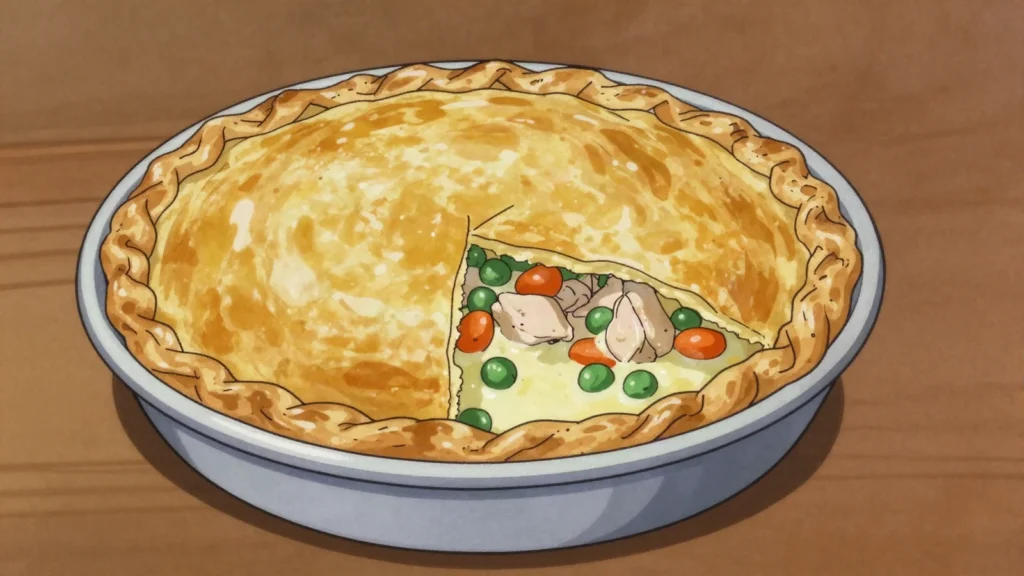
Dutch-influenced chicken pie with peas and carrots under a pastry lid, baked for birthdays and holidays.
Frequently asked questions
What is Pastei?
Pastei is a bread & pastry from Suriname: creole pot pie of chicken, peas and carrots in flaky crust. Dutch-influenced chicken pie with peas and carrots under a pastry lid, baked for birthdays and holidays.
How long does Pastei take to make?
Pastei takes 45 minutes of preparation and 1 hour of cooking. The recipe makes serves 8. It is rated medium to make.
What can I substitute in Pastei?
Yes, within limits. Sliced green olives or chopped boiled egg are both common in Surinamese versions — olives adding salt and sharpness, egg adding substance — though neither is essential. White pepper is traditional in the filling, being milder and less visible than black.
What is the most important thing to get right in Pastei?
Leave visible pieces of butter in it. Do not rub it in completely smooth. Work quickly with cool dry hands. Beat the egg with the cold water. Add it gradually to the flour.