
Ingredients
The greens
- 800 gleafy greens
- pumpkin leaves, sweet potato leaves
- or mustard greens or cassava leaves
- strings pulled off where needed
The pot
- 2onions, chopped
- 3tomatoes, chopped
- 3 tablespoonsoil
- about 200 ml water
- salt
The groundnut
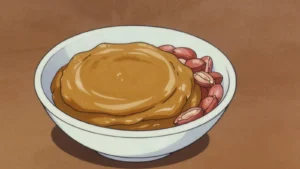
- 4 tablespoonsgroundnut flour
- nsinjiro, finely ground
- or unsweetened peanut butter
- a little hot water, to loosen
To serve
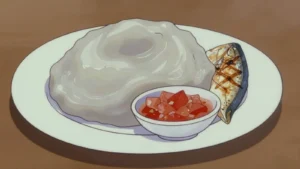
- nsima
- stiff maize porridge
- eaten with the right hand
Directions
- Pick the leaves from the tough stems. Thick woody stems always stay tough. Pull the broken end down the stem. Do the thick leaf veins as well.
- Wash the greens in several changes of water. Fill a bowl and lift the leaves out. Repeat it until no grit settles. Stack the leaves and roll them up. Slice them across into fine ribbons. Cut them fairly fine for that. Heat the oil in a wide heavy pot.
- Add the chopped onions in to it. Cook them for a good six minutes. Add the chopped tomatoes to the pot. Cook them down for about six minutes. The tomato should soften and break down.
- Cook it until it goes quite jammy. Add the chopped greens to the pot. Add them in batches if the pot is full. Raw leaves take up an enormous space. Add a handful, let it wilt, add more. Adding the liquid is straightforward enough.
- Add a little water to the pot. Season the pot with a little salt. Add only a little to start with. Add more later if it goes dry. Cooking it takes about fifteen minutes. Cover the pot and lower the heat. Let it cook for about fifteen minutes. Stir it through every now and then. Judging the greens takes a taste. Cook them on if they still resist. Mix the groundnut flour with hot water.
- Stir it into a smooth loose paste. Dry flour tipped in sits in lumps. Stir the loosened paste into the pot. Let it cook for ten more minutes. Ten minutes makes a real difference. Stir it regularly all the way through. Keep the heat low and quite steady. Judging it takes a careful look.
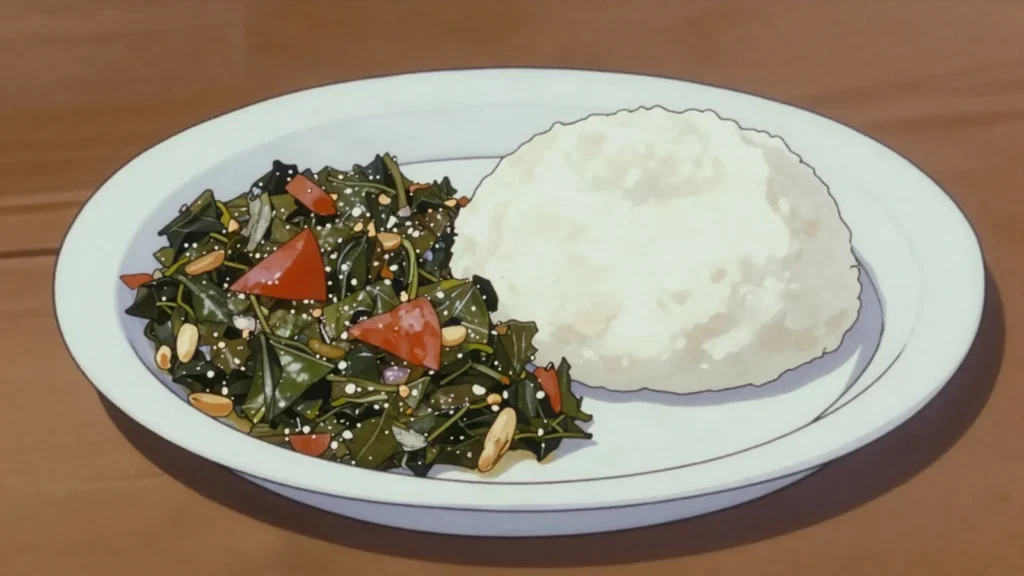
- Taste it and adjust the salt as needed. Salt is most of the seasoning. Serving it is always done hot. Spoon it out into a serving bowl. Serve stiff nsima alongside it. It keeps two days refrigerated.
Technique
- Ndiwo is the Chichewa word for relish — a category rather than one dish, covering everything eaten with nsima from pumpkin leaves to dried fish, beans and meat. The word describes the role rather than the food, and the atlas records that rather than narrowing it. The greens version written here is the everyday one.
- Nsinjiro, the finely ground raw groundnut used in Malawi, is a dry powder rather than a paste and is not the same as peanut butter. Loosen it with hot water into a smooth pourable paste before it goes in, since dry flour tipped into the pot sits in lumps that never disperse, then cook it ten minutes since raw groundnut tastes chalky and it catches and burns bitter on the bottom.
- Cassava leaves are also used as ndiwo but need different treatment from other greens, since they contain cyanogenic compounds and must be pounded and cooked long. Pumpkin and sweet potato leaves need no such step, so do not treat them as interchangeable.
Substitutions
- Unsweetened peanut butter stands in for nsinjiro; say clearly if groundnut has gone in, since peanut allergy can be severe.
- Almost any leafy green is used and what is in season is what goes in; only pumpkin leaves really need stringing.
Variations
- Nsima is the bulk of the meal and ndiwo a smaller accompaniment that flavours the starch rather than a main course.
- A piece of nsima is pinched off and pressed into a shallow scoop, which lifts the relish.
- The relish must be thick enough to hold on that scoop, since a thin one falls off it.
History
The Chichewa word for the relish eaten with nsima, covering everything from pumpkin leaves to dried fish.
Frequently asked questions
What is Ndiwo?
Ndiwo is a salad & side from Malawi: greens relish with tomato, onion and groundnut flour. The Chichewa word for the relish eaten with nsima, covering everything from pumpkin leaves to dried fish.
How long does Ndiwo take to make?
Ndiwo takes 25 minutes of preparation and 30 minutes of cooking. The recipe makes serves 6. It is rated easy to make.
What can I substitute in Ndiwo?
Yes, within limits. Unsweetened peanut butter stands in for nsinjiro; say clearly if groundnut has gone in, since peanut allergy can be severe. Almost any leafy green is used and what is in season is what goes in; only pumpkin leaves really need stringing.
What is the most important thing to get right in Ndiwo?
Ndiwo is the Chichewa word for relish — a category rather than one dish, covering everything eaten with nsima from pumpkin leaves to dried fish, beans and meat. The word describes the role rather than the food, and the atlas records that rather than narrowing it. The greens version written here is the everyday one.