
Ingredients
The pig
- 1whole pig
- or a large pork shoulder and belly
- cleaned and jointed
- coarse salt
The oven
- hardwood, for the fire
- dense volcanic stones
- never river stones
- banana leaves, in quantity
- green leaves and grass
- clean sacking or old cloth
- earth, to seal
Often cooked alongside
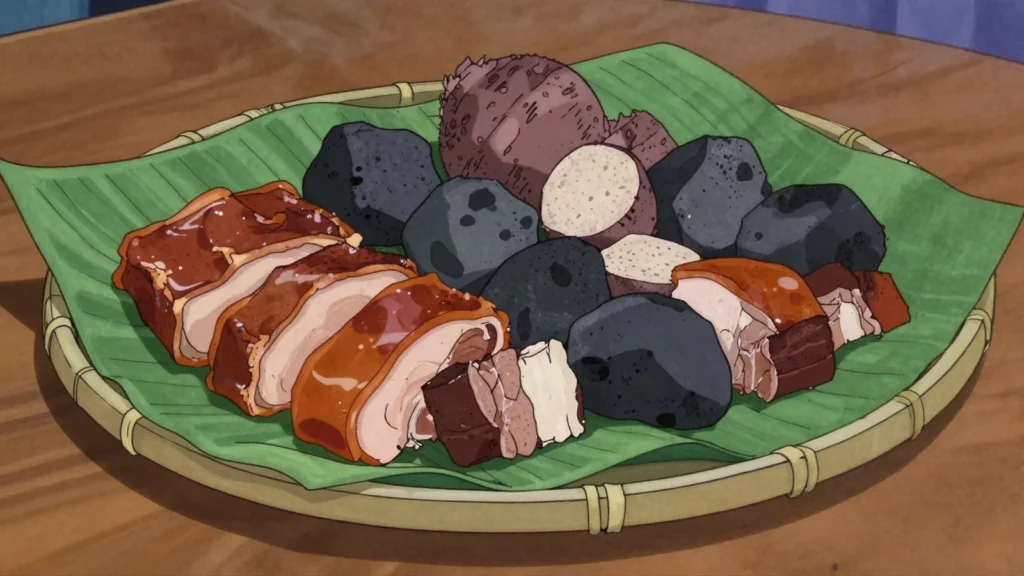
- sweet potato and yam
- cassava
- taro
- green bananas
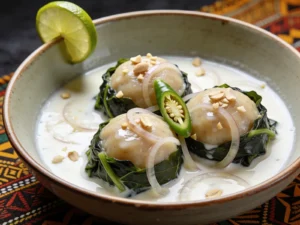
- leafy greens in coconut cream
To serve
- on banana leaves
- eaten with the hands
- at a feast
Directions
- Steam alone would give no browning. Wet or porous stones can explode when heated. Keep people well back while stones heat. Do not stand over the fire at all. Use stones that have been fired before if you can. Stand back as each layer goes down. An earth oven takes many hands. Make it larger than the food you have. Allow room for stones and leaves as well. Dig in dry ground rather than wet.
- Use hardwood if you can get it. Pile the stones over the fire. Use plenty of them in the pit. Heating them takes several hours. Let the fire burn for two or three hours. Stones take a long time to heat through.
- Rub coarse salt over the meat. Salt is most of the seasoning here. Rub it into the meat generously. You need far more than seems necessary. Remove the burnt wood and embers. Use long poles rather than reaching in.
- Lay green leaves and grass over the stones. It stops the food touching the stones. Lay it thickly rather than thinly. That escaping steam is scalding hot. Stand well back as you lay them. Work quickly but very carefully. Lay the pork out on the leaves. Add the root vegetables around it. That suits their different cooking needs.
- Pack them in reasonably tightly. Lay banana leaves over everything. Cover all of the food completely. No food should be left exposed. Lay sacking or cloth over the leaves. Cooking it takes several hours. Leave it sealed for about three hours. A whole pig takes three hours or more.
- Peel back the cloth and leaves. Stand well back and open it away from you. Let it clear before reaching in. Judging the pork takes a check. Check the thickest parts particularly.
- Return it to the oven if it is not done. Serving it is done on the leaves. Lift the food out onto banana leaves. Lay them out on the ground or a table. Serve the root vegetables alongside. Add greens cooked in coconut cream. Leftovers keep two days refrigerated.
Technique
- Wet or porous stones can explode when heated, because trapped water turns to steam with nowhere to escape and the stone bursts with real force. Never use stones taken from a river or any water; dense volcanic stone is what is used, chosen deliberately because it holds heat and does not burst. Keep people well back while the stones heat, and use stones that have been fired before where you can.
- The steam released when green leaves hit the hot stones is scalding, as is the steam when the oven is opened; stand well back as each layer goes down and open the pit away from yourself, letting it clear before reaching in.
- Once the oven is sealed it stays sealed — opening it lets all the heat out, so it cannot be checked mid-cook and the timing has to be right. Watch for escaping steam as you seal it and cover any gaps, since a good seal is what makes it work.
Substitutions
- A covered barbecue or slow oven roasting are the nearest home equivalents, though neither reproduces it and the atlas says so.
- Gather far more leaves than seems necessary, since several layers go above and below and running short mid-build is a real problem.
Variations
- Pigs are wealth as much as food in Melanesian social life, given and exchanged and killed for occasions including formal compensation, which settles disputes and repairs relationships.
- Meat goes in the hottest middle of the pit and root vegetables around the edges, suiting their different cooking needs.
- An earth oven takes many hands over hours, and that shared work is part of the occasion.
History
The motu earth oven uses fire-heated stones under layers of leaves; pigs are killed for feasts, weddings and compensation ceremonies.
Frequently asked questions
What is Motu-Cooked Pork?
Motu-Cooked Pork is a main from Solomon Islands: pork steamed with hot stones in a leaf-covered earth oven. The motu earth oven uses fire-heated stones under layers of leaves; pigs are killed for feasts, weddings and compensation ceremonies.
How long does Motu-Cooked Pork take to make?
Motu-Cooked Pork takes 3 hours of preparation and 3 hours of cooking. The recipe makes serves 20 or more. It is rated hard to make.
What can I substitute in Motu-Cooked Pork?
Yes, within limits. A covered barbecue or slow oven roasting are the nearest home equivalents, though neither reproduces it and the atlas says so. Gather far more leaves than seems necessary, since several layers go above and below and running short mid-build is a real problem.
What is the most important thing to get right in Motu-Cooked Pork?
Steam alone would give no browning. Wet or porous stones can explode when heated. Keep people well back while stones heat. Do not stand over the fire at all. Use stones that have been fired before if you can. Stand back as each layer goes down. An earth oven takes many hands. Make it larger than the food you have. Allow room for stones and leaves as well. Dig in dry ground rather than wet.