
Ingredients
Batter
- 6eggs, separated
- 250 mlwhole milk
- 150 gplain flour
- 40 gcaster sugar, for the whites
- 1 tbspcaster sugar, for the yolks
- a pinch of salt
- grated zest of ½ lemon
- 1 tspvanilla extract
To cook
- 80 graisins, soaked 30 minutes in 3 tbsp rum
- 70 gclarified butter or unsalted butter
- 2 tbspcaster sugar, for caramelising
- icing sugar, to dust
Zwetschkenröster
- 500 gdamson or other tart plums, halved and stoned
- 80 gsugar
- 1cinnamon stick
- 2cloves
- a strip of lemon peel
- 4 tbspwater
Directions
- Make the Zwetschkenröster first: simmer the plums with the sugar, spices, lemon peel and water in a covered pan over low heat for 20–25 minutes, until the fruit has slumped but still holds its shape and the syrup is dark and glossy. Remove the cinnamon and cloves and keep warm.
- Whisk the yolks with the 1 tbsp sugar, the milk, lemon zest and vanilla, then whisk in the flour and salt until smooth. Rest the batter 10 minutes.
- Whip the whites with the pinch of salt to soft peaks, then add the 40 g of sugar in three goes and whisk to a firm, glossy meringue.
- Fold the whites into the batter in three additions with a spatula, cutting down and lifting over, keeping as much air in as possible. The batter should be thick, mousse-like and full of bubbles. This aeration is what makes Kaiserschmarrn fluffy rather than a heavy pancake.
- Heat half the clarified butter in a large heavy pan, ideally 28 cm cast iron, over medium heat until it foams. Pour in the batter to a depth of about 2 cm and scatter the drained raisins over the top so they do not sink and burn.
- Cook 4–5 minutes without moving it, until the underside is deep golden and the edges are set but the top is still wet.
- Now tear rather than flip: cut the mass into four with a spatula, turn each piece, cook 2 minutes, then tear it all into rough bite-sized pieces with two forks or the edges of two spatulas. The ragged, uneven shapes are the whole point; Schmarrn means a mess or a trifle.
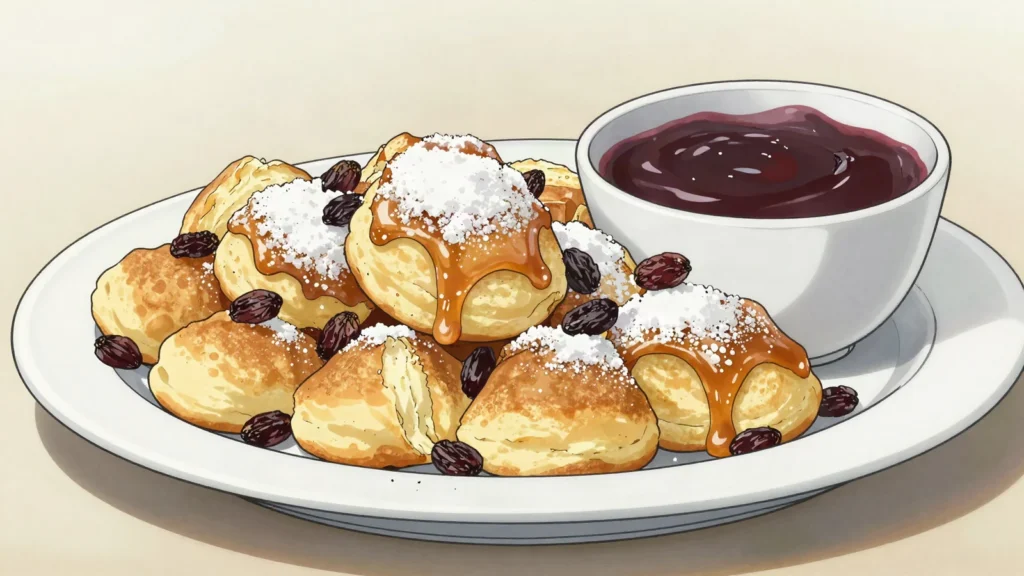
- Add the rest of the butter, sprinkle over the 2 tbsp of sugar and toss the pieces over medium-high heat for 2–3 minutes until the sugar caramelises and the edges are crisp and lacquered. Alternatively finish in the oven at 200°C (400°F) for 5 minutes. Dust generously with icing sugar and serve straight from the pan with the warm plum compote.
Technique
- Whipped whites folded in at the end are non-negotiable. A batter mixed all at once gives a dense pancake, and the airy, custardy interior against the caramelised edges is what defines the dish.
- Do not overcaramelise. The sugar should turn glassy and just golden; a few seconds too long and it goes bitter and welds to the pan.
- The name means the Emperor’s mess and is tied to Franz Joseph I, with several competing stories about a court dessert that failed, a hunting hut and an Empress watching her figure. None is documented, so treat all of them as legend.
- In Austria it is eaten as a main course in its own right, particularly in ski huts, not only as a dessert.
Substitutions
- No rum? Soak the raisins in warm apple juice, or leave them out entirely, which is common in the alpine version.
- Apfelmus (apple sauce) or cranberry compote both replace the Zwetschkenröster; plums are simply the classic.
Variations
- Kaiserschmarrn with toasted flaked almonds instead of raisins, common in Salzburg.
- A Tyrolean version enriched with a spoon of sour cream in the batter.
- Kirschenschmarrn, made with fresh cherries folded through instead of raisins.
History
A shredded, caramelised pancake, torn into irregular pieces while cooking rather than served whole, dusted with powdered sugar and traditionally served with fruit compote, generally traced to the Habsburg imperial court, with its name directly translating to Emperor’s mess, referencing Emperor Franz Joseph I, who reigned over Austria-Hungary through much of the 1800s and into the early 1900s. One popular but not fully verified legend describes the emperor’s personal chef accidentally tearing a pancake while cooking it, then serving the imperfect, torn result to the emperor anyway, who reportedly enjoyed it regardless of its messy appearance, giving the dish both its name and its now-signature torn presentation. It remains one of Austria’s most iconic traditional desserts, closely associated with Viennese and wider Austrian café culture.
Frequently asked questions
What is Kaiserschmarrn?
Kaiserschmarrn is a dessert from Austria: torn fluffy pancake with raisins, icing sugar, plum compote. A shredded, caramelised pancake, torn into irregular pieces while cooking rather than served whole, dusted with powdered sugar and traditionally served with fruit compote, generally traced to the Habsburg imperial court, with its name directly translating to Emperor’s mess, referencing Emperor Franz Joseph I, who reigned over Austria-Hungary through much of the 1800s and into the early 1900s. One popular but not fully verified legend describes the emperor’s personal chef accidentally tearing a pancake while cooking it, then serving the imperfect, torn result to the emperor anyway, who reportedly enjoyed it regardless of its messy appearance, giving the dish both its name and its now-signature torn presentation. It remains one of Austria’s most iconic traditional desserts, closely associated with Viennese and wider Austrian café culture.
How long does Kaiserschmarrn take to make?
Kaiserschmarrn takes 20 min of preparation and 25 min of cooking. The recipe makes 4 servings. It is rated medium to make.
What can I substitute in Kaiserschmarrn?
Yes, within limits. No rum? Soak the raisins in warm apple juice, or leave them out entirely, which is common in the alpine version. Apfelmus (apple sauce) or cranberry compote both replace the Zwetschkenröster; plums are simply the classic.
What is the most important thing to get right in Kaiserschmarrn?
Fold the whites into the batter in three additions with a spatula, cutting down and lifting over, keeping as much air in as possible. The batter should be thick, mousse-like and full of bubbles. This aeration is what makes Kaiserschmarrn fluffy rather than a heavy pancake.