
Ingredients
Dough
- 500 gplain flour (medium-gluten, not bread flour)
- 250 mlcold water
- ½ tspsalt
Filling
- 500 gpork shoulder or belly, minced with about 25% fat
- 500 gnapa cabbage, finely chopped
- 2 tspsalt, for the cabbage
- 4spring onions, finely chopped
- 20 gginger, grated
- 2 tbsplight soy sauce
- 1 tbspShaoxing wine
- 1 tbsptoasted sesame oil
- ½ tspground white pepper
- 120 mlcold stock or ginger-spring onion water, added a little at a time
- 1 tspsalt
Dipping sauce
- 4 tbspChinkiang black vinegar
- 1 tbsplight soy sauce
- 1 tbspfinely shredded ginger
- 1 tspchilli oil, optional
Directions
- Mix the flour, salt and cold water to a shaggy dough, knead 8–10 minutes until smooth, then cover and rest 30 minutes; the rest relaxes the gluten so the wrappers roll thin without springing back.
- Salt the chopped cabbage, leave 15 minutes, then squeeze it hard in a cloth to wring out as much water as you can. Wet cabbage is why fillings turn watery and wrappers tear.
- Beat the pork with the soy, wine, ginger, white pepper and salt, stirring in one direction only for 3–4 minutes, adding the cold stock a splash at a time until it is absorbed and the mixture is sticky and springy.
- Fold in the cabbage, spring onion and sesame oil, still stirring one way; chill 20 minutes to firm up.
- Roll the dough into two long ropes, cut into 10 g pieces, press each flat and roll into a 8–9 cm round that is thicker in the centre than at the rim, turning the dough as you roll.
- Hold a wrapper in your palm, add a heaped teaspoon of filling, fold in half and pleat one side against the flat other side, 5–7 pleats, pressing each firmly so no air is trapped. A jiaozi should sit up on its base.
- Bring a large pot of water to a rolling boil and drop in 20 dumplings, stirring once with the back of a spoon so they do not stick to the base.
- When the water returns to the boil, add a cup of cold water; repeat this twice more. This dian shui method cooks the filling through without bursting the skins.
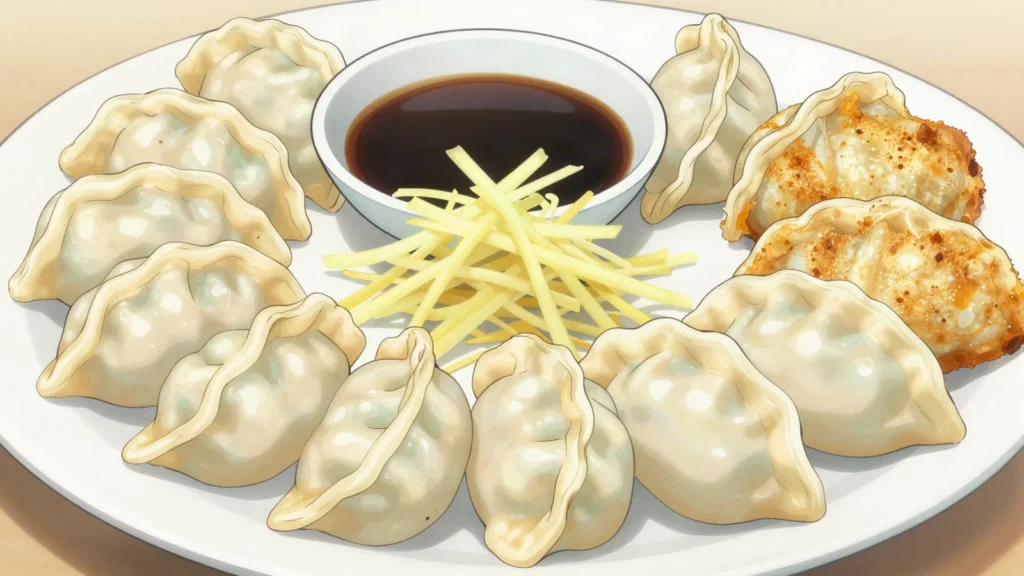
- The jiaozi are done when they float, look plump and translucent and the skins are no longer floury, about 6–8 minutes total. Lift out with a slotted spoon and serve at once with the vinegar-ginger dip.
Technique
- Stirring the filling in one direction builds the protein network that traps the added liquid, which is what makes a juicy dumpling. Stirring back and forth breaks it up.
- Jiaozi are eaten at Lunar New Year because they resemble yuanbao ingots; families fold them together on New Year’s Eve and eat them after midnight, sometimes with a coin hidden in one.
- Northern Chinese eat boiled jiaozi (shuijiao) and reserve pan-frying (guotie) for leftovers from the day before.
Substitutions
- Shop-bought wrappers work; look for round, white, refrigerated ones and press the edges with a damp finger, as they seal less well than fresh.
- Napa cabbage can be swapped for Chinese chives (jiucai) with pork and egg, or for finely chopped celery.
Variations
- Guotie: pan-fry the raw dumplings flat-side down, add water to a third of their height, cover and steam until dry, then crisp the base.
- Zhūròu báicài is the classic filling; lamb and carrot, and egg with chive and wood ear, are the other two staples.
History
Said in a widely repeated but historically shaky legend to have been invented by the Eastern Han-dynasty physician Zhang Zhongjing around the 2nd or 3rd century, who supposedly wrapped medicine and mutton in dough to treat frostbitten ears among the poor during a cold winter, giving the dumpling its ear-like shape. Archaeological finds of dumpling-like foods from earlier tombs suggest some version of wrapped dough existed before that story, whatever its truth. Jiaozi became specifically associated with Lunar New Year over the following centuries, in part because their shape resembles old Chinese gold and silver ingots, making them a symbol of wealth for the coming year, and families traditionally gather to fold them together the night before the new year begins.
Frequently asked questions
What is Jiaozi?
Jiaozi is a main from China: boiled or pan-fried pork-and-cabbage dumplings, essential at Lunar New Year. Said in a widely repeated but historically shaky legend to have been invented by the Eastern Han-dynasty physician Zhang Zhongjing around the 2nd or 3rd century, who supposedly wrapped medicine and mutton in dough to treat frostbitten ears among the poor during a cold winter, giving the dumpling its ear-like shape. Archaeological finds of dumpling-like foods from earlier tombs suggest some version of wrapped dough existed before that story, whatever its truth. Jiaozi became specifically associated with Lunar New Year over the following centuries, in part because their shape resembles old Chinese gold and silver ingots, making them a symbol of wealth for the coming year, and families traditionally gather to fold them together the night before the new year begins.
How long does Jiaozi take to make?
Jiaozi takes 1 hr of preparation and 15 min of cooking. The recipe makes about 50 dumplings, 4 servings. It is rated medium to make.
What can I substitute in Jiaozi?
Yes, within limits. Shop-bought wrappers work; look for round, white, refrigerated ones and press the edges with a damp finger, as they seal less well than fresh. Napa cabbage can be swapped for Chinese chives (jiucai) with pork and egg, or for finely chopped celery.
What is the most important thing to get right in Jiaozi?
Bring a large pot of water to a rolling boil and drop in 20 dumplings, stirring once with the back of a spoon so they do not stick to the base.