
Ingredients
Dough
- 500 gplain flour
- 7 gdried yeast
- 1 teaspoonsugar
- 1 teaspoonsalt
- about 350 ml warm water
- or warm milk
- 2 tablespoonsoil
To fry
- oil, for deep frying
To serve
- honey, to pour over
- white cheese, crumbled
- jam
- ajvar, for a savoury plate
- kaymak or clotted cream
Directions
- Warm the water to blood temperature. Stir the yeast and the sugar into it. Let it stand until it foams up. Give it about ten minutes to foam. Put the flour and salt in a large bowl. Make a well in the middle of it. Pour in the foaming yeast liquid. Add the oil to the well as well. Beat it with a wooden spoon rather than kneading.
- Work it hard for about five minutes. A wet dough cannot be kneaded on a surface. Add more water if it is stiff. Add more flour if it pours freely. Too stiff gives a heavy dense piece.
- Cover the bowl over with a cloth. Leave it somewhere warm to rise. Let it roughly double in size. Give it an hour or a little more. Pour the oil into a deep heavy pot. Fill it no more than half full. Heat it to about one hundred and seventy degrees. It should rise and puff straight away.
- Keep a lid nearby to smother a flare-up. Never put water on an oil fire at all. Keep children well away from the pot. Shaping them is done with wet hands.
- Squeeze dough up between finger and thumb. Scoop it off with a wet spoon. Drop it gently into the hot oil. Aim for about a walnut in size. Turn them over with a slotted spoon. Give them another two or three minutes.
- Break the first one open to check. The inside should be light and open. Lift them out onto a wire rack. A rack keeps them crisp underneath. Let all the excess oil drip away. That softens them within minutes. Pile them into a bowl or onto a plate.
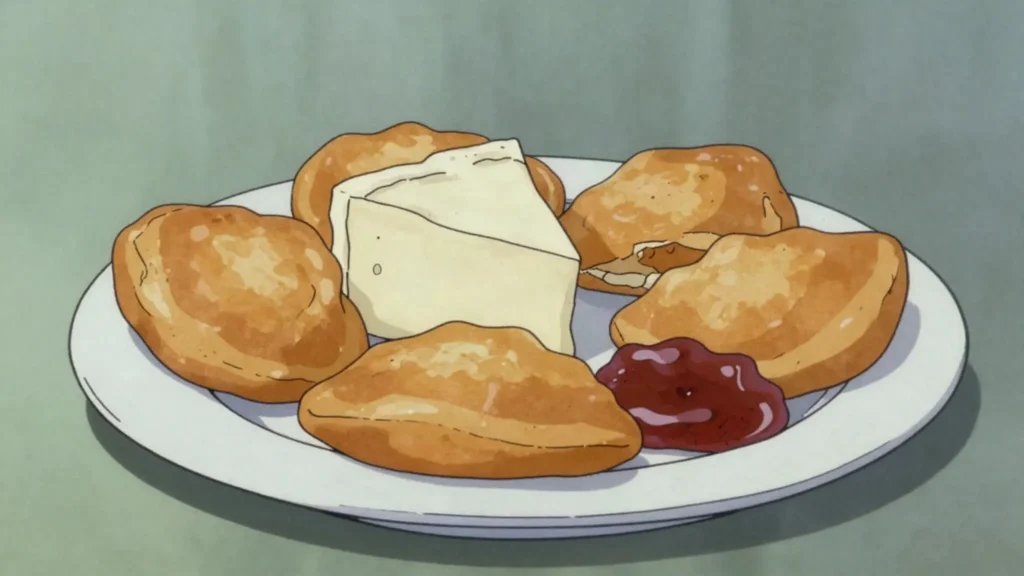
- Pour honey over them generously. It goes on while they are still hot. Spread ajvar on them instead of honey. They must be eaten hot from the oil.
Technique
- Most of the lokma family is drowned in syrup, but llokuma is not soaked at all and is dressed at the table instead, which is what lets the same dough serve as a sweet breakfast with honey or jam and a savoury one with white cheese or ajvar.
- The dough is deliberately wet and slack, too sticky to handle by hand and beaten in the bowl rather than kneaded; that water turns to steam in the hot oil and inflates each piece from inside, where a stiff dough gives a dense heavy result.
- Do not knock the risen dough back: the bubbles in it are what puff in the oil, and the craggy irregular shape the pieces come out with is expected and crisps particularly well.
Substitutions
- Warm milk in place of water gives a slightly richer dough.
- Two spoons dipped in the hot oil shape it as well as wet hands.
Variations
- It is eaten sweet with honey or jam and savoury with white cheese or ajvar.
- Lokma, loukoumades, lokmet el qadi and luqaimat are the same idea elsewhere.
- It is made in quantity for celebrations and eaten plainly at breakfast.
History
Fried dough served at breakfast and at celebrations; the name comes from Ottoman Turkish lokma, a fried sweet.
Frequently asked questions
What is Llokuma?
Llokuma is a bread & pastry from Kosovo: puffy fried dough eaten with honey, cheese or jam. Fried dough served at breakfast and at celebrations; the name comes from Ottoman Turkish lokma, a fried sweet.
How long does Llokuma take to make?
Llokuma takes 20 minutes plus rising of preparation and 25 minutes of cooking. The recipe makes about 30 pieces. It is rated medium to make.
What can I substitute in Llokuma?
Yes, within limits. Warm milk in place of water gives a slightly richer dough. Two spoons dipped in the hot oil shape it as well as wet hands.
What is the most important thing to get right in Llokuma?
Warm the water to blood temperature. Stir the yeast and the sugar into it. Let it stand until it foams up. Give it about ten minutes to foam. Put the flour and salt in a large bowl. Make a well in the middle of it. Pour in the foaming yeast liquid. Add the oil to the well as well. Beat it with a wooden spoon rather than kneading.