
Ingredients
Peppers
- 5 kgred roga or kurtovska kapija peppers, fleshy, thick-walled and fully ripe
- 1 kgaubergine, optional, for a milder blended ajvar
To cook
- 350 mlsunflower oil
- 3 tbspred wine vinegar
- 2 tbspfine salt
- 4garlic cloves, crushed (optional, and disputed)
- 1hot red chilli, minced, for ljuti ajvar
For jarring
- Sterilised jars and lids
- A little extra oil, to seal the surface
Directions
- Buy the peppers at the end of the season, in September, when they are cheapest and at their sweetest. Ajvar is autumn work, done outdoors in one long day, and 5 kg of raw peppers yields only about 1.5 litres of finished relish.
- Roast the peppers whole over a wood fire, on a metal sheet over coals, or under a very hot grill, turning until the skins are blistered and blackened all over, about 20–25 minutes. Roast the aubergines whole the same way until they collapse.
- Pile the hot peppers into a large pot or a plastic bag and cover, and leave 20–30 minutes. The trapped steam lifts the skins off the flesh.
- Peel, stem and deseed every pepper by hand. Do not rinse them under the tap, however tempting: water washes away the roasted flavour and leaves a watery ajvar. Scoop the aubergine flesh out of its skin.
- Drain the peeled flesh in a colander for 1 hour, or overnight in a cool place. Getting rid of this liquid is the difference between ajvar and a wet sauce.
- Mince the flesh through the coarse plate of a meat grinder, which is the traditional tool and gives the correct slightly fibrous texture. A food processor pulses to a purée and makes it feel like baby food.
- Cook the minced pepper in a wide heavy pot over medium-low heat, stirring constantly with a long wooden spoon, for 45 minutes to reduce it. It will spit; stand back and keep stirring, because it catches instantly.
- Start adding the oil in a thin stream, a ladle at a time, stirring after each addition until it is absorbed. This takes another 45 to 60 minutes in total. Add the salt, the vinegar, and the garlic and chilli if using, in the last 15 minutes.
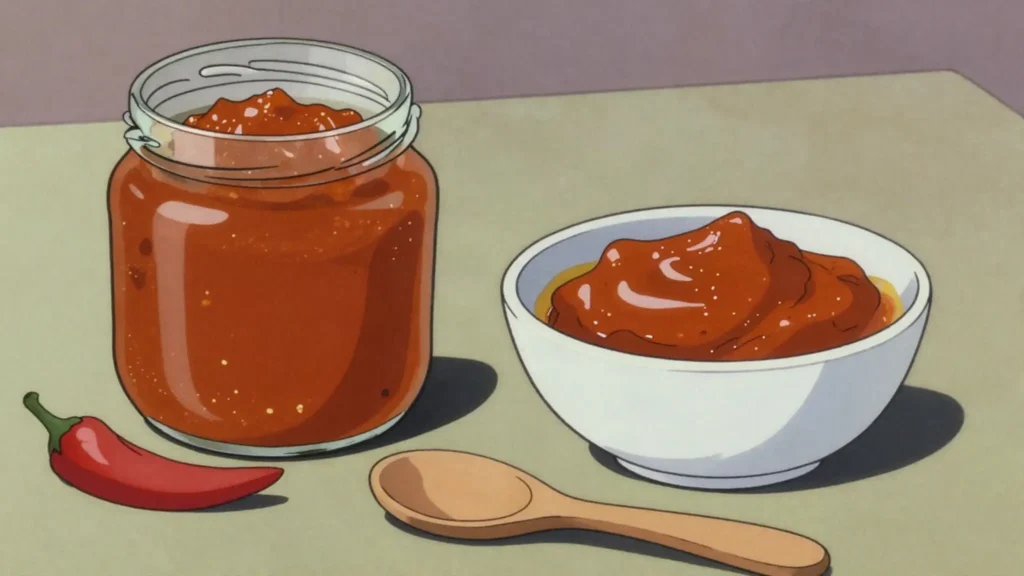
- The ajvar is done when a wooden spoon dragged across the base leaves a channel that stays open for two full seconds and no oil pools separately at the edges. It should be dark red, glossy and thick enough to stand in a spoon.
- Fill hot sterilised jars to within 1 cm of the rim, pour a film of oil on top, seal, then process the jars in a water bath at 90°C (195°F) for 20 minutes, or wrap them in blankets to cool slowly overnight, which is the traditional Serbian method.
Technique
- Real ajvar is made with sunflower oil, not olive oil. Olive oil is not a Serbian pantry fat, it is more expensive, and its flavour fights the roasted pepper.
- Whether garlic belongs in ajvar is a genuine and long-running domestic argument. Many Serbian households insist ajvar is peppers, oil, salt and vinegar only, and that garlic makes it a different relish. Both versions are made.
- Time and stirring are the only thickeners. There is no flour, no starch and no tomato in ajvar; anything that thickens it faster than reduction is a shortcut that shows.
- Food safety: ajvar is a low-acid vegetable preserve. The vinegar and the surface oil help, but for long room-temperature storage water-bath the sealed jars, and refrigerate any jar once opened and use within two weeks.
Substitutions
- No roga peppers? Any thick-fleshed sweet red pepper works, including romano or long red peppers; ordinary bell peppers give a thinner, more watery result, so drain them longer.
- No wood fire? A gas flame, a barbecue or the oven grill at maximum all char the skins adequately.
- A meat grinder can be replaced by chopping the drained flesh by hand with a large knife, which is slower but keeps the texture right.
Variations
- Ljuti ajvar, the hot version, made with a proportion of chilli peppers ground in with the sweet ones.
- Pindjur, the related relish that includes tomato and often more aubergine.
- Blagi ajvar, the mild style made with a share of aubergine, softer and darker than the pure pepper version.
History
A relish made from roasted red peppers, sometimes with aubergine added, cooked down into a thick, deep red spread, developed across the former Yugoslav republics and the wider former Ottoman Balkans, with red peppers themselves only becoming available in the region after their introduction from the Americas through Ottoman-era trade beginning in the 1500s and 1600s, making ajvar in its now-familiar form a comparatively more recent addition to a much older regional pepper and vegetable-preserving tradition. Its name is thought to derive from a Turkish word connected to caviar, possibly reflecting its historical status as a relatively prized, labor-intensive preserve rather than an everyday casual condiment. Ajvar is traditionally made in large batches each autumn, when peppers are most abundant, and preserved for use throughout the rest of the year.
Frequently asked questions
What is Ajvar?
Ajvar is a sauce & condiment from Kosovo: roasted red-pepper relish made each autumn. A relish made from roasted red peppers, sometimes with aubergine added, cooked down into a thick, deep red spread, developed across the former Yugoslav republics and the wider former Ottoman Balkans, with red peppers themselves only becoming available in the region after their introduction from the Americas through Ottoman-era trade beginning in the 1500s and 1600s, making ajvar in its now-familiar form a comparatively more recent addition to a much older regional pepper and vegetable-preserving tradition. Its name is thought to derive from a Turkish word connected to caviar, possibly reflecting its historical status as a relatively prized, labor-intensive preserve rather than an everyday casual condiment. Ajvar is traditionally made in large batches each autumn, when peppers are most abundant, and preserved for use throughout the rest of the year.
How long does Ajvar take to make?
Ajvar takes 1 hr 30 min of preparation and 2 hr 30 min of cooking. The recipe makes about 1.5 litres, 4 to 5 jars. It is rated medium to make.
What can I substitute in Ajvar?
Yes, within limits. No roga peppers? Any thick-fleshed sweet red pepper works, including romano or long red peppers; ordinary bell peppers give a thinner, more watery result, so drain them longer. No wood fire? A gas flame, a barbecue or the oven grill at maximum all char the skins adequately. A meat grinder can be replaced by chopping the drained flesh by hand with a large knife, which is slower but keeps the texture right.
What is the most important thing to get right in Ajvar?
Peel, stem and deseed every pepper by hand. Do not rinse them under the tap, however tempting: water washes away the roasted flavour and leaves a watery ajvar. Scoop the aubergine flesh out of its skin.