
Ingredients
The meat and cure
- 1.5 kgbeef topside or lean brisket, cut into strips 3 cm wide and 1 cm thick
- 45 gcoarse salt, about 3 per cent of the meat weight
- 8garlic cloves, crushed to a paste
- 2 tbspground coriander seed
- 2 tbspground cumin
- 1 tbspsweet paprika
- 1 tspcayenne
- 1 tbspdried oregano
- 3 tbspwhite vinegar
- 3 tbspolive oil
To confit and store
- 500 gbeef suet or lamb tail fat, diced
- 200 mlolive oil
- 200 mlwater
- 1 tspsalt
Directions
- Trim the meat of sinew and cut it along the grain into long strips no thicker than 1 cm, so it dries evenly rather than rotting in the middle.
- Mix the salt, garlic, coriander, cumin, paprika, cayenne, oregano, vinegar and olive oil into a slurry and massage it into every surface of the meat with your hands.
- Pack the strips into a non-reactive bowl, cover and refrigerate for 24 hours, turning once, so the salt penetrates and draws out moisture.
- Hang the strips on clean string in a warm, dry, airy place out of direct sun, or dry them in an oven or dehydrator at 45°C (115°F) to 50°C (120°F) with the door slightly ajar.
- Dry for 4 to 7 days outdoors, or roughly 12 to 18 hours in a dehydrator, until the strips are stiff, dark red-brown and leathery, bending without snapping and having lost about half their weight.
- Cut the dried meat into 3 cm pieces. Render the diced fat gently in a heavy pot over low heat for 30 minutes with the water, which stops it catching, until the water has boiled off and the fat runs clear.
- Add the meat, the olive oil and the salt, and cook at a bare shiver, never a bubble, for 45 minutes to 1 hour, until the pieces are tender enough to shred between finger and thumb.
- Pack the meat into sterilised jars and pour the strained hot fat over so it is covered by at least 1 cm, then seal and cool.
- Keep refrigerated and lift out pieces with a clean, dry spoon as you need them, smoothing the fat back over the surface each time.
Technique
- Salt at about 3 per cent of the meat weight, thin strips, and genuinely dry moving air are the three things that make this safe. Warm, still, humid conditions grow bacteria instead of curing meat.
- Traditionally khlia is dried on rooftops in high summer, which is exactly the hot dry airflow a dehydrator imitates. Do not attempt it in a damp winter kitchen.
- Discard the whole batch if you see fuzzy black or green mould, or smell anything sour or ammoniac; a white salt bloom is harmless.
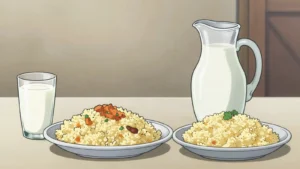
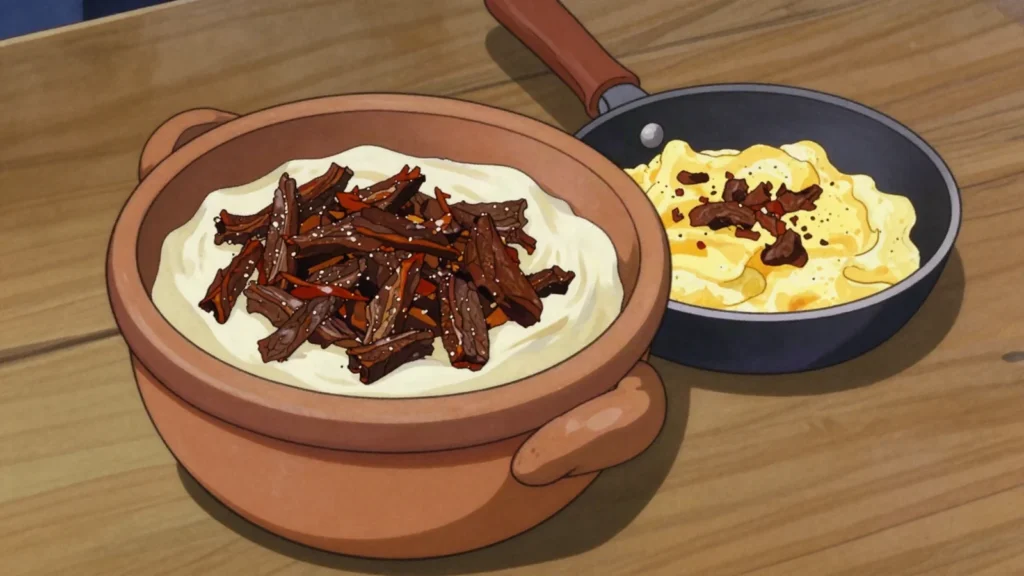
- In the fridge under a full seal of fat it keeps for months, and a spoonful transforms scrambled eggs, loubia, chakhchoukha and semolina dishes.
Substitutions
- Lamb or camel meat is used in some regions and cures identically; keep the same salt percentage.
- No suet: use 500 ml olive oil alone for the confit and the storage, which is the lighter Algiers style.
Variations
- The Moroccan khlii is the same preparation with more cumin and no cayenne.
- An eastern Algerian version adds dried mint and extra garlic to the cure.
- The rendered spiced fat left in the jar, called dhen, is prized in its own right for frying eggs.
History
Made from surplus Eid meat, salted with cumin, coriander and garlic, air-dried, then cooked and stored under its own fat for months.
Frequently asked questions
What is Khlia?
Khlia is a charcuterie & cured from Algeria: spiced dried beef kept in fat, stirred into eggs, stews and semolina. Made from surplus Eid meat, salted with cumin, coriander and garlic, air-dried, then cooked and stored under its own fat for months.
How long does Khlia take to make?
Khlia takes 40 min over two days of preparation and 4 to 7 days drying, then 1 hr confiting of cooking. The recipe makes about 700 g cured meat, plus fat, enough for many dishes. It is rated hard to make.
What can I substitute in Khlia?
Yes, within limits. Lamb or camel meat is used in some regions and cures identically; keep the same salt percentage. No suet: use 500 ml olive oil alone for the confit and the storage, which is the lighter Algiers style.
What is the most important thing to get right in Khlia?
Trim the meat of sinew and cut it along the grain into long strips no thicker than 1 cm, so it dries evenly rather than rotting in the middle.