
Ingredients
Base
- 150 gglutinous rice, soaked 2 hours
- 2duck eggs
- salt
Serundeng
- 100 ggrated coconut, toasted
- 1 tspdried shrimp, ground
- 2shallots
- 1 tspground ginger
- ½ tspground pepper
- 1 tspsugar
To finish
- fried shallots
- extra serundeng
Equipment
- 1small cast iron or heavy pan
- charcoal brazier
Directions
- Soak the glutinous rice for at least 2 hours and drain it, keeping a little of the water.
- Toast the grated coconut in a dry pan until deep golden, then pound it with the dried shrimp, shallots, ginger, pepper and sugar into the serundeng.
- Toast the coconut properly, to a real brown. Pale serundeng tastes of nothing and it is half the flavour of the dish.
- Set a small heavy pan over a charcoal brazier and let it get hot.
- Spread the soaked rice in the pan with a spoonful of its water and let it cook for 2 to 3 minutes until it starts to stick.
- Crack in the duck eggs, add a spoonful of serundeng and a pinch of salt, and beat everything together directly in the pan with a spoon.
- Duck eggs rather than hen eggs. They are richer and the yolk is what gives kerak telor its colour and its particular flavour.
- Spread the mixture out flat and let it cook, undisturbed, until the underside sets into a firm crust.
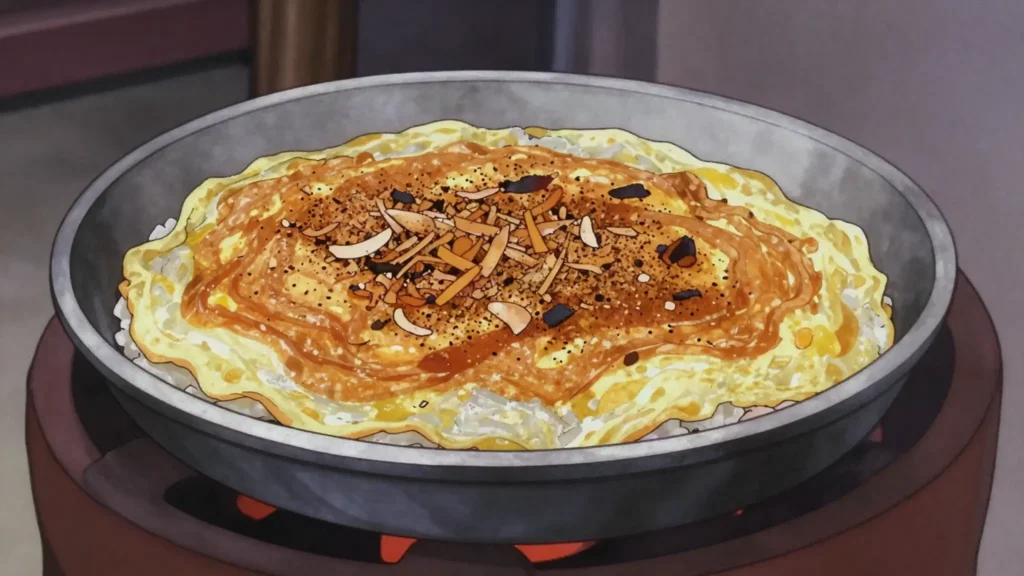
- Now the part that surprises people. Lift the pan and turn it upside down over the coals, so the top of the omelette faces the fire directly.
- Cooking it face-down over the coals is the whole technique. There is no way to flip a wet omelette this thin, so the vendors invert the pan and let the fire finish the top.
- Hold it there for 2 to 3 minutes until the surface is dry, browned and lightly charred in patches.
- Kerak means crust, and the scorched crust on both sides is what the dish is named for.
- Slide it out onto a plate and scatter generously with more serundeng and fried shallots.
- Serve immediately, eaten straight from the plate while the crust is still crisp.
- It is Betawi food from Jakarta and it is now made almost exclusively at fairs and at the Jakarta Fair, cooked to order over charcoal.
Technique
- It is one of the few dishes that has survived almost entirely as festival food rather than home cooking.
- The charcoal is not optional for the real thing; a gas hob cannot do the inverted step.
- Hen eggs are used when duck eggs are unavailable and the result is paler and milder.
Substitutions
- Hen eggs in place of duck.
- Desiccated coconut toasted with a little coconut milk, in place of fresh grated.
Variations
- With extra dried shrimp for a stronger serundeng.
- Made in a covered pan on a hob, browning the top under a grill.
- With more chilli in the serundeng.
History
A savory omelette made from glutinous rice, egg, dried shrimp and fried shallot, cooked directly over hot coals in a wok until crisp, documented across Indonesia, specifically associated with Jakarta and the Indigenous Betawi people native to that region, considered one of Betawi cuisine’s most iconic traditional dishes. Its distinctive cooking technique, flipping the wok directly over the open coals partway through cooking so the omelette crisps and chars slightly without a spatula, reflects a specific traditional Betawi street-cooking method passed down among dedicated kerak telor vendors. Kerak telor remains closely tied to Jakarta’s Betawi cultural identity, particularly associated with the city’s annual anniversary celebrations.
Frequently asked questions
What is Kerak Telor?
Kerak Telor is a street food from Indonesia: betawi glutinous-rice omelette with spiced coconut, Jakarta fairs. A savory omelette made from glutinous rice, egg, dried shrimp and fried shallot, cooked directly over hot coals in a wok until crisp, documented across Indonesia, specifically associated with Jakarta and the Indigenous Betawi people native to that region, considered one of Betawi cuisine’s most iconic traditional dishes. Its distinctive cooking technique, flipping the wok directly over the open coals partway through cooking so the omelette crisps and chars slightly without a spatula, reflects a specific traditional Betawi street-cooking method passed down among dedicated kerak telor vendors. Kerak telor remains closely tied to Jakarta’s Betawi cultural identity, particularly associated with the city’s annual anniversary celebrations.
How long does Kerak Telor take to make?
Kerak Telor takes 20 min plus 2 hr soaking of preparation and 20 min of cooking. The recipe makes 2 servings. It is rated medium to make.
What can I substitute in Kerak Telor?
Yes, within limits. Hen eggs in place of duck. Desiccated coconut toasted with a little coconut milk, in place of fresh grated.
What is the most important thing to get right in Kerak Telor?
Duck eggs rather than hen eggs. They are richer and the yolk is what gives kerak telor its colour and its particular flavour.