
Ingredients
The maize
- 4green maize cobs
- young and milky
- husks removed
- silk pulled off
To roast
- hot coals
- or a wire grill
- or a brazier
Sometimes
- a little salt
- or nothing at all
- eaten plain
The season
- February and March
- at the harvest
- sold at the roadside
Directions
- Press one with a nail and it should spurt. Travellers stop the car and buy. Turn it round to char it evenly. Pick cobs that feel heavy and full. A light one is dry or poorly filled.
- Peel back a little husk and press a kernel. It should spurt a milky liquid. Pull all the husks off the cobs. Peel them back from the top down. Take all of the layers off it. Pull all the silk threads off.
- Pull every one of them off carefully. A dry cloth helps remove them. Rub the cob over with a dry cloth. Wait until they glow under grey ash. That is what the method needs.
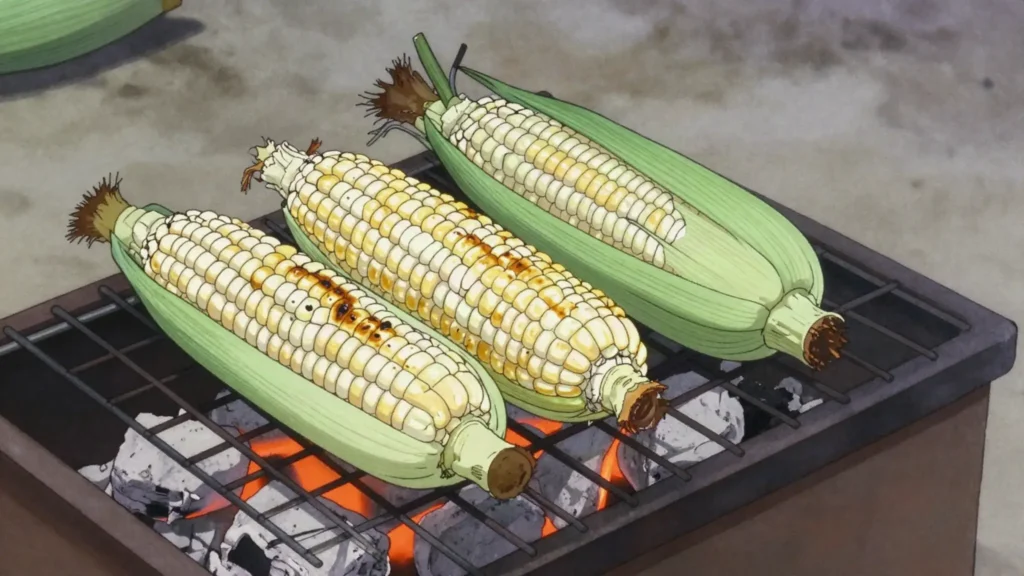
- Set the cobs close to the coals. Raise them if they burn too fast. Adjust the grill height as you go. Lay the cobs directly on the coals. Turn the cobs round constantly. Roll them a quarter turn at a time.
- Keep turning them right throughout. Cooking them takes about fifteen minutes. Press a kernel with a fingernail. It should be tender rather than hard.
- Roast it longer if it resists. Pull a kernel off and taste it. It should be sweet and tender. Use tongs to turn and lift them. Use tongs rather than copying them. Let them cool a moment before eating. Serving them is always done hot.
- Sprinkle a little salt if you like. The maize is sweet enough alone. Salt is a fairly modern addition. It does not keep at all well after.
Technique
- The maize must be at the young milky stage: press a kernel with a nail and it should spurt. Milky kernels roast sweet and tender where starchy older ones go tough and chewy, and that cannot be corrected by cooking — the stage of the maize is everything. Fresh husks are bright green and tight with pale soft silk, and the cob should feel heavy for its size.
- Pull all the silk off carefully, rubbing the cob with a dry cloth that the threads catch on — fine silk clinging between the kernels burns and tastes bitter, and the cloth removes far more than fingers do.
- Roast over coals glowing under grey ash rather than flames, which burn the kernels black at once, and turn the cobs constantly a quarter turn at a time so they char evenly. Charring in patches is wanted and gives the smoky flavour; black all over is simply burnt.
Substitutions
- Leaving a layer of husk on steams the cob before it chars, where a bare cob chars directly and fast; both are done and the bare method is the roadside one.
- Laying them directly on the coals is the roadside way and a wire grill above gives more control; both are genuinely done.
Variations
- Most are eaten entirely plain, since the maize is sweet enough alone and salt is a modern addition; this is maize and fire and nothing else, which is the whole dish.
- The cobs are extremely hot and roadside sellers handle them fast from long practice — use tongs rather than copying them.
- The atlas also carries perrerreque from Nicaragua, which uses maize at the same milky stage; young maize is a seasonal food in many places.
History
Sold from braziers along mountain roads during the February and March harvest, when maize is still soft and milky.
Frequently asked questions
What is Poone?
Poone is a street food from Lesotho: green maize cobs roasted over coals at the roadside in late summer. Sold from braziers along mountain roads during the February and March harvest, when maize is still soft and milky.
How long does Poone take to make?
Poone takes 10 minutes of preparation and 20 minutes of cooking. The recipe makes serves 4. It is rated easy to make.
What can I substitute in Poone?
Yes, within limits. Leaving a layer of husk on steams the cob before it chars, where a bare cob chars directly and fast; both are done and the bare method is the roadside one. Laying them directly on the coals is the roadside way and a wire grill above gives more control; both are genuinely done.
What is the most important thing to get right in Poone?
Keep turning them right throughout. Cooking them takes about fifteen minutes. Press a kernel with a fingernail. It should be tender rather than hard.