
Ingredients
Dough
- 500 gcassava starch
- almidon de mandioca
- 300 gfresh cheese, grated
- Paraguay cheese or a mild firm one
- 100 gpork lard
- or 100 g butter
- 2eggs
- 1 teaspoonsalt
- about 100 ml milk
Sometimes added
- 1onion, very finely chopped and fried
- 1 teaspoonaniseed
Equipment
- green sticks or wooden skewers
- about two centimetres thick
- an open fire with embers
Directions
- Use green wood rather than dry. Green sticks do not burn through. Strip the bark from the cooking end. Soak wooden skewers in water first. That stops them charring away. Put the cassava starch in a large bowl.
- Add the grated cheese to the bowl. Add the salt to the bowl as well. Rub the lard through with your fingers. Work it until it looks like coarse crumbs. Adding the wet ingredients takes judgement. Beat the eggs and add them in. Add the milk a little at a time.
- Work it together with your hands. Stop as soon as it comes together. Add more milk if it crumbles apart. Add more starch if it sticks to your hands. It takes less than wheat flour would.
- Add the milk slowly and judge by feel. Cover the dough and let it rest. Give it about twenty full minutes. Take one handful of the dough. Roll it into a long rope in your hands. Press the coils together to seal them. Keep the dough layer fairly thin. Aim for about a centimetre thick.
- Wait until the coals are covered in grey ash. Spread the embers into an even bed. Cooking them takes real patience. Set them at an angle beside the fire. Turn them slowly and constantly. Give them about twenty minutes.
- Rest the ends on stones and rotate them. That is how it is done at gatherings. Break one open to check the first one. The inside should be soft and cooked.
- Wrap the dough around wooden skewers. Set them across a roasting tin. Heat the oven to 200C before baking. Bake them for about twenty-five minutes. Turn them once halfway through. Serving them is done piping hot. Warm them in an oven to soften them.
Technique
- This is made with cassava starch rather than the fresh root: almidon de mandioca is a pure white powder with no fibre or protein, the same thing as tapioca starch, and the processing that makes it removes the cyanogenic compounds present in the fresh root.
- Cassava starch has no gluten and behaves nothing like wheat flour, giving a chewy elastic texture that crusts hard on the outside; wheat flour will not substitute for it.
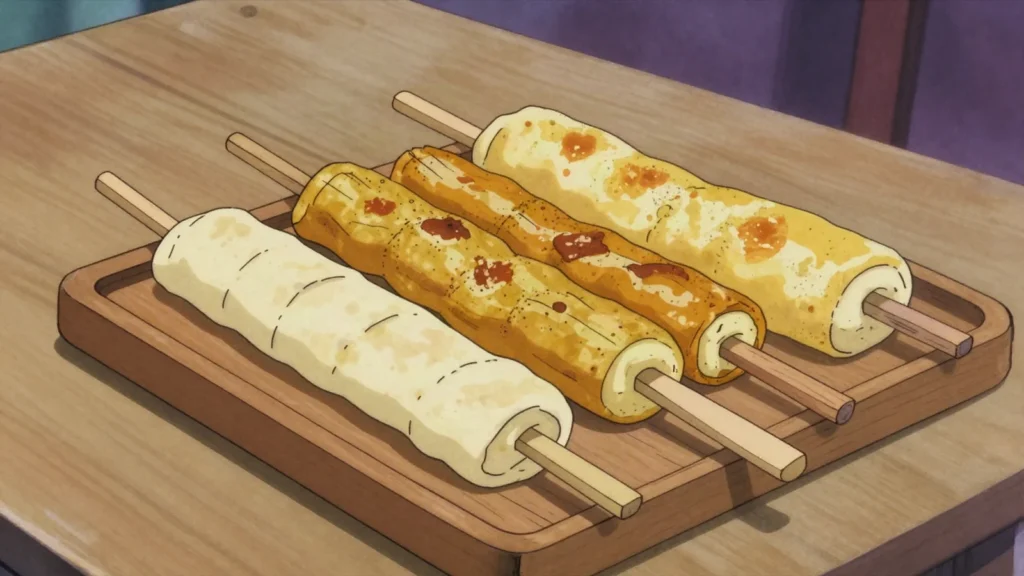
- Chipa is the baked ring, mbeju the flat griddled version and kabure the stick-roasted one, all made from the same basic cassava starch and cheese mixture and all Holy Week food.
Substitutions
- Any mild firm fresh cheese stands in for queso Paraguay, though wet mozzarella does not.
- An oven at 200C works in place of an open fire, though it lacks the smoke.
Variations
- Some cooks add fried onion or aniseed to the dough.
- Chipa and mbeju use the same mixture in different shapes.
- Mate or cocido is the usual drink alongside.
History
Cooked at rural gatherings and in Holy Week, turned over the embers until crusted.
Frequently asked questions
What is Kaburé?
Kaburé is a street food from Paraguay: cassava and cheese dough wrapped on a stick and roasted over coals. Cooked at rural gatherings and in Holy Week, turned over the embers until crusted.
How long does Kaburé take to make?
Kaburé takes 30 minutes of preparation and 25 minutes of cooking. The recipe makes about 12 sticks. It is rated medium to make.
What can I substitute in Kaburé?
Yes, within limits. Any mild firm fresh cheese stands in for queso Paraguay, though wet mozzarella does not. An oven at 200C works in place of an open fire, though it lacks the smoke.
What is the most important thing to get right in Kaburé?
Use green wood rather than dry. Green sticks do not burn through. Strip the bark from the cooking end. Soak wooden skewers in water first. That stops them charring away. Put the cassava starch in a large bowl.