
Ingredients
The chicken
- 600 gminced chicken
- or chicken thighs, chopped small
- thigh meat rather than breast
- not extra lean
The base
- 3 tablespoonsoil
- or butter
- 2large onions, chopped
- a large thumb of ginger
- grated or finely chopped
- 6 clovesgarlic, crushed
- 3tomatoes, chopped
- or 1 tin chopped tomatoes
- 4to 8 green chillies
- slit or chopped, to taste
- half a teaspoon turmeric
- optional
The liquid
- about 400 ml water or stock
- salt, to taste
- black pepper
To finish
- a handful of coriander leaf
- chopped
- a quarter teaspoon thingye
- Bhutanese Sichuan pepper, ground
- or Sichuan pepper, optional
- 50 gdatshi, crumbled
- optional, not traditional in every version
To serve
- red rice
- ezay, the chilli relish
- other dishes alongside
Directions
- Reduce the chillies if you need to. It is closer to a thin stew than a curry. Use thigh rather than breast. Do not use extra lean chicken mince. Use far more than you would in most dishes.
- Peel it with the edge of a teaspoon. Grate it or chop it very finely. Heat the oil in a heavy pot. Add the chopped onions. Cook them for about eight minutes until soft. They should soften rather than brown much. Cook them for three minutes. This much ginger needs time to lose its raw edge.
- Add them slit or chopped. Wear gloves if you are handling many. Add the chopped tomatoes and the turmeric. Cook them down for about eight minutes. They should collapse into a loose sauce. Add the minced chicken. Break it up thoroughly with a spoon.
- Break it apart in the first two minutes. Work it through the sauce as it goes in. Cook it for about five minutes. It should turn opaque throughout. Add the water or stock. Bring it to a simmer. Season it with salt.
- Simmer it gently for about twenty minutes. It should stay loose and soupy. Add more water if it reduces too far. Chicken must be cooked right through. Use a separate board and wash everything after. Taste and correct the salt. Grind over black pepper.
- Add the Sichuan pepper if you have it. Take the pot off the heat first. Crumble the cheese in and fold it gently. Fresh curd toughens if it is boiled.
- Add plenty of chopped coriander at the end. It lifts a dish that is otherwise heavy with ginger. Serve it in bowls with red rice. It takes longer to cook than white rice. Freeze it before adding any cheese. Add fresh cheese after reheating.
Technique
- Keep it loose. Jasha maru is a thin soupy stew whose liquid is poured over rice and soaks into it — reducing it to a thick sauce makes a different dish.
- Use far more ginger than you would in most dishes. It is the leading flavour rather than a background one, and a large thumb is the minimum.
- Cook the ginger and garlic a full three minutes in the fat. This much ginger needs time to lose its raw edge, and it mellows and deepens as it cooks.
- Use thigh meat rather than breast. Thigh stays moist through simmering; breast dries out and goes stringy. Ask a butcher to mince thighs if you can, and avoid extra lean mince.
- Break the mince up thoroughly in the first two minutes. Clumps formed then stay clumps.
- Slit chillies give aroma with moderate heat; chopped ones give the full force. Choose deliberately, wear gloves if you are handling many, and do not rub your eyes afterwards.
- Do not wash raw chicken. Washing splashes campylobacter around the kitchen and removes nothing from the meat — only cooking does.
- If you add datshi, take the pot off the heat first and fold it in gently. Fresh curd toughens if boiled, and the residual heat is enough. Many versions use no cheese at all, and both are proper.
- Grate or finely chop the ginger, never chunk it. It is fibrous and coarse pieces eat badly.
- Bhutanese versions often use chicken chopped through the bone, which gives a better broth; diners pick the bones out as they eat. Warn anyone unused to that.
- Thingye, the Bhutanese Sichuan pepper, gives a citrus aroma and a numbing tingle distinct from chilli heat, and the two together are the characteristic Bhutanese sensation. Sichuan pepper substitutes closely.
- Red rice needs about forty minutes, considerably longer than white. Start it before the stew.
Substitutions
- Finely chopped chicken thigh replaces mince and gives a better texture.
- Chicken on the bone, chopped through, is traditional and gives more flavour.
- Butter replaces oil for a richer stew.
- Feta or a fresh curd replaces datshi if you want cheese in it.
- Sichuan pepper replaces thingye closely; both are optional.
- Plain rice replaces red rice, though red rice is the Bhutanese grain.
Variations
- Ema datshi, whole chillies cooked in cheese, is Bhutan’s national dish and sits on the same table.
- Kewa datshi, potato with cheese, is the milder everyday dish.
- Shakam paa, dried beef with chillies, is the meat dish of the same cooking.
- Phaksha paa uses pork with dried chillies and radish.
- Goen hogay, the cucumber salad, is the fresh element alongside.
- A version with more cheese, closer to a datshi dish, is made in some households.
Frequently asked questions
What is Jasha Maru?
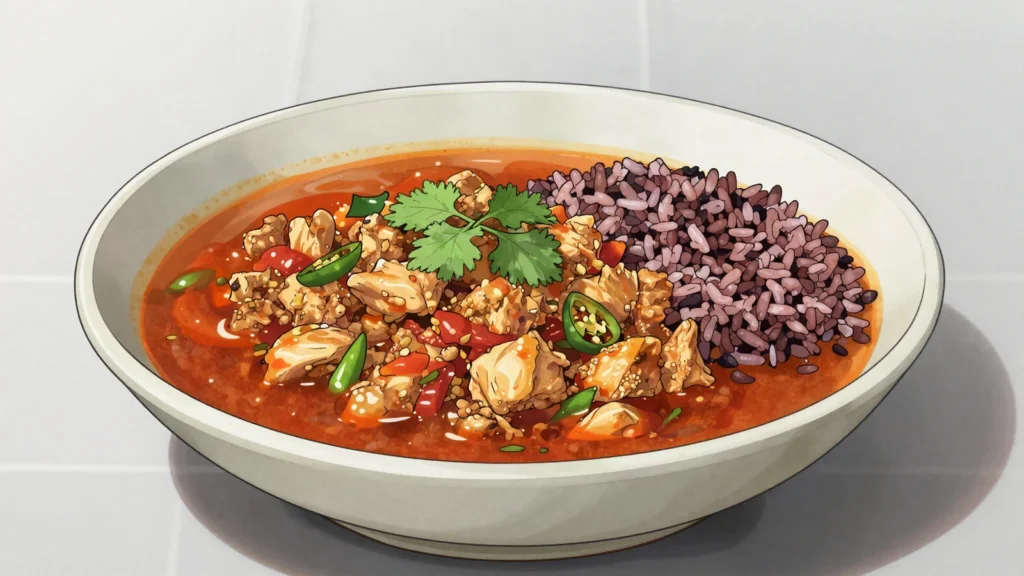
Jasha Maru is a soup & stew from Bhutan: minced chicken stew with ginger, tomato and chili.
How long does Jasha Maru take to make?
Jasha Maru takes 20 minutes of preparation and 35 minutes of cooking. The recipe makes serves 4. It is rated easy to make.
What can I substitute in Jasha Maru?
Yes, within limits. Finely chopped chicken thigh replaces mince and gives a better texture. Chicken on the bone, chopped through, is traditional and gives more flavour. Butter replaces oil for a richer stew. Feta or a fresh curd replaces datshi if you want cheese in it. Sichuan pepper replaces thingye closely; both are optional. Plain rice replaces red rice, though red rice is the Bhutanese grain.
What is the most important thing to get right in Jasha Maru?
Reduce the chillies if you need to. It is closer to a thin stew than a curry. Use thigh rather than breast. Do not use extra lean chicken mince. Use far more than you would in most dishes.