
Ingredients
Caterpillars
- 200 gdried mopane caterpillars
- warm water, for soaking
The pan
- 3onions, sliced
- 4garlic cloves, crushed
- 3tomatoes, chopped
- 2 tablespoonstomato paste
- 4 tablespoonsoil
- 1chilli, chopped, optional
- 1stock cube
- salt and black pepper
To serve
- nshima, thick maize porridge
- cooked greens
- chilli sauce
Directions
- Put the dried caterpillars in a bowl. Cover them over with warm water. Soak them for at least one hour. Two hours is better for very dry ones. Rub them between your hands in the water.
- Pour off the water and rinse them again. Repeat that two or three times over. Pick out any that look damaged or mouldy. Put the soaked caterpillars in a pan.
- Cover them over with fresh water. Add a little salt to the pan too. Bring the whole pan up to a boil. Let them simmer for about twenty minutes. Drain them thoroughly afterwards. Heat the oil in a wide heavy pan. Add the sliced onions to the pan.
- Cook them for a good eight minutes. They should soften and turn golden. Add the crushed garlic and the chilli. Cook them for a good two minutes.
- Add the drained caterpillars to the pan. Fry them hard for about eight minutes. Stir them regularly as they fry. Boiled alone they are soft and dull. Stir the tomato paste into the pan. Fry it for a good two minutes. Add the chopped tomatoes to it.
- Crumble in the stock cube as well. Season it with salt and black pepper. Cook it all down for about ten minutes. The tomato should have cooked down thick. Add a splash of water if it goes dry. Taste it and adjust the salt now. It should be salty and savoury together.
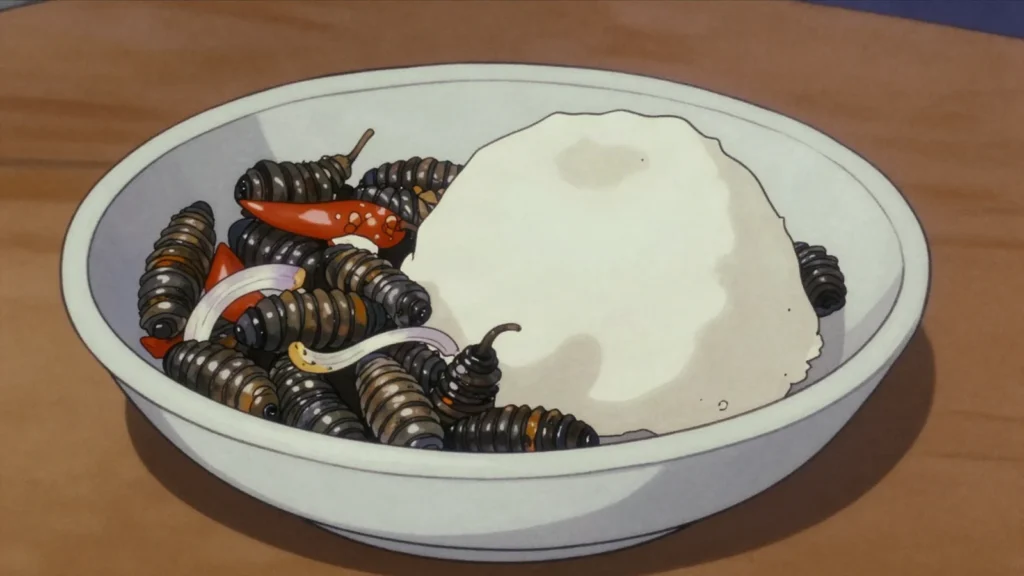
- Add more chilli if you want heat. Serving it is done hot as a relish. Spoon it beside a mound of nshima. Nshima is the thick Zambian maize porridge. Put chilli sauce on the table. Pinch off nshima and scoop with it. It keeps three days refrigerated.
Technique
- Insects contain tropomyosin, a protein also found in shellfish, and cross-reactivity is documented, so anyone with a shellfish or dust mite allergy may react and should not eat them.
- The caterpillars are gutted as soon as they are picked by squeezing out the gut contents, which removes the bitter half-digested leaves inside, then boiled in salted water and sun dried until brittle, after which they keep for many months.
- Frying is what gives them their character, since boiled alone they are soft and dull while frying makes them savoury and chewy; that stage is not optional.
Substitutions
- Dried mopane caterpillars are sold in African shops and need only soaking.
- The tomato can be left out for a plainer fried relish.
Variations
- Some cooks fry them with groundnut paste instead of tomato.
- They are also eaten dry as a snack straight from the bag.
- Similar caterpillars are eaten across Zimbabwe, Botswana and South Africa.
History
Mopane caterpillars gutted, boiled and dried; harvested from mopane woodland in Zambia’s south and traded by the bucket in markets.
Frequently asked questions
What is Ifinkubala?
Ifinkubala is a snack from Zambia: mopane caterpillars dried then fried with onion, protein-rich delicacy. Mopane caterpillars gutted, boiled and dried; harvested from mopane woodland in Zambia’s south and traded by the bucket in markets.
How long does Ifinkubala take to make?
Ifinkubala takes 30 minutes plus soaking of preparation and 40 minutes of cooking. The recipe makes serves 6 as a relish. It is rated medium to make.
What can I substitute in Ifinkubala?
Yes, within limits. Dried mopane caterpillars are sold in African shops and need only soaking. The tomato can be left out for a plainer fried relish.
What is the most important thing to get right in Ifinkubala?
Cover them over with fresh water. Add a little salt to the pan too. Bring the whole pan up to a boil. Let them simmer for about twenty minutes. Drain them thoroughly afterwards. Heat the oil in a wide heavy pan. Add the sliced onions to the pan.