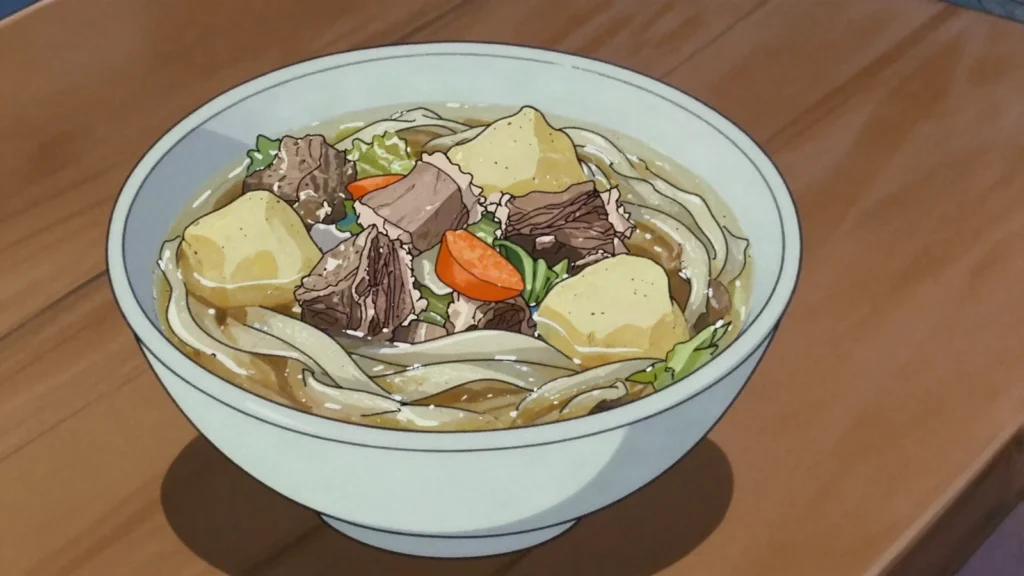

Ingredients
The meat
- 600 gmutton or lamb
- shoulder or neck, on the bone if possible
- cut into chunks
- with the fat left on
- or beef, cut the same way
The broth
- 2 litreswater
- 1large onion, sliced
- 2carrots, cut into batons
- 1potato, diced, optional
- quarter of a white cabbage, shredded
- 2 clovesgarlic, sliced, optional
- salt and black pepper
- 1bay leaf, optional
The noodles
- 300 gplain flour
- half a teaspoon salt
- about 150 ml water
- flour, for rolling
To finish
- a handful of spring onions
- or wild chives, if you have them
- sliced
- extra black pepper
To serve
- hot, in deep bowls
- with bread, optional
- suutei tsai alongside
Directions
- Put the meat in a large pot. Cover it with cold water. Bring it slowly to a simmer. Grey foam rises in the first fifteen minutes. Skim it off carefully. Keep skimming until it stops rising. Simmer it gently for about an hour. The meat should become genuinely tender.
- Salt it after about forty minutes. Salt and pepper carry most of it. Put the flour and salt in a bowl. Add water gradually while mixing. Bring it together into a firm dough. It should be noticeably firm. Knead it hard for about eight minutes. It should become smooth and quite stiff. Cover it and rest it for thirty minutes. That makes it possible to roll thin.
- Divide the dough in two. Roll each piece out on a floured surface. Roll it as thin as you can manage. Thin noodles cook fast and eat well. Roll thinner than feels necessary. Dust the sheet generously with flour. Fold or roll it loosely.
- Slice across into strips. Aim for about half a centimetre wide. Toss them in flour so they do not stick. Add the onion and carrot after the meat is tender. Simmer them for about ten minutes. Add the potato if you are using it. Add the cabbage after that. Cabbage needs only five or six minutes. Add the garlic near the end. Use what you have.
- Drop them straight into the simmering pot. That keeps the broth clear. Shake off excess flour before they go in. Drop them in a handful at a time. Stir so they do not clump together.
- Simmer them for about five minutes. Taste one to check. It should be tender with no raw flour taste. Add hot water if it becomes too thick. Taste and correct the salt. Mutton takes more salt than people expect. Grind over plenty of black pepper. Scatter sliced spring onion over. Serve it in deep bowls, very hot.
- Serve bread alongside if you like. It keeps three days refrigerated. Add water when reheating it. Freeze the broth and meat alone. Make fresh noodles when you reheat it. Raw noodles keep a day refrigerated, well floured.
Technique
- Make the noodle dough noticeably firm — firmer than bread dough — and rest it thirty minutes. A soft dough gives noodles that dissolve into the broth, and unrested dough springs back and tears when you try to roll it thin.
- Roll thinner than feels necessary, one or two millimetres. Thick noodles stay doughy in the centre.
- Skim the grey foam off in the first fifteen minutes. It is coagulated protein and it clouds the broth; keep skimming until it stops rising.
- Do not trim the fat off the mutton. It renders into the broth, and a lean broth tastes thin — in a cold climate fat is fuel, and this is practical rather than stylistic.
- Cooking the noodles in the soup thickens the broth and is what most households do; boiling them separately keeps the broth clear and stops them drinking all the liquid, which matters if you want leftovers. Both are proper.
- Make it looser than you want it. The noodles thicken the soup as they cook and go on thickening as it stands, so keep hot water beside the pot.
- Salt after about forty minutes rather than at the start, once you can judge the reduction.
- Simmer gently and never boil hard. Hard boiling toughens the meat and clouds the broth.
- Meat on the bone gives a far better broth — lamb neck is excellent and worth asking a butcher for.
- Mongolian cooking is not heavily spiced, and salt, pepper and wild herbs carry it. That plainness is the character of the food rather than a gap in it.
- Do not freeze it with the noodles in — they turn mushy. Freeze the broth and meat and make fresh noodles when you reheat it.
- Tsuivan is the same meat and vegetables with steamed hand-cut noodles, and budaatai khuurga is the fried rice version. Only the grain and the method change.
Substitutions
- Lamb shoulder or neck replaces mutton and is far easier to buy outside Mongolia.
- Beef replaces mutton with a milder flavour.
- Bought flat noodles or tagliatelle replace hand-cut, at some cost in texture.
- Potato, turnip or pepper join or replace the listed vegetables; the dish is deliberately flexible.
- Spring onion replaces the wild chives used in Mongolia.
- Boiling the noodles separately keeps the broth clear and the soup thinner.
Variations
- Tsuivan steams the same hand-cut noodles over the meat and tosses them through, with no broth.
- Budaatai khuurga is the fried rice version of the same stir-fry.
- Bantan is a thicker Mongolian soup with flour rubbed into crumbs rather than cut noodles.
- Buuz, steamed mutton dumplings, are the festive dish eaten at Tsagaan Sar.
- Khuushuur are the fried flat meat pastries eaten at Naadam.
- Thenthuk in Tibet and bathup in Bhutan are the Himalayan hand-torn relatives.
History
A noodle soup combining hand-cut noodles with meat, most often mutton, and vegetables in a savory broth, developed within Mongolian home cooking as a warming, filling dish particularly suited to Mongolia’s long, harsh winters and its historically meat-and-dairy-centered nomadic diet. Its name directly combines guril, flour or noodle, and shul, soup, describing the dish plainly rather than referencing any specific place or person tied to its invention. As with several other Mongolian noodle dishes, the specific technique of cutting or rolling the noodles by hand reflects broader Central and East Asian noodle-making traditions carried into Mongolian cooking through historic trade and cultural contact along Silk Road-era routes crossing the region for many centuries.
Frequently asked questions
What is Guriltai Shul?
Guriltai Shul is a soup & stew from Mongolia: hearty mutton soup with hand-rolled noodle strips. A noodle soup combining hand-cut noodles with meat, most often mutton, and vegetables in a savory broth, developed within Mongolian home cooking as a warming, filling dish particularly suited to Mongolia’s long, harsh winters and its historically meat-and-dairy-centered nomadic diet. Its name directly combines guril, flour or noodle, and shul, soup, describing the dish plainly rather than referencing any specific place or person tied to its invention. As with several other Mongolian noodle dishes, the specific technique of cutting or rolling the noodles by hand reflects broader Central and East Asian noodle-making traditions carried into Mongolian cooking through historic trade and cultural contact along Silk Road-era routes crossing the region for many centuries.
How long does Guriltai Shul take to make?
Guriltai Shul takes 30 minutes plus 30 minutes resting of preparation and 1 hour 15 minutes of cooking. The recipe makes serves 4. It is rated medium to make.
What can I substitute in Guriltai Shul?
Yes, within limits. Lamb shoulder or neck replaces mutton and is far easier to buy outside Mongolia. Beef replaces mutton with a milder flavour. Bought flat noodles or tagliatelle replace hand-cut, at some cost in texture. Potato, turnip or pepper join or replace the listed vegetables; the dish is deliberately flexible. Spring onion replaces the wild chives used in Mongolia. Boiling the noodles separately keeps the broth clear and the soup thinner.
What is the most important thing to get right in Guriltai Shul?
Slice across into strips. Aim for about half a centimetre wide. Toss them in flour so they do not stick. Add the onion and carrot after the meat is tender. Simmer them for about ten minutes. Add the potato if you are using it. Add the cabbage after that. Cabbage needs only five or six minutes. Add the garlic near the end. Use what you have.