
Ingredients
Leaves
- 300 gdried fumbwa leaves
- or 500 g fresh fumbwa, finely shredded
- or 500 g spinach, very finely shredded
- water, for soaking
The pot
- 200 gsmoked fish, flaked
- or 200 g dried fish, soaked
- 150 ggroundnut paste
- or 150 g unsweetened peanut butter
- 4 tablespoonsred palm oil
- 2onions, chopped
- 5garlic cloves, crushed
- 3tomatoes, chopped
- 2 tablespoonstomato paste
- 2chillies, chopped
- 2stock cubes
- about 600 ml water
- salt and black pepper
To serve
- chikwangue, cassava bread
- or fufu
- or plain rice
Directions
- Soak it in warm water for an hour. Drain it and squeeze it out well. Shred it finer if it is still coarse. Preparing fresh leaves takes more work. Wash the fresh leaves thoroughly. Strip them from any woody stems.
- Stack them and roll them up tightly. Slice the roll into the finest strips you can. Keep going until they are hair thin. Warm it gently to melt it before use. Never let it smoke or bleach in the pan.
- Flake it off the bones carefully. Check for bones very thoroughly. Dried fish should be soaked first. Rinse it and check it for grit. Warm the palm oil gently in a large pot. Add the chopped onions to the pot. Cook them for about ten minutes.
- Add the crushed garlic and the chillies. Cook them for a good two minutes. Stir the tomato paste in as well. Fry it for a good two minutes.
- Add the chopped tomatoes to the pot. Cook them down for about eight minutes. Add the shredded fumbwa to the pot. Stir it through the base thoroughly. Add the water and the stock cubes. Bring it up to a gentle simmer. Cover it over and let it cook. Cooking the leaves takes real time.
- Add water if the pot goes dry. Loosen the groundnut paste with hot liquid first. Take a ladle of liquid from the pot. Mix it into the paste until smooth. Cooking it on takes real patience. Let it simmer for another fifteen minutes. Stir it regularly so it does not catch. Stir the flaked smoked fish through. Give it about five full minutes.
- Taste it and adjust the salt to suit. It should be strongly flavoured. Spoon it out into warm deep bowls. Serve chikwangue alongside it. Tear off a piece of the starch and dip it. It keeps three days refrigerated.
Technique
- Fumbwa is Gnetum africanum, a wild climbing forest vine gathered by hand rather than cultivated, and the same plant is eaten as koko, eru, okazi and afang across central and west Africa.
- The trade in wild Gnetum is commercially important and supports many rural households, but overharvesting is a documented concern since the vine is slow growing and hard to cultivate.
- The leaves are tough and must be shredded hair-thin to be edible, since whole leaves stay leathery however long they cook.
Substitutions
- Very finely shredded spinach stands in for fumbwa, though it collapses far faster and lacks the bite.
- Unsweetened peanut butter works in place of groundnut paste.
Variations
- Some cooks add smoked meat alongside the fish.
- Eru in Cameroon adds waterleaf to the same plant.
- Afang soup in Nigeria uses the same vine with different seasoning.
History
Made from Gnetum africanum, a wild forest vine gathered by villagers and traded to Kinshasa, cooked with groundnut paste and smoked fish.
Frequently asked questions
What is Fumbwa?
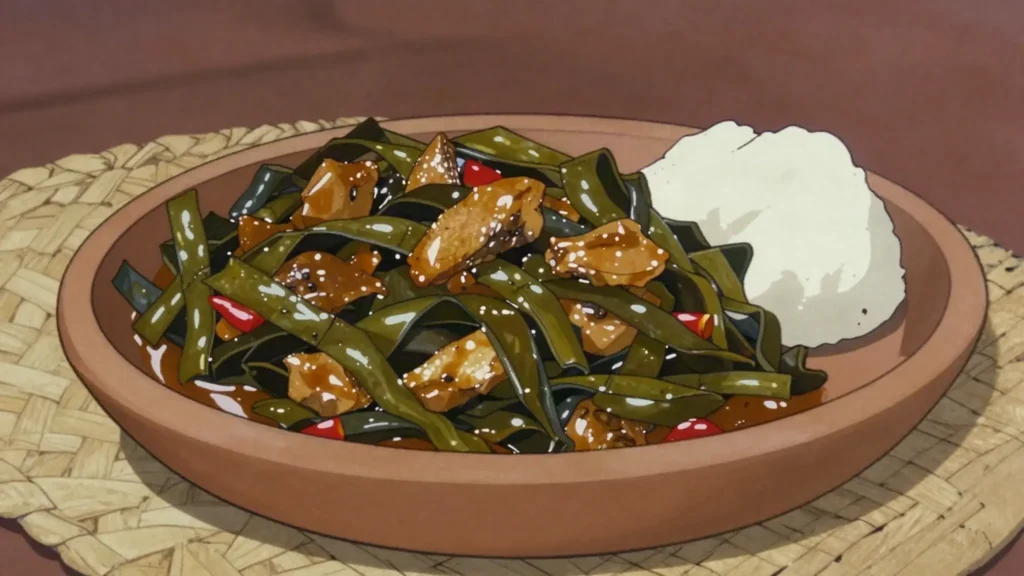
Fumbwa is a soup & stew from DR Congo: wild fumbwa leaves in peanut-palm sauce with smoked fish. Made from Gnetum africanum, a wild forest vine gathered by villagers and traded to Kinshasa, cooked with groundnut paste and smoked fish.
How long does Fumbwa take to make?
Fumbwa takes 40 minutes of preparation and 1 hour of cooking. The recipe makes serves 6. It is rated medium to make.
What can I substitute in Fumbwa?
Yes, within limits. Very finely shredded spinach stands in for fumbwa, though it collapses far faster and lacks the bite. Unsweetened peanut butter works in place of groundnut paste.
What is the most important thing to get right in Fumbwa?
Stack them and roll them up tightly. Slice the roll into the finest strips you can. Keep going until they are hair thin. Warm it gently to melt it before use. Never let it smoke or bleach in the pan.