
Ingredients
The rice
- 250 graw rice
- soaked 2 hours and ground
- or 250 g rice flour
- not glutinous rice flour
The coconut
- 300 gfresh grated coconut
- or 200 g desiccated coconut
- soaked in coconut milk
- 400 mlthick coconut milk
The sweetening
- 250 gpalm sugar
- or jaggery, or dark brown sugar
- grated or chopped
- or to taste
The flavouring
- half a teaspoon ground cardamom
- a pinch of salt
- 2eggs, beaten
- optional, for a firmer set
- 1 teaspoonrose water
- optional
The tin
- a 20 by 20 cm tin
- greased and lined
- or a similar baking dish
To serve
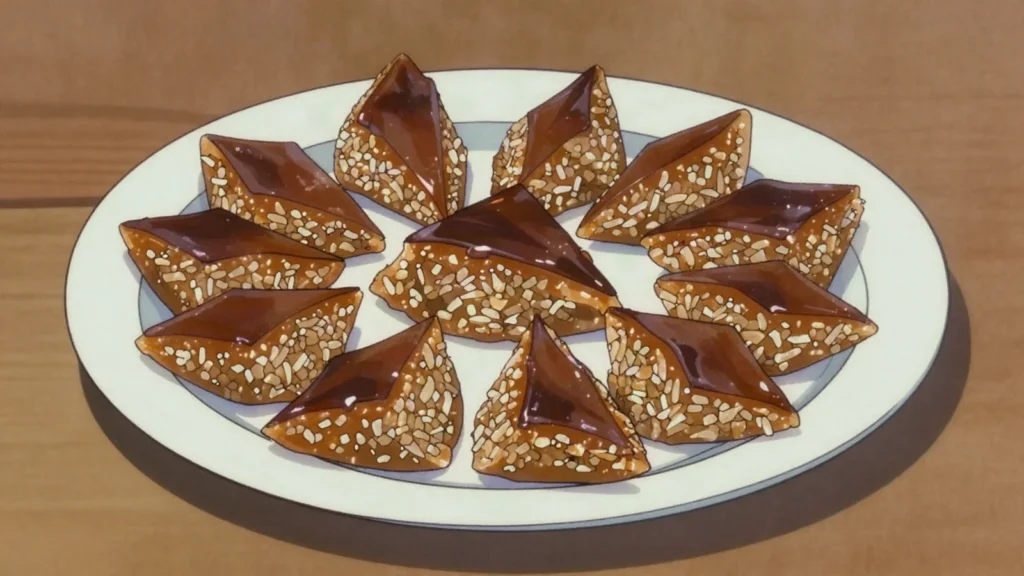
- cut into squares or diamonds
- with black tea
- as part of hedhikaa
Directions
- Use plain rice flour, not glutinous. Soak the raw rice for two hours. Drain it thoroughly. Grind it in a blender with some of the coconut milk. Grind it to a smooth thick paste. That takes several minutes and some scraping down.
- Use unsweetened desiccated coconut only. Soak it in warm coconut milk for twenty minutes. One is soft and can be pierced. Drain the water into a glass. Hold it over a bowl in one hand. Turn it as you tap. Keep tapping until it splits. Never hold a coconut in your palm and swing a machete at it.
- Put the rice flour or rice paste in a large bowl. Add the grated coconut. Add the palm sugar. Add the coconut milk gradually.
- Mix until smooth and combined. It should be a thick pourable batter. Add more coconut milk if it is stiff. Add the cardamom and the salt. Add the rose water if you are using it.
- Beat them in thoroughly if using them. There is no raw wheat flour and no raw egg if you leave the eggs out. Taste before adding them instead. Grease and line a square tin. Pour the mixture in. Bake at one hundred and eighty degrees. Give it about fifty minutes to an hour.
- Let it cool completely in the tin. That takes at least two hours. Cut warm, it crumbles and tears. Cut cold, it gives clean squares.
- Turn it out and peel off the paper. Cut it into squares or diamonds. Use a sharp knife wiped between cuts. Serve it at room temperature. Serve it with strong black tea. It keeps four days in an airtight tin. Wrap the squares individually.
Technique
- Let it cool completely in the tin, at least two hours, before cutting. It firms up considerably as it cools — cut warm it crumbles, cut cold it gives clean squares.
- It is meant to be dense, moist and slightly chewy rather than a light sponge. Do not keep baking hoping for a cake texture; you will only dry it out.
- Use plain rice flour, not glutinous rice flour, which gives a sticky chewy result and is an entirely different thing. The two are sold in near-identical bags.
- Soaking and grinding raw rice into a paste gives a better texture than flour and is the traditional route. It is more work and it is genuinely noticeable.
- Use unsweetened desiccated coconut, soaked in warm coconut milk for twenty minutes, if you cannot get fresh — and add a little extra coconut milk, since it stays drier than fresh even after soaking. Sweetened coconut throws the sugar balance out entirely.
- Never hold a coconut in your palm and swing a blade at it — that is how serious hand injuries happen. Tap around its equator with the back of a heavy knife, turning as you go, or wrap it in a cloth and strike it on concrete. Fifteen minutes in a hot oven also cracks it.
- Dissolve hard palm sugar in a little warm coconut milk rather than trying to chop it. Jaggery or dark brown sugar substitute, though neither tastes quite the same.
- Taste the batter for sweetness before the eggs go in, not after. Without eggs there is nothing raw to worry about; with them, taste earlier instead.
- Eggs give a firmer, more cake-like set and are used in some versions and not others. Without them it is denser and more pudding-like, and both are proper.
- Palm sugar is boiled sap and carries none of the risk that raw palm sap does — raw date palm sap has transmitted Nipah virus in Bangladesh and India. The atlas records the distinction so the fact is not misapplied here.
- A sweet built on coconut, imported rice and palm sugar says something real about a nation of low coral islands with almost no agriculture: it uses what grows and what trade brings.
- Kulhi boakibaa is the savoury version made with tuna, chilli and curry leaves, and it is far better known. The two share a construction and a name.
Substitutions
- Rice flour replaces soaked ground rice and is the practical modern route.
- Frozen grated coconut replaces fresh closely; unsweetened desiccated, well soaked, is the fallback.
- Jaggery or dark brown sugar replaces palm sugar.
- The eggs can be left out for a denser, more pudding-like set, which is also traditional.
- Cardamom, rose water or a little cinnamon all appear; plain is equally normal.
- Tinned coconut milk replaces fresh with no real loss.
Variations
- Kulhi boakibaa is the savoury version with tuna, chilli and curry leaves.
- Bondibai is the Maldivian sweet rice pudding, a softer treatment of the same ingredients.
- Gulha, bis keemiya and masroshi are the savoury short eats served alongside it.
- Sri Lankan and south Indian coconut rice cakes are close regional relatives.
- A version with banana worked into the batter is made in some households.
- Bibinka in Goa and bibingka in the Philippines are more distant relatives of the same idea.
Frequently asked questions
What is Foni Boakibaa?
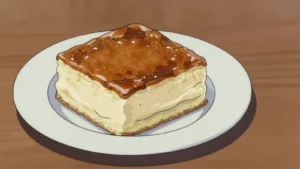
Foni Boakibaa is a dessert from Maldives: baked sweet cake of rice, coconut and palm sugar, cut into squares.
How long does Foni Boakibaa take to make?
Foni Boakibaa takes 25 minutes of preparation and 1 hour of cooking. The recipe makes makes about 20 squares. It is rated easy to make.
What can I substitute in Foni Boakibaa?
Yes, within limits. Rice flour replaces soaked ground rice and is the practical modern route. Frozen grated coconut replaces fresh closely; unsweetened desiccated, well soaked, is the fallback. Jaggery or dark brown sugar replaces palm sugar. The eggs can be left out for a denser, more pudding-like set, which is also traditional. Cardamom, rose water or a little cinnamon all appear; plain is equally normal. Tinned coconut milk replaces fresh with no real loss.
What is the most important thing to get right in Foni Boakibaa?
Use unsweetened desiccated coconut only. Soak it in warm coconut milk for twenty minutes. One is soft and can be pierced. Drain the water into a glass. Hold it over a bowl in one hand. Turn it as you tap. Keep tapping until it splits. Never hold a coconut in your palm and swing a machete at it.