
Ingredients
Beans
- 500 gfabes de la Granja, soaked overnight
Compango
- 2chorizo asturiano
- 2morcilla asturiana
- 200 glacón, soaked
- 150 gpanceta
Pot
- 1onion, whole
- 2 clovesgarlic
- 1bay leaf
- a large pinch of saffron
- 2 tbspolive oil
- salt
Directions
- Soak the beans overnight in plenty of cold water, and soak the salted lacón separately, changing its water twice.
- Drain the beans and put them into a wide pot with the whole onion, garlic, bay leaf and all the meats.
- Cover with cold water by about 5 cm and bring slowly to the boil, skimming carefully as it rises.
- Whenever the level drops, top it up with cold water rather than hot, added slowly. Asturians call this asustar las fabes, frightening the beans, and the cold shock is said to keep the skins from bursting.
- Once it has boiled, drop it to the barest simmer and never let it boil again.
- The surface should barely move for the next two hours. Fabes are large and delicate and a rolling boil breaks them into a purée.
- Never stir it with a spoon. Shake the pot by its handles instead, which moves everything without tearing the beans apart.
- Simmer for 2 hours to 2 hours 30 minutes, until the beans are completely soft and creamy but still whole.
- Add the saffron, crumbled between your fingers, for the last 30 minutes.
- Lift out the meats and slice them, and salt the pot only now that the cured meats have given up whatever salt they are going to.
- Take out the onion and garlic, and if the broth seems thin, crush a few beans against the side of the pot and stir them back in. No flour goes into a fabada.
- Let it rest off the heat for at least 30 minutes, and preferably make it the day before.
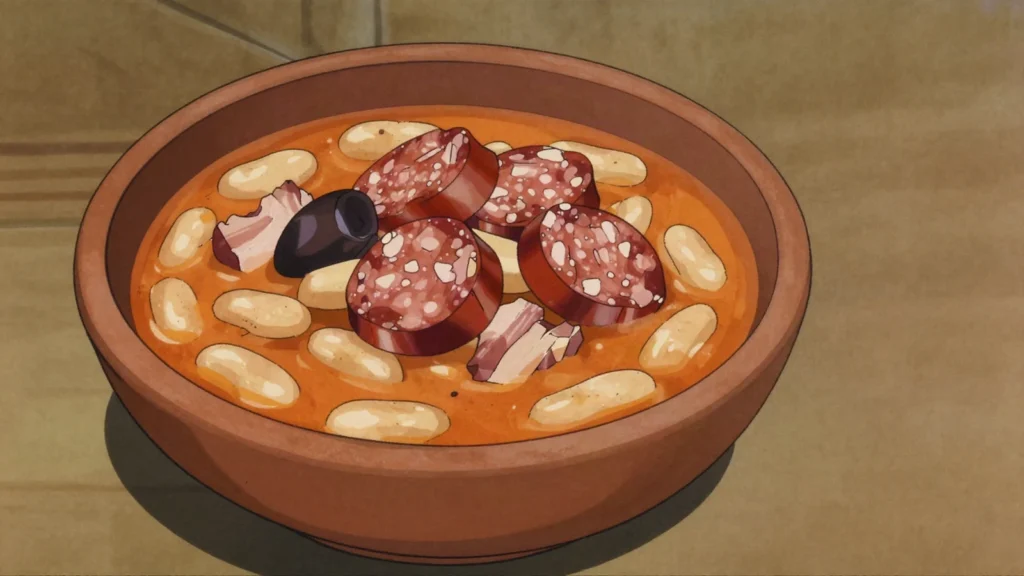
- Serve the beans in bowls with the sliced compango arranged over the top.
Technique
- The faba de la Granja has protected status and is worth buying properly. It is large, thin-skinned and buttery, and an ordinary haricot is a different dish.
- Compango is the collective name for the meats, and it is usually sold as a set bundle in Asturias.
- It was first mentioned in print in 1884, which is recent for a dish that feels ancient.
Substitutions
- Large butter beans or judión if fabes are unavailable.
- Any good cooking chorizo and black pudding, though the Asturian ones are smoked differently.
Variations
- Fabada with clams instead of meat, for a Lenten version.
- With pig’s ear and trotter added for more gelatine.
- Made without saffron, which some households consider unnecessary.
History
A rich bean stew, combining large white fabes beans with a variety of pork products including chorizo, morcilla blood sausage and pork belly, developed in Asturias, a region in northern Spain, using fabes, a specific large white bean variety long cultivated in the region’s cooler, wetter climate compared to much of the rest of Spain. Its combination of hearty beans with rich, fatty pork products reflects Asturias’s traditionally cold, mountainous conditions, where a dense, high-calorie stew provided practical sustenance through harsh winters. Fabada asturiana remains widely considered one of Spain’s most essential regional stews, closely tied to Asturian identity specifically, and it received Spanish protected geographical status recognizing the specific fabes bean variety central to an authentic version.
Frequently asked questions
What is Fabada asturiana?
Fabada asturiana is a soup & stew from Spain: white bean stew with chorizo, morcilla and pork. A rich bean stew, combining large white fabes beans with a variety of pork products including chorizo, morcilla blood sausage and pork belly, developed in Asturias, a region in northern Spain, using fabes, a specific large white bean variety long cultivated in the region’s cooler, wetter climate compared to much of the rest of Spain. Its combination of hearty beans with rich, fatty pork products reflects Asturias’s traditionally cold, mountainous conditions, where a dense, high-calorie stew provided practical sustenance through harsh winters. Fabada asturiana remains widely considered one of Spain’s most essential regional stews, closely tied to Asturian identity specifically, and it received Spanish protected geographical status recognizing the specific fabes bean variety central to an authentic version.
How long does Fabada asturiana take to make?
Fabada asturiana takes 20 min plus overnight soaking of preparation and 2 hr 30 min of cooking. The recipe makes 6 servings. It is rated medium to make.
What can I substitute in Fabada asturiana?
Yes, within limits. Large butter beans or judión if fabes are unavailable. Any good cooking chorizo and black pudding, though the Asturian ones are smoked differently.
What is the most important thing to get right in Fabada asturiana?
Drain the beans and put them into a wide pot with the whole onion, garlic, bay leaf and all the meats.