
Ingredients
Broth
- 800 gfresh skipjack tuna, cut into 4 cm steaks or chunks, bone in if possible
- 1.5 litreswater
- 1onion, quartered
- 1rampe (pandan) leaf, knotted
- 8curry leaves
- 1 tbspfine salt, or to taste
- 3dried chillies, whole, optional
To serve
- 600 gshort or long-grain rice, steamed
- 1large onion, very finely sliced
- 2limes, cut into wedges
- 2–4fresh green chillies, finely sliced
- 1 handfulcurry leaves, torn
- 1 tbspgrated coconut, optional
- Papadhu (papadums) and rihaakuru (tuna paste), on the side
Directions
- Use tuna as fresh as you can get. Garudhiya is a broth of almost nothing else, so the fish is the whole dish, and a tired fish makes a muddy, fishy soup.
- Rinse the tuna chunks in cold salted water and drain. Some Maldivian cooks soak them briefly in salted water to firm the flesh and draw out blood.
- Bring the water to a boil in a wide pot with the onion, rampe leaf, curry leaves, salt and dried chillies if using.
- Lower the tuna into the boiling water. Bring back to a simmer and immediately reduce the heat so the surface barely trembles.
- Skim continuously and carefully for the first 10 minutes. The brown-grey scum that rises is what makes the broth cloudy and strong-tasting, and removing all of it is the single most important step.
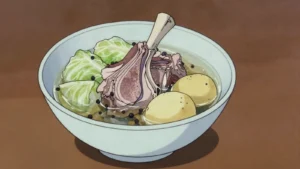
- Simmer very gently for 25–35 minutes. The broth should never boil. It is ready when it is pale, clear and golden, savoury and clean, and the tuna is cooked through and flaking but not shredded.
- Taste and adjust the salt. Garudhiya is salted quite firmly, because it is eaten poured over plain unsalted rice.
- Lift out the rampe leaf and the onion quarters. Keep the fish in the broth to stay warm.
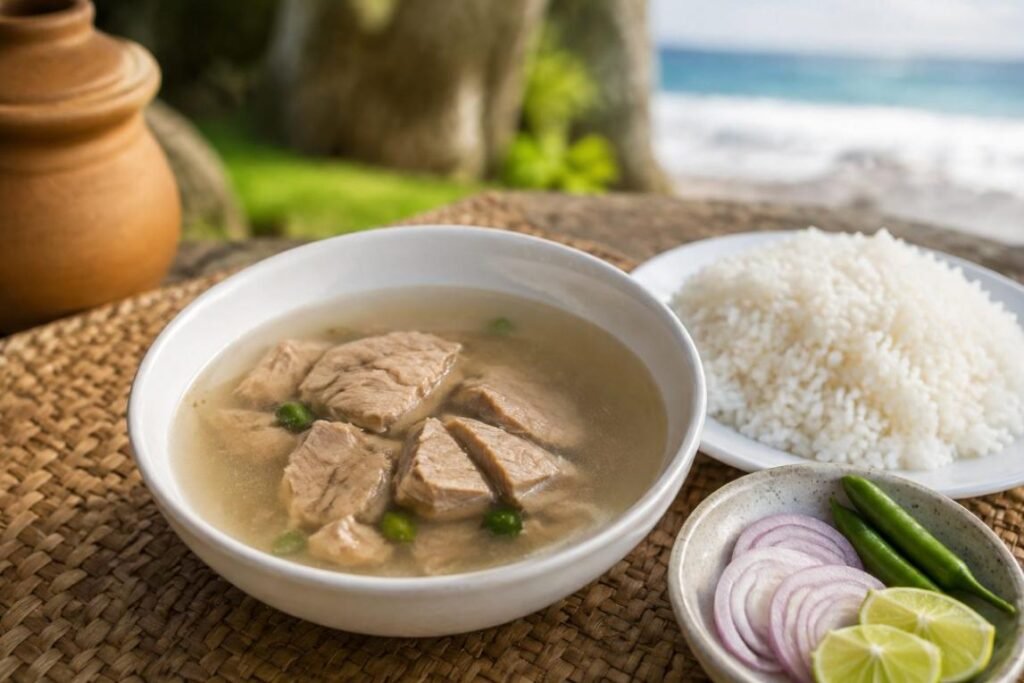
- Serve by mounding hot rice in a bowl, laying a piece of tuna on top and ladling the clear broth over it. At the table, each eater squeezes in lime and adds raw sliced onion, chilli and curry leaf to taste, then mashes the whole thing together with the fingers of the right hand.
- Offer papadhu and a spoon of rihaakuru alongside, which is the standard Maldivian midday plate.
Technique
- Clarity is everything. Skimming and a bare simmer are what give garudhiya its pale, clean broth; a hard boil emulsifies the fat and turns it grey and heavy.
- The seasoning at the table, lime, raw onion, chilli and curry leaf, is not optional garnish. The broth is deliberately plain so each eater builds it in the bowl.
- Skipjack tuna, kandu mas, is the backbone of Maldivian cooking. The same fish, boiled and reduced for hours, becomes rihaakuru, the thick brown paste eaten with rice at every meal.
- Traditionally the fish is boiled with very little beyond salt; the onion, chilli and rampe are common but the purest island versions are just tuna, water and salt.
Substitutions
- No skipjack: any firm dark-fleshed tuna, bonito or even mackerel will do, though mackerel gives a much oilier broth.
- No rampe leaf: leave it out rather than substituting; pandan extract is too sweet and perfumed here.
- Fresh curry leaves are worth seeking out; dried ones contribute almost nothing.
Variations
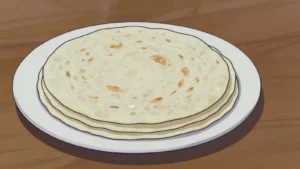
- Garudhiya served with roshi flatbread instead of rice, at breakfast.
- A version with drumstick leaves or moringa added to the broth.
- Kulhi garudhiya, spiced up with more chilli and a little curry powder.
History
A clear, simple fish broth, traditionally made from tuna, seasoned with little more than curry leaf, chili and lime, reflecting the Maldives’ historic reliance on fish as the dominant available protein and its correspondingly central place in the national diet across the archipelago’s many small islands. Its minimal seasoning, compared to richer curries and stews found elsewhere in South Asian cooking, is generally understood as reflecting genuine everyday necessity and the ready abundance of extremely fresh fish, rather than a lack of access to other spices, which have long reached the Maldives through its position along Indian Ocean trade routes. Garudhiya is traditionally eaten poured over rice, with the broth itself, rather than any accompanying meat, often considered the central element of the dish.
Frequently asked questions
What is Garudhiya?
Garudhiya is a soup & stew from Maldives: clear tuna broth over rice with lime, chili and onion. A clear, simple fish broth, traditionally made from tuna, seasoned with little more than curry leaf, chili and lime, reflecting the Maldives’ historic reliance on fish as the dominant available protein and its correspondingly central place in the national diet across the archipelago’s many small islands. Its minimal seasoning, compared to richer curries and stews found elsewhere in South Asian cooking, is generally understood as reflecting genuine everyday necessity and the ready abundance of extremely fresh fish, rather than a lack of access to other spices, which have long reached the Maldives through its position along Indian Ocean trade routes. Garudhiya is traditionally eaten poured over rice, with the broth itself, rather than any accompanying meat, often considered the central element of the dish.
How long does Garudhiya take to make?
Garudhiya takes 15 min of preparation and 40 min of cooking. The recipe makes 4 servings. It is rated easy to make.
What can I substitute in Garudhiya?
Yes, within limits. No skipjack: any firm dark-fleshed tuna, bonito or even mackerel will do, though mackerel gives a much oilier broth. No rampe leaf: leave it out rather than substituting; pandan extract is too sweet and perfumed here. Fresh curry leaves are worth seeking out; dried ones contribute almost nothing.
What is the most important thing to get right in Garudhiya?
Use tuna as fresh as you can get. Garudhiya is a broth of almost nothing else, so the fish is the whole dish, and a tired fish makes a muddy, fishy soup.