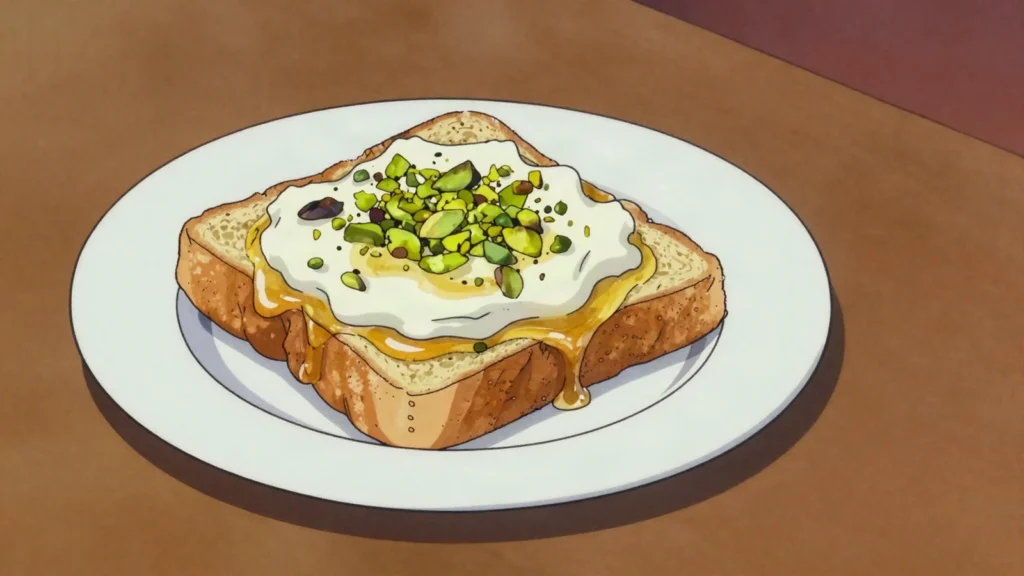

Ingredients
The base
- 1large stale white loaf
- or 1 plain sponge cake
- cut into thick slices
Syrup
- 600 gsugar
- 600 mlwater
- juice of half a lemon
- 1cinnamon stick
- 2 tablespoonshoney, optional
To top
- 400 gkaymak, clotted cream
- or 400 g clotted cream
- or thick whipped cream
To finish
- 100 gpistachios, chopped
- ground cinnamon, optional
Directions
- Cut the loaf into thick slices. Remove the crusts if they are very hard. Lay the slices on baking trays. Heat the oven to 150C for this. Bake them for about twenty minutes.
- Turn them over halfway through. They should be dry and lightly golden. Put the sugar and water in a wide pan. Add the whole cinnamon stick to it.
- Heat it gently until the sugar dissolves. Stir it well as it heats through. Let it boil for about eight minutes.
- Add the lemon juice near the end. That lemon stops it crystallising. Add the honey if you are using it. It should be thin rather than thick.
- Arrange the dried slices in a deep dish. Pack them fairly tightly together. Now ladle the hot syrup over them. Pour it over slowly and evenly. Let each ladleful soak in before the next.
- Keep going until it is fully soaked. Judging the soaking takes a look. Press a slice gently with a spoon. Syrup should rise up around it. Let it cool right down in the dish. Give it at least two full hours. Cut it into generous even squares.
- Set a thick spoonful of kaymak on each. Use plenty of it on each square. Scatter chopped pistachios over the top. Dust cinnamon over if you like. It keeps four days refrigerated. Add the cream just before serving.
Technique
- The name means bread kadaif, placing it in the syrup-pastry family, though it contains none of the shredded kadaif pastry used in dishes like kunefe.
- Syrup and base must be at different temperatures, hot syrup onto a cool base or the reverse, since both hot together makes everything soggy and both cold together absorbs nothing.
- Kaymak is a very thick clotted cream made by collecting the skin from slowly simmered and cooled milk in layers.
Substitutions
- Plain sponge cake is used in place of dried bread in many modern versions and absorbs syrup more evenly.
- Clotted cream or very thick whipped cream stand in for kaymak.
Variations
- Some versions are baked briefly after soaking and others are not.
- A version topped with ice cream is served in some shops.
- The dessert is made across Turkey, Greece and the Balkans under related names.
History
An Ottoman dessert kept in Macedonian and Aegean pastry shops, its name meaning bread kadaif.
Frequently asked questions
What is Ekmek kadaif?
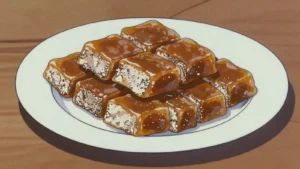
Ekmek kadaif is a dessert from North Macedonia: syrup-soaked bread pudding topped with thick clotted cream. An Ottoman dessert kept in Macedonian and Aegean pastry shops, its name meaning bread kadaif.
How long does Ekmek kadaif take to make?
Ekmek kadaif takes 20 minutes of preparation and 40 minutes of cooking. The recipe makes serves 8. It is rated medium to make.
What can I substitute in Ekmek kadaif?
Yes, within limits. Plain sponge cake is used in place of dried bread in many modern versions and absorbs syrup more evenly. Clotted cream or very thick whipped cream stand in for kaymak.
What is the most important thing to get right in Ekmek kadaif?
Turn them over halfway through. They should be dry and lightly golden. Put the sugar and water in a wide pan. Add the whole cinnamon stick to it.