
Ingredients
Dough
- 500 gplain flour
- 350 ghoney
- 100 gsugar
- 100 gbutter
- 2eggs
- 2 tspbicarbonate of soda
Spice
- 2 tspcinnamon
- 1 tspground clove
- 1 tspground ginger
- 1 tspground cardamom
- ½ tspground nutmeg
- ½ tspground black pepper
- ½ tspground star anise
Filling
- 300 gthick fruit jam, traditionally plum or apple povidlo
- or 300 g sweetened condensed milk, boiled
Glaze
- 150 gicing sugar
- 2 tbsphot water
Equipment
- a carved wooden pryanik board, or a patterned mould
Directions
- Warm the honey, sugar and butter together in a pan until melted, and never let it boil. Cool the mixture to lukewarm, then beat in the eggs. Cool it first, or the eggs scramble into threads.
- Mix the flour, bicarbonate and all the spices, then work them into the honey mixture into a firm dough. The spice blend should smell sharply aromatic in the bowl, and the pepper belongs in it. Wrap the dough well and rest it in a cool place for at least a week. When you are ready, bring the dough to room temperature and knead it briefly until pliable.
- Divide it in two and roll each piece out to about 8 mm thick. Spread the thick jam over one sheet, leaving a clear 2 cm border all round. Use a genuinely thick jam or boiled condensed milk. Lay the second sheet over the top and press the borders together firmly to seal. Dust the board properly or the dough sticks and tears the pattern out with it.
- Press the sealed dough firmly into the board, pushing it into every corner of the carving. Press hard and evenly. Bake at 180°C (355°F) for 20 to 25 minutes for a large one, or 12 minutes for small.
- Take it out while it still gives slightly, because it firms considerably as it cools. Overbaked pryanik goes rock hard and dry. Mix the icing sugar with hot water into a thin glaze and brush it over the pryanik while it is still warm.
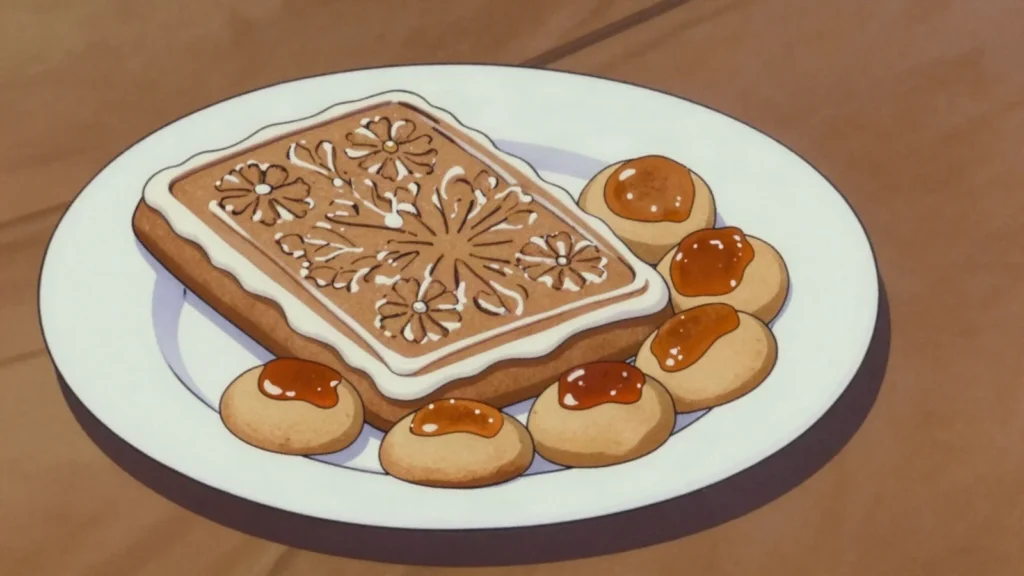
- Brush the glaze on hot so it soaks in slightly and dries to a faint white sheen rather than sitting as a thick icing. The glaze is thin and translucent, and it should not obscure the printed pattern.
- Cool it completely, then store it in a tin with a slice of apple. The apple releases moisture slowly and keeps the pryanik soft, which is the traditional trick.
Technique
- Carved pryanik boards are collectors’ items and are still made.
- The mint pryanik of Arkhangelsk and the honey ones of Vyazma are quite different regional styles.
- It is traditionally given as a gift rather than simply eaten.
Substitutions
- A springerle or patterned mould in place of a carved board.
- Boiled condensed milk, varenka, in place of jam.
Variations
- Small unfilled pryaniki, glazed and iced.
- Kozuli, the shaped and iced northern Russian gingerbread.
- With boiled condensed milk filling.
History
Spiced honey cake pressed in carved wooden moulds; the printed pryanik of Tula has been made since the seventeenth century.
Frequently asked questions
What is Pryanik?
Pryanik is a dessert from Russia: spiced honey gingerbread, Tula’s stamped classic. Spiced honey cake pressed in carved wooden moulds; the printed pryanik of Tula has been made since the seventeenth century.
How long does Pryanik take to make?
Pryanik takes 40 min plus 1 week resting of preparation and 25 min of cooking. The recipe makes 1 large printed pryanik, or 20 small. It is rated hard to make.
What can I substitute in Pryanik?
Yes, within limits. A springerle or patterned mould in place of a carved board. Boiled condensed milk, varenka, in place of jam.
What is the most important thing to get right in Pryanik?
Warm the honey, sugar and butter together in a pan until melted, and never let it boil. Cool the mixture to lukewarm, then beat in the eggs. Cool it first, or the eggs scramble into threads.