
Ingredients
Corn
- 6 earsfresh young maize, kernels cut off
- or 600 g frozen sweetcorn, thawed
Batter
- 3 tbspsugar, or to taste
- 1 tspsalt
- 2 tbspplain flour or cornflour, if needed
- 1egg, optional
- a splash of milk, if needed
To cook
- butter or oil for the griddle
To serve
- natilla, Costa Rican soured cream
- or a slice of queso Turrialba or another fresh white cheese
- with coffee
Directions
- Stand the ear upright and cut down the cob with a sharp knife. That corn milk is where much of the flavour and thickening lives, so do not skip the scraping. Blend the kernels into a coarse batter.
- Blend it only until roughly smooth, leaving some texture rather than reducing it to a purée. That texture is what makes a chorreada rather than a smooth pancake. Add no liquid at all if you can avoid it. Fresh corn contains plenty of its own, and adding milk or water gives a batter too thin to hold together.
- Keep it restrained, since the accompaniment is salty cheese or soured cream. The salt matters as much as the sugar and it should be clearly present. Heat a heavy pan or a griddle over a medium heat with a little butter.
- Keep the heat moderate, since corn batter burns readily and it needs time for the middle to set. A hot pan gives a pancake browned outside and raw within. Pour a ladleful onto the griddle and let it spread on its own. Do not spread it with the back of a spoon, which drags the batter and tears it.
- Make them roughly the size of your palm. Cook for three or four minutes on the first side without touching them. Leave them alone until the underside is golden and the edges look set, since moving them early breaks them.
- Turn once and cook the other side for two or three minutes. Now judging when they are done. Break one open to check the first one, and adjust the heat for the rest. Now serving them out while hot.
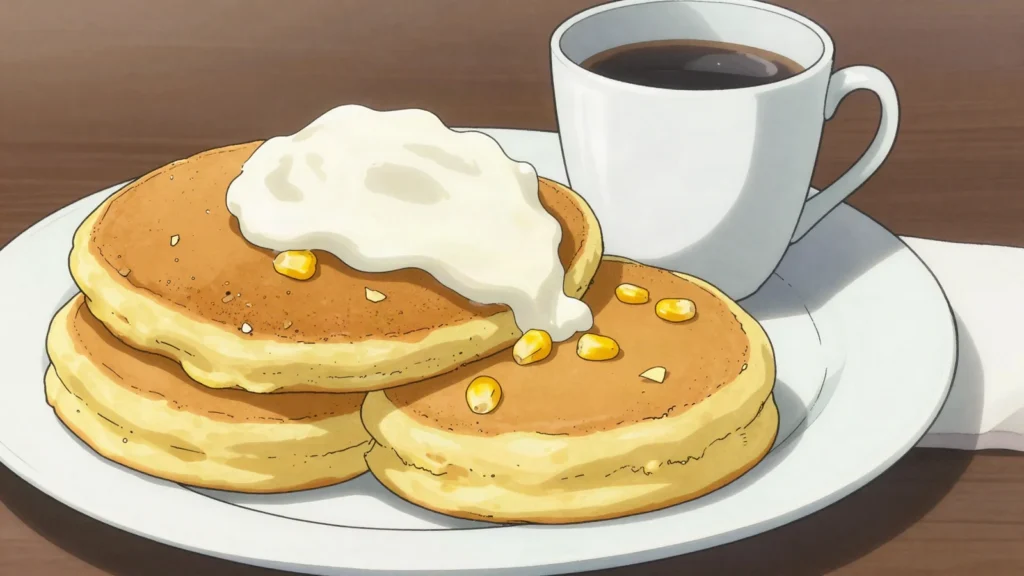
- Serve them hot with a spoonful of natilla, the Costa Rican soured cream, which is thinner and less sour than crème fraîche. A slice of queso Turrialba, the fresh semi-soft Costa Rican cheese, is the other standard partner.
Technique
- They are made from fresh young maize, not cornmeal, with almost no flour.
- Scrape the cob after cutting, since the corn milk is much of the flavour.
- They are eaten at the afternoon coffee break with cream or cheese.
Substitutions
- Frozen sweetcorn, with a spoonful of flour and less sugar.
- Soured cream or crème fraîche in place of natilla.
Variations
- Made savoury, with cheese in the batter.
- Made sweeter, as a dessert version.
- With a little cinnamon in the batter.
History
Made from young maize ground and fried like a pancake; a farmhouse snack of the Central Valley eaten at the afternoon coffee break.
Frequently asked questions
What is Chorreadas?
Chorreadas is a snack from Costa Rica: fresh corn pancakes griddled and topped with natilla or cheese. Made from young maize ground and fried like a pancake; a farmhouse snack of the Central Valley eaten at the afternoon coffee break.
How long does Chorreadas take to make?
Chorreadas takes 20 min of preparation and 20 min of cooking. The recipe makes about 10 pancakes. It is rated easy to make.
What can I substitute in Chorreadas?
Yes, within limits. Frozen sweetcorn, with a spoonful of flour and less sugar. Soured cream or crème fraîche in place of natilla.
What is the most important thing to get right in Chorreadas?
Stand the ear upright and cut down the cob with a sharp knife. That corn milk is where much of the flavour and thickening lives, so do not skip the scraping. Blend the kernels into a coarse batter.