
Ingredients
Jelly
- 5 gagar-agar strands (China grass), or 2 tsp agar powder
- 500 mlwater
- 2 tbspsugar
- A few drops of rose or almond essence, plus a drop of red or green food colouring (optional)
Drink
- 3 tbsptukmaria (sweet basil seeds)
- 200 mlcold water, for soaking
- 1 litrewhole milk, very cold
- 6 tbspsugar
- 1 tspvanilla essence, or 3 tbsp rose or grenadine syrup
- ¼ tspground cardamom (optional)
To serve
- Crushed ice
- 4small scoops vanilla ice cream (optional, the Port Louis market style)
Directions
- Soak the basil seeds in the cold water for 20–30 minutes. They swell to five or six times their size and each seed takes on a clear grey jelly coat with a black speck inside. Do not rush this; hard, unswollen seeds are unpleasant to drink.
- Meanwhile soak the agar strands in the 500 ml water for 10 minutes, then bring to the boil and simmer, stirring, for 5 minutes until completely dissolved and the liquid is clear.
- Stir the 2 tbsp sugar, the essence and the colouring into the agar liquid, pour into a shallow tray and leave to set at room temperature for 20 minutes. Agar sets firm without refrigeration, which is exactly why market stalls use it.
- Turn the set jelly out and cut it into small 5 mm cubes.
- Whisk the cold milk with the 6 tbsp sugar, the vanilla or syrup and the cardamom until the sugar has fully dissolved. Keep it in the fridge until you assemble; a lukewarm alouda is a poor one.
- Drain the soaked basil seeds lightly, keeping them wet and loose.
- Build each glass: 2 tbsp of jelly cubes in the bottom, 2 tbsp of swollen basil seeds on top, a handful of crushed ice, then pour over the sweetened cold milk to fill.
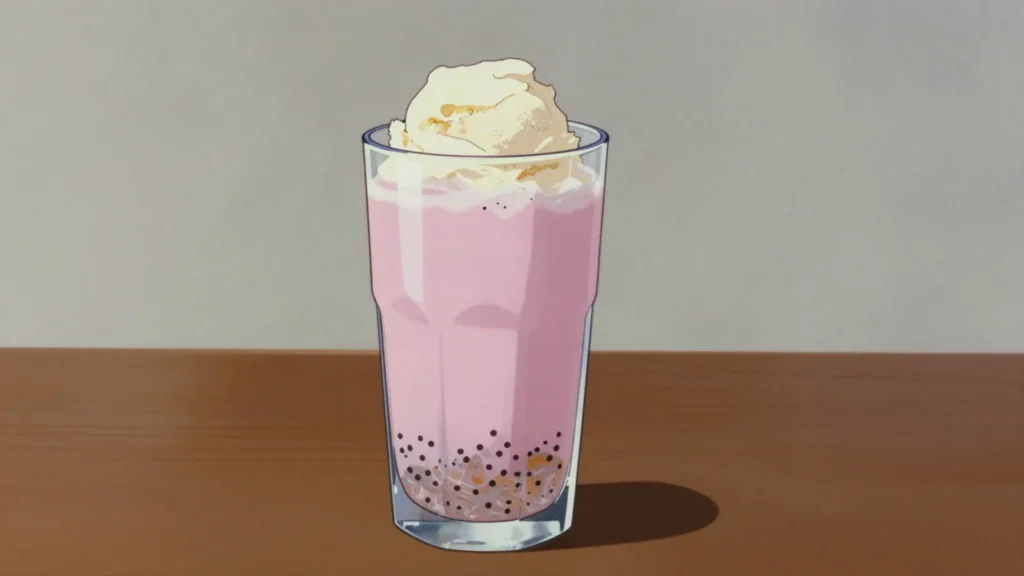
- Stir once with a long spoon, crown with a scoop of ice cream if you want the full market version, and serve at once with a wide straw and a spoon.
Technique
- Alouda is descended from Persian and Indian faluda, carried to Mauritius by indentured labourers in the nineteenth century, and the Port Louis Central Market stalls remain its home. Unlike Indian falooda it usually skips the vermicelli and leans on the basil seeds and agar.
- Agar is the correct setting agent, not gelatine. It sets in the island heat without a fridge, holds its cubes in cold milk, and keeps the drink suitable for the Hindu and Muslim customers who make up most of the queue.
- Serve it very cold and drink it quickly. Left standing, the ice melts, the milk thins and the seeds sink into a sludge at the bottom.
- Some stalls thicken the milk with a spoon of condensed milk, which is a modern touch but very common now.
Substitutions
- No basil seeds: chia seeds swell the same way and look nearly identical, though they are softer and slightly nutty.
- No agar: 4 sheets of a vegetarian setting agent work, but ordinary gelatine will melt into the drink on a hot day.
- Evaporated milk let down with water gives the thicker, sweeter body many Mauritian stalls prefer.
Variations
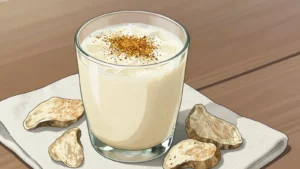
- Alouda vanille is the plain white classic; alouda grenadine is bright pink and sweeter.
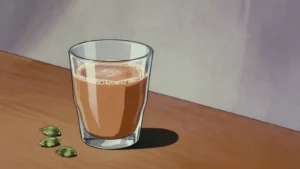
- A rose-syrup version scented with cardamom is common at the Quatre Bornes market.
- Some vendors add a spoonful of tapioca pearls alongside the jelly.
History
A sweet, milk-based drink flavoured with basil seed, rose syrup and often agar jelly, documented across Mauritius with roots tracing to Indian and broader South Asian falooda drink tradition, brought to the island through Indian indentured laborers and subsequently adapted with Mauritius’s own specific flavour preferences and available ingredients. Its distinctive basil seed, which swells and becomes gelatinous when soaked, gives alouda a unique textural quality found across several related South and Southeast Asian drinks descended from the same falooda tradition. Alouda remains a popular refreshing drink across Mauritius, particularly enjoyed during the island’s warm tropical climate.
Frequently asked questions
What is Alouda?
Alouda is a drink from Mauritius: iced milk with basil seeds, agar jelly and syrup. A sweet, milk-based drink flavoured with basil seed, rose syrup and often agar jelly, documented across Mauritius with roots tracing to Indian and broader South Asian falooda drink tradition, brought to the island through Indian indentured laborers and subsequently adapted with Mauritius’s own specific flavour preferences and available ingredients. Its distinctive basil seed, which swells and becomes gelatinous when soaked, gives alouda a unique textural quality found across several related South and Southeast Asian drinks descended from the same falooda tradition. Alouda remains a popular refreshing drink across Mauritius, particularly enjoyed during the island’s warm tropical climate.
How long does Alouda take to make?
Alouda takes 15 min of preparation and 30 min soaking and setting of cooking. The recipe makes 4 tall glasses. It is rated easy to make.
What can I substitute in Alouda?
Yes, within limits. No basil seeds: chia seeds swell the same way and look nearly identical, though they are softer and slightly nutty. No agar: 4 sheets of a vegetarian setting agent work, but ordinary gelatine will melt into the drink on a hot day. Evaporated milk let down with water gives the thicker, sweeter body many Mauritian stalls prefer.
What is the most important thing to get right in Alouda?
Soak the basil seeds in the cold water for 20–30 minutes. They swell to five or six times their size and each seed takes on a clear grey jelly coat with a black speck inside. Do not rush this; hard, unswollen seeds are unpleasant to drink.