
Ingredients
Schnitzels
- 4chicken breast fillets, about 200 g each, butterflied and beaten to 1 cm
- 100 gplain flour
- 2eggs, beaten with 2 tbsp milk
- 200 gdry breadcrumbs, or panko for a coarser crust
- 1 tspsalt
- ½ tspwhite pepper
- 600 mlsunflower or canola oil for shallow frying
Napoli sauce
- 2 tbspolive oil
- 3garlic cloves, sliced
- 1x 400 g tin chopped tomatoes
- 2 tbsptomato paste
- 1 tspdried oregano
- 1 tspsugar
- salt and pepper
Topping
- 8thin slices leg ham
- 250 gmozzarella, grated, or half mozzarella and half tasty cheddar
- 1 tspdried oregano
To serve
- 800 gpotatoes, cut into thick chips and fried
- 1cos lettuce salad with vinaigrette
- 1lemon, in wedges
Directions
- Make the sauce first: warm the olive oil in a small pan over medium heat, cook the garlic for 1 minute until it smells sweet but has taken no colour, then add the tomatoes, paste, oregano and sugar.
- Simmer the sauce for 20 minutes, stirring now and then, until it is thick enough to hold a line when you drag a spoon through it; a watery sauce will soak the crumb and ruin the whole plate.
- Butterfly each chicken breast and beat it out between two sheets of plastic to an even 1 cm, so it cooks through in the time the crumb takes to brown.
- Set up three trays: seasoned flour, egg and milk, then crumbs. Coat each fillet in flour, shake off the excess, dip in egg, then press hard into the crumbs on both sides and rest the crumbed fillets on a rack for 10 minutes so the coating sets.
- Heat the oil in a wide frying pan to 175°C (350°F), deep enough to come halfway up the schnitzel, and fry two at a time for 3 to 4 minutes a side, until deep golden and crisp and the crumb crackles when tapped.
- Drain on a wire rack rather than paper, so steam escapes and the underside stays crisp.
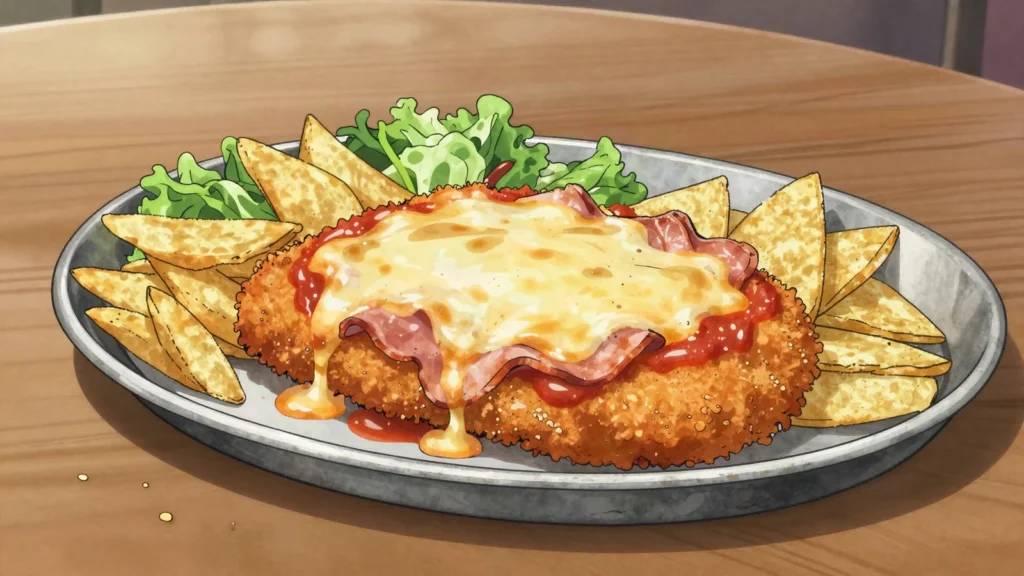
- Lay the schnitzels on an oven tray, spoon a few tablespoons of hot sauce over each, leaving a border of bare crumb visible at the edge, then lay on the ham and pile on the cheese.
- Grill or bake at 220°C (425°F) for 6 to 8 minutes, until the cheese is melted, blistered and just browning at the edges. Serve straight away with chips, salad and lemon, before the crust softens.
Technique
- The border of bare crumb around the edge is the mark of a good pub parma: it gives you crunch on every bite and stops the whole thing turning to mush.
- Fry, then top, then blast under high heat. If you assemble raw and bake it from cold, the crumb steams and goes pale and soggy.
- The name is a running national argument. Victorians say parma, most of the rest of the country says parmi, and South Australia has historically called it a parmy.
- It is Australian pub food with an Italian-Australian ancestry rather than an Italian dish; melanzane alla parmigiana is the aubergine ancestor, and the crumbed cutlet comes from the schnitzel tradition.
Substitutions
- Veal or pork schnitzel works identically and is what many pubs offer as an alternative; a thick slice of salted, drained aubergine gives a meat-free version.
- No leg ham: prosciutto crisped for a minute under the grill first is richer, or leave it out entirely, which is standard in New South Wales.
Variations
- The Kiev parma and the Hawaiian parma, the latter with pineapple, are common pub menu variants.
- Some pubs add a layer of sliced pickled jalapeno under the cheese.
- A parma pizza, with the same toppings on a base, exists in Melbourne and is exactly as strange as it sounds.
History
Adapted by postwar Italian migrants from melanzane alla parmigiana, swapping aubergine for crumbed schnitzel and becoming a pub-counter fixture.
Frequently asked questions
What is Chicken Parmigiana?
Chicken Parmigiana is a main from Australia: breaded chicken schnitzel with tomato sauce and melted cheese, pub-night staple. Adapted by postwar Italian migrants from melanzane alla parmigiana, swapping aubergine for crumbed schnitzel and becoming a pub-counter fixture.
How long does Chicken Parmigiana take to make?
Chicken Parmigiana takes 30 min of preparation and 30 min of cooking. The recipe makes 4 servings. It is rated medium to make.
What can I substitute in Chicken Parmigiana?
Yes, within limits. Veal or pork schnitzel works identically and is what many pubs offer as an alternative; a thick slice of salted, drained aubergine gives a meat-free version. No leg ham: prosciutto crisped for a minute under the grill first is richer, or leave it out entirely, which is standard in New South Wales.
What is the most important thing to get right in Chicken Parmigiana?
Simmer the sauce for 20 minutes, stirring now and then, until it is thick enough to hold a line when you drag a spoon through it; a watery sauce will soak the crumb and ruin the whole plate.