
Ingredients
Rolls
- 500 gfilo pastry or jufka
- 500 gminced beef
- 2onions, very finely chopped
- 1 teaspoonsalt
- 1 teaspoonblack pepper
- 1/2 teaspoonpaprika
- 100 mlwater
- oil, for brushing
Yoghurt sauce
- 500 mlthick plain yoghurt
- 3garlic cloves, crushed
- 1/2 teaspoonsalt
To finish
- 100 gbutter
- 1 teaspoonpaprika
- 3eggs, optional
- chopped parsley
To serve
- a tomato and onion salad
- pickled peppers
Directions
- Put the minced beef in a bowl. Add the very finely chopped onion. Chop the onion as small as you possibly can. Add the salt, pepper and paprika. Add the water and mix it all through. The mixture should be soft and loose. Let filo come to room temperature first. Cold filo cracks as you unroll it.
- Keep the sheets under a damp cloth as you work. Filo dries and shatters within minutes. Lay out two sheets of filo and brush with oil. Spread a thin line of meat along one long edge. Keep the line thin and even all the way along. Too much filling and it bursts as it bakes. Roll it up into a long thin tube. Roll it loosely rather than tightly. Repeat with the rest of the pastry and filling.
- Cut each long roll into short lengths. Aim for pieces about five centimetres long. Stand them upright in an oiled baking dish. Pack them close together so they support each other. They should fill the dish snugly.
- Brush the tops with a little oil. Heat the oven to 200C before baking. Bake them for about thirty-five minutes. They should be golden and crisp on top. Cut one open to check if you are unsure. There should be no pink meat left. Beat the yoghurt until it is smooth. Crush the garlic to a paste with salt. Stir it through the yoghurt thoroughly.
- Use it at room temperature, not cold. Very cold yoghurt on hot pastry is unpleasant. Taste it and adjust the garlic to suit you. Finishing the dish is done in the pan. Take the baked rolls out of the oven. Pour the garlic yoghurt over them at once.
- Pour it while the pastry is still hot. Hot pastry drinks the yoghurt in. Melt the butter in a small pan. Stir the paprika into the hot butter. Pour that red butter over the whole dish. Adding eggs is done in some versions. Beat the eggs into the yoghurt before pouring.
- Return the dish to the oven for ten minutes. That sets the yoghurt into a soft custard. Scatter chopped parsley over the top. Spoon them out with plenty of sauce. They are eaten hot with a fork.
Technique
- In Bosnia burek means the meat-filled pastry specifically, while cheese and spinach versions have their own names.
- Ascinice are the traditional Sarajevo eateries serving cooked dishes, and the dish began as a way of reviving day-old pita.
Substitutions
- Shop filo pastry replaces hand-stretched jufka and is what most kitchens now use.
- Minced lamb or a mix of beef and lamb works in place of pure beef.
Variations
- Some cooks beat eggs into the yoghurt and set it in the oven.
- A version made with fresh rather than day-old burek is common now.
- Cheese-filled sirnica is treated the same way in some households.
History
A Sarajevo way of reviving day-old pita, served hot from the pan in aščinice eateries.
Frequently asked questions
What is Buredzici?
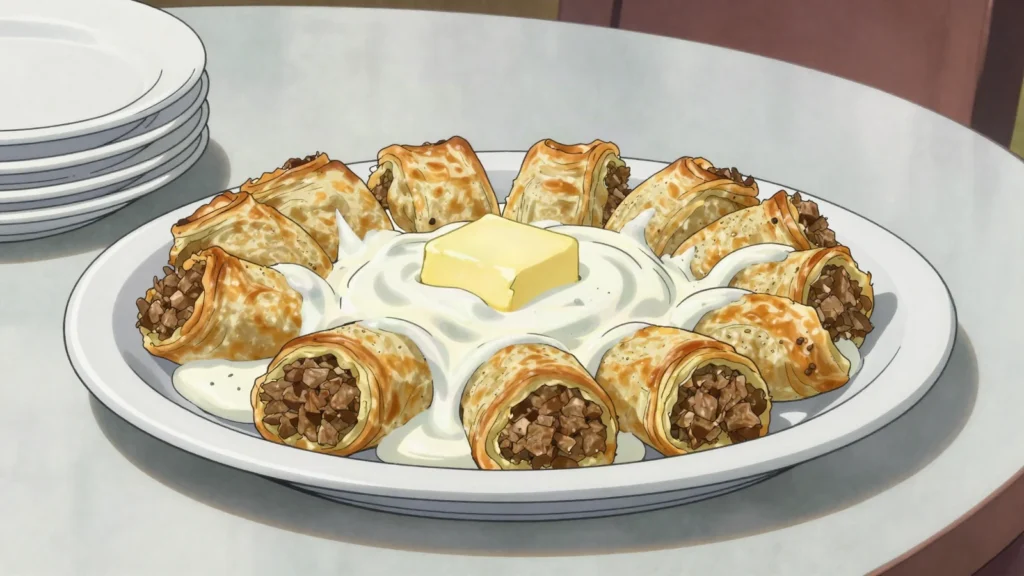
Buredzici is a main from Bosnia and Herzegovina: small burek rolls baked then drowned in garlicky yoghurt and butter. A Sarajevo way of reviving day-old pita, served hot from the pan in aščinice eateries.
How long does Buredzici take to make?
Buredzici takes 45 minutes of preparation and 40 minutes of cooking. The recipe makes serves 6. It is rated medium to make.
What can I substitute in Buredzici?
Yes, within limits. Shop filo pastry replaces hand-stretched jufka and is what most kitchens now use. Minced lamb or a mix of beef and lamb works in place of pure beef.
What is the most important thing to get right in Buredzici?
Keep the sheets under a damp cloth as you work. Filo dries and shatters within minutes. Lay out two sheets of filo and brush with oil. Spread a thin line of meat along one long edge. Keep the line thin and even all the way along. Too much filling and it bursts as it bakes. Roll it up into a long thin tube. Roll it loosely rather than tightly. Repeat with the rest of the pastry and filling.