
Ingredients
Dough
- 500 gstrong white flour
- 300 mlwarm water
- 1 teaspoonsalt
- 1 tablespoonsunflower oil
- 1 tablespoonwhite vinegar
To stretch
- sunflower oil, for the hands and the cloth
- a large clean tablecloth
Filling
- 600 gfresh soft cheese, drained
- 200 gfeta or a salty white cheese
- 2eggs
- 3 tablespoonssoured cream
- black pepper
- salt, only if the cheese is mild
To finish
- 100 mlsunflower oil or melted butter
- 100 mlwater or milk, for the finishing splash
To serve
- kiselo mlijeko or plain drinking yoghurt
Directions
- Put the flour and salt into a large bowl and stir them together. Pour in the warm water, the oil and the vinegar. The vinegar relaxes the gluten and helps the dough stretch later.
- Mix it with one hand until the flour has all come together. Turn it out onto a work surface and knead it hard. Knead for a full ten minutes until it is smooth and elastic. The dough should be soft, slightly tacky and not at all stiff.
- Divide it into two equal balls and rub each one with oil. Cover them with a bowl and leave them for at least an hour. Two hours of resting makes the stretching noticeably easier. Drain the fresh cheese well if it is at all wet. A wet filling makes the bottom layers of pastry soggy. Crumble both cheeses into a bowl with your fingers.
- Beat in the eggs and the soured cream until it is loose. Season it generously with plenty of black pepper. Taste it and add salt only if the cheeses are mild ones. Feta and similar cheeses usually bring enough salt on their own. Spread a large clean tablecloth over a table you can walk around. Dust it very lightly with flour and rub a film of oil over it.
- Put one ball of dough in the middle and press it flat. Roll it out to about the size of a dinner plate. Oil your hands and slide them under the centre of the disc. Lift it on the backs of your hands and let gravity pull it wider.
- Turn it as you go so it stretches evenly in all directions. Lay it back on the cloth when it grows too big to hold. Pull outward a little at a time, walking around the table. It should cover most of the tablecloth when you are done. Brush the whole sheet with oil using a wide pastry brush. Spoon half the cheese filling in a long line along one edge.
- Leave a hand’s width of bare pastry in front of the filling. Lift the cloth itself to start the roll instead of using your hands. Keep rolling until you reach the far side of the sheet. You should end up with a rope about as thick as your wrist.
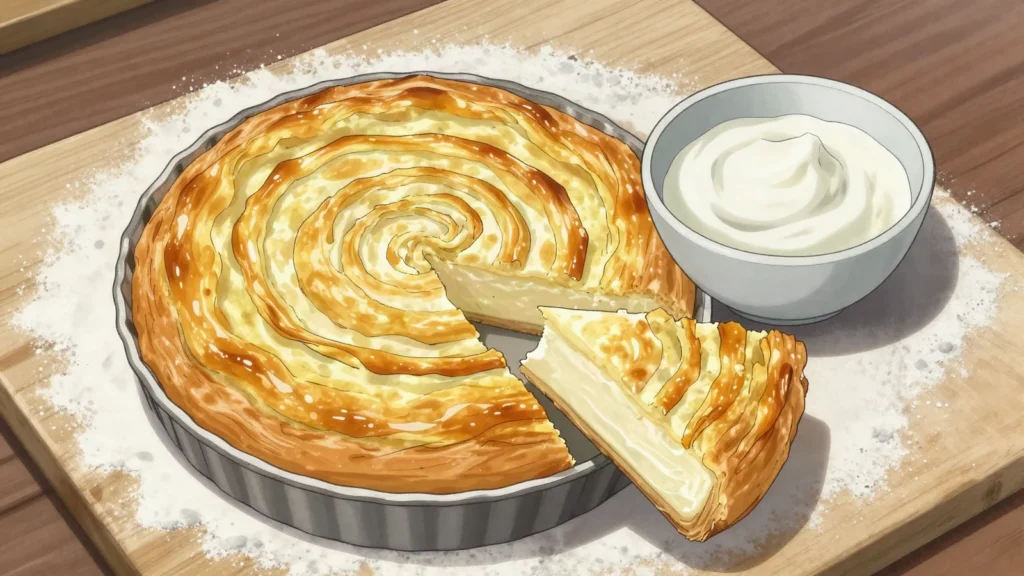
- Oil a large round baking tin generously all over. Work inward in a spiral, leaving small gaps between the turns. The pastry expands in the oven and needs that room. Repeat the whole process with the second ball of dough. Add the second rope to the coil, continuing the spiral inward. Baking it takes a hot oven and a splash of liquid at the end.
- Heat the oven to 200C with a shelf near the middle. Brush the top of the coil with the remaining oil or butter. Bake it for about thirty minutes until it is golden brown. Take the tin out and splash the water or milk over the top. It will hiss and steam as it hits the hot pastry.
- Cover the tin with a cloth or a lid for ten minutes. The steam softens the crust and keeps the inside tender. Return it briefly to the oven if the top has gone soft. Serving it is done hot, cut into wedges from the coil. Cut through the spiral so each portion holds several turns. Pour cold kiselo mlijeko into glasses to drink alongside it.
Technique
- Sirnica the pita should not be confused with the Croatian and Dalmatian Easter bread also called sirnica, which is a sweet enriched loaf and has nothing to do with cheese pastry.
- In Bosnia the pita is sold by weight from bakeries called buregdzinica.
Substitutions
- Ready-made filo can be used, brushing every sheet with oil and layering them, though the texture is drier and flatter than hand-stretched jufka.
- Bosnian shops sell ready-stretched jufka in rolls, which is what most households now buy.
Variations
- Zeljanica adds spinach to the same cheese filling.
- Krompirusa uses grated potato and onion.
- Burek uses minced beef and onion, and is coiled the same way.
History
A cheese-filled version of the same layered phyllo pastry family as zeljanica and burek, using a filling of fresh, soft white cheese mixed with egg, documented across Bosnia and the wider former Ottoman Balkans as one of several standard fillings within a shared regional pastry tradition. Its name directly reflects sir, the Bosnian and wider South Slavic word for cheese, distinguishing it plainly by filling from its meat, potato and spinach-filled relatives within the same pastry family. Sirnica is commonly eaten for breakfast across Bosnia, often alongside yoghurt, and remains a staple item at bakeries selling the full range of pita-family pastries rather than being considered rare or specially occasion-only food.
Frequently asked questions
What is Sirnica?
Sirnica is a bread & pastry from Bosnia and Herzegovina: coiled filo pie filled with fresh soft cheese, eaten hot with yoghurt. A cheese-filled version of the same layered phyllo pastry family as zeljanica and burek, using a filling of fresh, soft white cheese mixed with egg, documented across Bosnia and the wider former Ottoman Balkans as one of several standard fillings within a shared regional pastry tradition. Its name directly reflects sir, the Bosnian and wider South Slavic word for cheese, distinguishing it plainly by filling from its meat, potato and spinach-filled relatives within the same pastry family. Sirnica is commonly eaten for breakfast across Bosnia, often alongside yoghurt, and remains a staple item at bakeries selling the full range of pita-family pastries rather than being considered rare or specially occasion-only food.
How long does Sirnica take to make?
Sirnica takes 1 hour 30 minutes of preparation and 45 minutes of cooking. The recipe makes one large coil, serves 6. It is rated hard to make.
What can I substitute in Sirnica?
Yes, within limits. Ready-made filo can be used, brushing every sheet with oil and layering them, though the texture is drier and flatter than hand-stretched jufka. Bosnian shops sell ready-stretched jufka in rolls, which is what most households now buy.
What is the most important thing to get right in Sirnica?
Turn it as you go so it stretches evenly in all directions. Lay it back on the cloth when it grows too big to hold. Pull outward a little at a time, walking around the table. It should cover most of the tablecloth when you are done. Brush the whole sheet with oil using a wide pastry brush. Spoon half the cheese filling in a long line along one edge.