
Ingredients
Rice
- 900 gaged basmati rice, rinsed until clear and soaked 30 min
- 4 litreswater
- 3 tbspsalt
- 4green cardamom pods
- 1black cardamom pod
- 6cloves
- 1cinnamon stick
- 2bay leaves
- 1 tspcaraway (shahi zeera)
Korma (meat masala)
- 1 kgbone-in mutton or chicken, cut in large pieces
- 250 gthick yoghurt, whisked
- 150 mlghee plus 100 ml vegetable oil
- 3large onions, sliced paper thin and fried to deep brown (birista)
- 4tomatoes, chopped
- 3 tbspginger-garlic paste
- 6green chillies, slit
- 2 tbspSindhi biryani masala or: 1 tbsp coriander, 2 tsp cumin, 1 tsp red chilli, 1 tsp turmeric, 1 tsp garam masala
- 8dried plums (aloo bukhara), soaked
- 3medium potatoes, peeled, halved and fried golden
- 2 tspsalt
Layering
- ½ tspsaffron soaked in 4 tbsp warm milk
- 2 tbspkewra water
- 1small bunch coriander, chopped
- 1small bunch mint leaves
- 2 tbsplemon juice
- 2 tbspreserved fried onion
- dough or foil, to seal the pot
To serve
- 400 graita of yoghurt, cucumber, mint and roasted cumin
- sliced onion and lemon
Directions
- Marinate the meat with the yoghurt, ginger-garlic paste, biryani masala, half the fried onions and the salt for at least 1 hour, or overnight for mutton.
- Heat the ghee and oil in a heavy pot, add the green chillies and the marinated meat and fry over high heat 8–10 minutes until the yoghurt water has cooked off and the fat starts to separate.
- Add the tomatoes, cover and cook over medium heat 25 minutes for chicken, 60–75 minutes for mutton, until the meat is tender and the masala has reduced to a thick, oily gravy that clings – this stage is called bhunai and cannot be hurried.
- Stir in the soaked plums and the fried potatoes, taste for salt – it should taste slightly over-seasoned, since the rice is bland – and take off the heat.
- Boil the 4 litres of water hard with the salt and whole spices. Drain the rice and cook it 4–5 minutes only, until a grain crushed between the fingers is soft at the ends but still has a hard white pin in the centre. It must be at seventy per cent.
- Drain the rice at once in a wide colander so it stops cooking; do not rinse.
- Spread half the rice over the korma in the pot, scatter with half the coriander, mint, fried onion, lemon juice, saffron milk and kewra. Add the remaining rice and repeat with the rest.
- Seal the pot with a tight lid, weighted, with dough pressed round the rim or a sheet of foil under the lid so no steam escapes.
- Set the pot on the lowest possible heat, over a flat tawa or heat diffuser if you have one, and dum for 25–30 minutes. You should hear a faint hiss and smell saffron and kewra when it is ready.
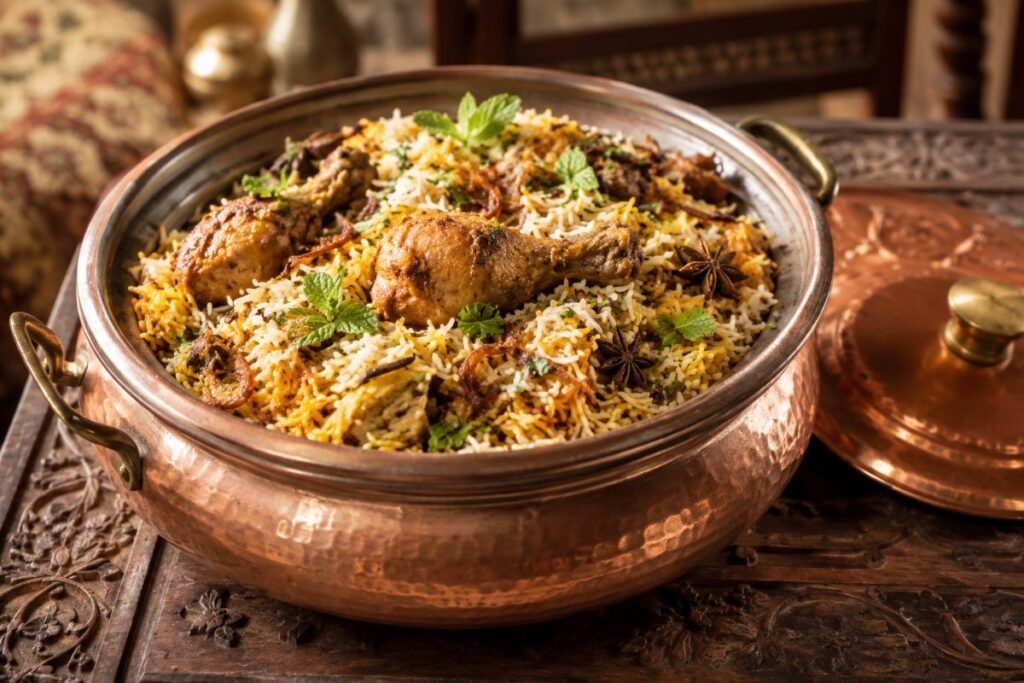
- Rest 10 minutes off the heat, then open at the table and lift the biryani from one side with a flat spoon, bringing meat and potato up through the rice rather than stirring. Serve with raita.
Technique
- Aged basmati, at least a year old, is essential: new rice holds too much moisture, breaks in the dum and turns sticky.
- The rice must be undercooked when it goes into the pot. It finishes in the trapped steam, and rice boiled through will be mush by the time the dum is over.
- Sindhi and Karachi biryani are distinguished by potato, dried plums and a sourer, tomato-forward masala; Delhi-style biryani has none of these. Do not confuse them.
Substitutions
- No kewra water? Use 1 tbsp rosewater, though the perfume is different and softer.
- Ghee can be replaced by a neutral oil, but the biryani loses the nutty depth that makes it a celebration dish.
- Aloo bukhara can be replaced by 6 chopped dried apricots plus 1 tsp tamarind paste.
Variations
- Sindhi biryani, the tomato-and-plum-heavy version made across Karachi.
- Bombay biryani, closely related and sweeter, with more potato and dried fruit.
- Kachchi biryani, where raw marinated meat is layered under the rice and both cook together in the dum.
History
Its exact path into South Asia is debated: one common account credits Mughal royal kitchens, blending Persian pilaf technique with Indian spices from the 1500s onward as the Mughal Empire expanded across the subcontinent, while other food historians point to earlier Arab trade contact with South India, particularly Kerala’s Malabar coast, as an independent or parallel route for rice-and-meat cooking to arrive. Both threads likely fed into what became biryani, which then diverged sharply by region and royal court: Hyderabadi, Lucknowi (Awadhi), Kolkata and Sindhi biryani, among many others, differ in spicing, layering technique and whether the meat is cooked separately from the rice or together with it. The 1947 Partition carried biryani traditions across the new India-Pakistan border along with the millions of people who moved.
Frequently asked questions
What is Biryani?
Biryani is a main from India: fragrant layered rice with marinated meat; Hyderabadi and Lucknowi styles famed. Its exact path into South Asia is debated: one common account credits Mughal royal kitchens, blending Persian pilaf technique with Indian spices from the 1500s onward as the Mughal Empire expanded across the subcontinent, while other food historians point to earlier Arab trade contact with South India, particularly Kerala’s Malabar coast, as an independent or parallel route for rice-and-meat cooking to arrive. Both threads likely fed into what became biryani, which then diverged sharply by region and royal court: Hyderabadi, Lucknowi (Awadhi), Kolkata and Sindhi biryani, among many others, differ in spicing, layering technique and whether the meat is cooked separately from the rice or together with it. The 1947 Partition carried biryani traditions across the new India-Pakistan border along with the millions of people who moved.
How long does Biryani take to make?
Biryani takes 45 min of preparation and 1 hr 30 min of cooking. The recipe makes 6 servings. It is rated hard to make.
What can I substitute in Biryani?
Yes, within limits. No kewra water? Use 1 tbsp rosewater, though the perfume is different and softer. Ghee can be replaced by a neutral oil, but the biryani loses the nutty depth that makes it a celebration dish. Aloo bukhara can be replaced by 6 chopped dried apricots plus 1 tsp tamarind paste.
What is the most important thing to get right in Biryani?
Boil the 4 litres of water hard with the salt and whole spices. Drain the rice and cook it 4–5 minutes only, until a grain crushed between the fingers is soft at the ends but still has a hard white pin in the centre. It must be at seventy per cent.