
Ingredients
Fish and stock
- 800 gmackerel, ikan kembung, whole
- 2 litreswater
- 6 piecesasam gelugor, dried garcinia slices
- 80 gtamarind pulp, soaked and strained
- 2 teaspoonssalt
Spice paste
- 10dried red chillies, soaked
- 4fresh red chillies
- 8shallots
- 4garlic cloves
- 3 stalkslemongrass, sliced
- 3cm galangal
- 3cm fresh turmeric
- 1 tablespoonbelacan, toasted shrimp paste
To flavour the broth
- 2torch ginger flowers, bunga kantan, halved
- a large handful of daun kesum, Vietnamese coriander
- 2 tablespoonssugar, or to taste
To assemble
- 800 gthick rice noodles, laksa noodles
- 1cucumber, in fine matchsticks
- 200 gpineapple, in fine strips
- 1red onion, very thinly sliced
- 2chillies, sliced
- a handful of mint leaves
- 1torch ginger flower, finely sliced
- lime wedges
On the table
- hae ko, thick sweet prawn paste
Directions
- Bring the water to a simmer in a large pot. Add the asam gelugor slices and the salt. Poach it gently for about twelve minutes. Never let the pot boil hard or the flesh breaks apart. Lift the fish out carefully onto a plate to cool. Keep the poaching water, which is now your stock. Flaking the fish is slow and needs real care.
- Pull the flesh away from the bones with your fingers. Mackerel is full of fine bones and every one must come out. Work through the flesh methodically, checking as you go. Discard the head, skin and every bone you find.
- Flake the flesh into small pieces and set it aside. Slit the dried chillies and soak them in warm water. Leave them for twenty minutes until they soften. Peel the shallots, garlic, galangal and turmeric.
- Toast the belacan wrapped in foil in a dry pan first. Give it two minutes on each side until it smells strong. Put everything into a blender with a splash of the stock. Blend it into a smooth paste with no fibres left in it. A stone mortar gives a better texture if you have the patience.
- Stir the spice paste into the fish stock. Add the strained tamarind water. Bring it to a simmer over a medium heat. Add the halved torch ginger flowers to the pot. Add most of the daun kesum, keeping some back for garnish.
- Let it simmer gently for about twenty-five minutes. Stir in the flaked fish and the sugar. Simmer it for another ten minutes to bring it together. Taste it carefully and think about what it needs. It should be sour first, then salty, with a faint sweetness.
- Add more tamarind if it is not sour enough. Add salt or a little more belacan if it tastes flat. Add sugar only to round the edges, not to sweeten it. Keep tasting until the balance feels right. Preparing the garnishes takes about fifteen minutes. Cut the cucumber into very fine matchsticks. Cut the pineapple into fine strips the same size.
- Slice the red onion as thinly as you possibly can. Slice the extra torch ginger flower very finely. Pick the mint leaves off their stems. Arrange everything in separate bowls before serving. Cooking the noodles is done at the last moment. Cook them according to the packet in plenty of water.
- Drain them and rinse them briefly in cold water. That rinsing stops them sticking together in the bowl. Put a nest of noodles in the bottom of each deep bowl. Ladle the hot broth generously over them. Make sure each bowl gets plenty of the flaked fish.
- Pile cucumber, pineapple and onion over the top. Add sliced chilli, mint and torch ginger flower. Set a lime wedge on the side of each bowl. Serving it is done immediately while the broth is hot. Put the hae ko on the table in a small dish. Hae ko is a thick black sweet prawn paste. Keep the garnishes and noodles entirely separate from it.
Technique
- Penang asam laksa is one of several quite different Malaysian laksas, and it shares little beyond the name with the coconut-based curry laksa.
- Hae ko, the thick sweet prawn paste stirred in at the table, is specific to Penang and is not interchangeable with other shrimp pastes.
Substitutions
- Sardines or any oily fish can replace mackerel, though mackerel is what Penang uses.
- If asam gelugor cannot be found, use more tamarind and add a squeeze of lime at the end.
Variations
- Some stalls make it considerably fishier and others lighter.
- Laksa Johor uses spaghetti and a thicker fish gravy.
- Curry laksa and Sarawak laksa are entirely different dishes despite the shared name.
History
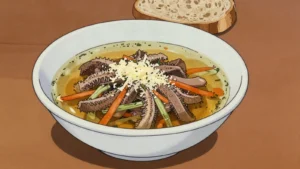
A noodle soup built on a notably sour, tamarind-based fish broth, topped with shredded fish, pineapple, cucumber, mint and a thick shrimp paste condiment called petis, documented across Malaysia, particularly associated with Penang, where this specific sour style of laksa developed as one of the region’s most distinctive noodle dishes. Its notably tangy, tamarind-forward broth, distinguishing asam laksa clearly from the richer, coconut milk-based curry laksa found elsewhere in Malaysia, reflects Penang’s specific and highly regarded regional culinary identity within the broader landscape of Malaysian cuisine. Asam laksa remains one of Malaysia’s most internationally celebrated dishes, closely tied to Penang’s culinary reputation specifically.
Frequently asked questions
What is Asam Laksa?
Asam Laksa is a soup & stew from Malaysia: penang’s sour mackerel-tamarind noodle soup with torch ginger. A noodle soup built on a notably sour, tamarind-based fish broth, topped with shredded fish, pineapple, cucumber, mint and a thick shrimp paste condiment called petis, documented across Malaysia, particularly associated with Penang, where this specific sour style of laksa developed as one of the region’s most distinctive noodle dishes. Its notably tangy, tamarind-forward broth, distinguishing asam laksa clearly from the richer, coconut milk-based curry laksa found elsewhere in Malaysia, reflects Penang’s specific and highly regarded regional culinary identity within the broader landscape of Malaysian cuisine. Asam laksa remains one of Malaysia’s most internationally celebrated dishes, closely tied to Penang’s culinary reputation specifically.
How long does Asam Laksa take to make?
Asam Laksa takes 45 minutes of preparation and 45 minutes of cooking. The recipe makes serves 6. It is rated hard to make.
What can I substitute in Asam Laksa?
Yes, within limits. Sardines or any oily fish can replace mackerel, though mackerel is what Penang uses. If asam gelugor cannot be found, use more tamarind and add a squeeze of lime at the end.
What is the most important thing to get right in Asam Laksa?
Bring the water to a simmer in a large pot. Add the asam gelugor slices and the salt. Poach it gently for about twelve minutes. Never let the pot boil hard or the flesh breaks apart. Lift the fish out carefully onto a plate to cool. Keep the poaching water, which is now your stock. Flaking the fish is slow and needs real care.