
Ingredients
The flour
- 600 gdried yam flour
- sold as farine d’igname or elubo
- sifted
- about 400 ml warm water
- adjust as you go
- half a teaspoon salt
The peanut sauce
- 200 gsmooth peanut butter
- unsweetened
- or 200 g ground roasted peanuts
- 1onion, chopped
- 3tomatoes, chopped
- 2 tablespoonstomato purée
- 2 clovesgarlic, crushed
- 1hot chilli, whole
- 1 litrestock or water
- 2 tablespoonsoil
- salt, to taste
Sometimes served with
- smoked or dried fish
- or goat, stewed
- or a tomato and pepper sauce
- chopped onion, raw
Equipment
- a couscoussier
- or a steamer basket over a pot
- muslin, to line it
- a wide bowl, for rubbing
- a fork or your fingers
Directions
- Discard flour that smells musty or stale. The flour must be moistened, not made into dough. Put the sifted flour in a wide bowl. Add the salt and stir it through.
- Use your fingertips to rub as you go. Rub the flour between your palms. Work in small circular movements. Break up any large lumps as they form. Keep adding water very slowly. Stop when it feels evenly damp. Let the mixture rest for ten minutes. Rub it through your fingers again. Break up any clumps that have formed. Line it with muslin if the holes are large.
- Fill the pot below with water. Bring the water to a steady boil. Tip the granules into the basket loosely. Do not press or pack them down. Steam must pass through freely. Steam it uncovered for fifteen minutes. Sprinkle a little more water over it.
- Rub it between your hands to separate it. Be careful, since it is very hot. Let it cool a moment before handling it. Steam scalds badly and condenses on skin. Break up every clump you find. Return it to the basket loosely. Steam it for another fifteen minutes. It should be soft with no hard centre.
- Tip it onto a wide tray or platter. Break up all of the remaining lumps. Stir a little oil through if you like. That keeps the granules separate. Cover it over and keep it warm. Heat the oil in a large heavy pot.
- Add the chopped onion and cook until soft. Add the garlic and cook briefly. Add the tomato purée and fry it. Fry it for two or three minutes. Add the chopped fresh tomatoes. Cook them down until they collapse. That softening takes about ten minutes.
- Whisk it with a ladle of hot stock. Work it into a smooth thin cream. Never add thick peanut paste directly. Stir the loosened paste into the pot. Add the remaining stock and the whole chilli.
- Simmer for at least twenty minutes. Stir it very frequently throughout. Keep the heat low and keep stirring. Season with salt and taste it carefully. It needs more salt than you expect. Add smoked fish or meat if you are using it. Let it simmer through with the sauce.
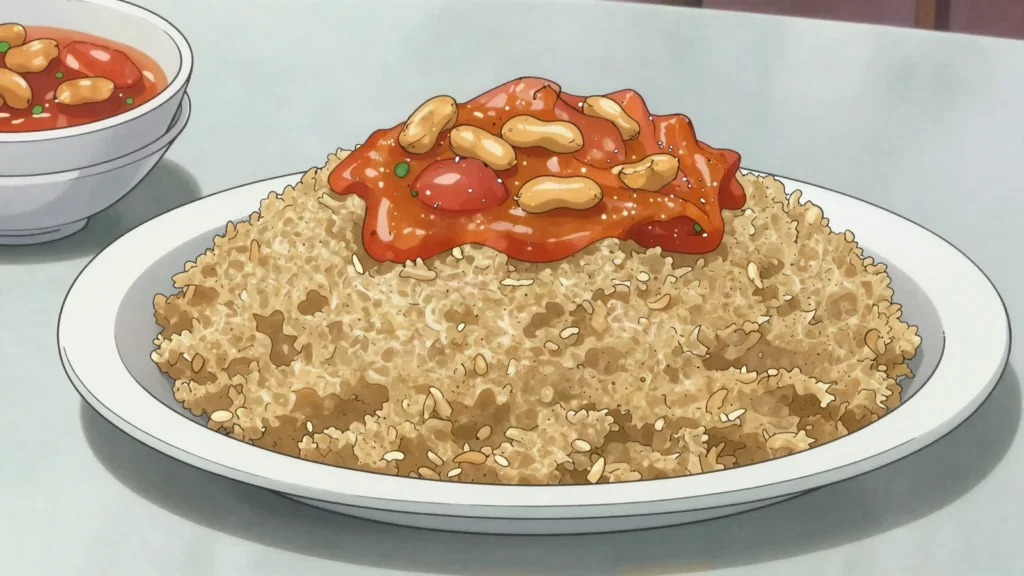
- Pile the yam couscous on a platter. Ladle the sauce over it generously. Serve raw chopped onion on the side. Wash hands before and after the meal. Leftovers keep two days refrigerated. Sprinkle a little water over it first. The sauce keeps three days refrigerated.
Technique
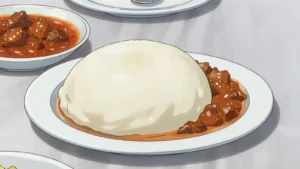
- Wassa-wassa is steamed into loose granules, unlike most West African yam flour dishes, which are made into a stiff swallow eaten in lumps. It is eaten with a spoon or the fingers, not swallowed, and that difference is the point of the dish.
- Moisten the flour, do not make a dough. Rub water in gradually with your fingertips until the granules hold together when squeezed and fall apart when released. Too wet steams into a solid lump; too dry falls through the steamer.
- The second steaming is essential. Rub the granules out between steamings, breaking every clump, and skipping that step gives dense clumped couscous. A third steaming gives the lightest result.
- Never add thick peanut paste straight to the pot. Whisk it into a ladle of hot stock first, then stir that back in — added dry or thick it forms lumps that never disperse.
- Peanut sauce catches and burns easily and a burnt batch is bitter throughout with no way to rescue it. Keep the heat low and stir frequently; the oil rising is the sign it has cooked out.
- Steam scalds worse than boiling water and it condenses on skin. Let the granules cool a moment before rubbing them out between steamings.
- Dried yam flour comes from surplus yams peeled, sliced, parboiled and sun-dried into cossettes, then milled. Yams rot in the barn within months; the flour keeps a year or more, so a short harvest feeds a long dry season. That is the entire reason the dish exists.
- Stored flour and stored peanuts can both carry aflatoxins from mould, which cooking does not destroy. Buy from a reputable source and discard anything musty or sour-smelling.
- Peanut allergy can be life-threatening and the classic sauce is entirely peanut-based. Tell guests, and offer the tomato and pepper sauce version instead where needed.
Substitutions
- Ground roasted peanuts replace peanut butter; grind them to a paste and loosen the same way.
- A tomato and pepper sauce replaces the peanut sauce entirely and contains no nuts, which matters for allergic guests.
- Smoked fish, dried fish or stewed goat can all be added to the sauce.
- Semolina couscous can be steamed and served with the same sauce, though it is a different dish.
- Cassava flour is used in some households in place of yam, giving a related preparation.
- Vegetable stock replaces meat stock for a vegetarian version.
Variations
- Télibo is the Beninese swallow made from the same dried yam flour, stiff rather than granular.
- Amala is the Yoruba swallow from the same flour, eaten with ewedu and gbegiri.
- Attiéké in Côte d’Ivoire is the fermented cassava granule that wassa-wassa most resembles in form.
- North African couscous uses the same moistening and repeated steaming technique with semolina.
- A version served with a tomato and pepper sauce rather than peanut is common and is nut free.
- Some households serve it with both a sauce and a separate stewed meat alongside.
History
A dish of northern Benin’s yam country, where surplus tubers are dried into cossettes and milled to flour that keeps.
Frequently asked questions
What is Wassa-wassa?
Wassa-wassa is a main from Benin: steamed couscous of dried yam flour, eaten with peanut sauce or stew. A dish of northern Benin’s yam country, where surplus tubers are dried into cossettes and milled to flour that keeps.
How long does Wassa-wassa take to make?
Wassa-wassa takes 30 minutes of preparation and 45 minutes of cooking. The recipe makes serves 6. It is rated medium to make.
What can I substitute in Wassa-wassa?
Yes, within limits. Ground roasted peanuts replace peanut butter; grind them to a paste and loosen the same way. A tomato and pepper sauce replaces the peanut sauce entirely and contains no nuts, which matters for allergic guests. Smoked fish, dried fish or stewed goat can all be added to the sauce. Semolina couscous can be steamed and served with the same sauce, though it is a different dish. Cassava flour is used in some households in place of yam, giving a related preparation. Vegetable stock replaces meat stock for a vegetarian version.
What is the most important thing to get right in Wassa-wassa?
Discard flour that smells musty or stale. The flour must be moistened, not made into dough. Put the sifted flour in a wide bowl. Add the salt and stir it through.