
Ingredients
The rice
- 500 gwhite rice
- basmati or another long grain
- rinsed until the water runs clear
- soaked 20 minutes, optional
The coconut
- 2mature coconuts
- grated and pressed
- for about 400 ml thick milk
- and 400 ml thin milk
- or 1 tin coconut milk
- full fat
- plus about 400 ml water
The seasoning
- 1 teaspoonsalt
- or to taste
- 1small onion, whole
- optional
- 2cardamom pods, bruised
- optional
- a small piece of cinnamon bark
- optional
Sometimes added
- a strip of pandan leaf
- a few whole black peppercorns
- a knob of ghee
- or a splash of oil
To serve
- a fish curry
- or a bean curry, maharagwe
- kachumbari, tomato and onion salad
- a fresh chilli relish
Directions
- Crack a mature coconut over a bowl. Never chop at a coconut on a board. Put it in a clean cloth or a fine sieve. Add a little warm water to it. Squeeze the cloth hard over a bowl. That first thick pressing is tui la kwanza. Set that first milk aside separately. Squeeze again for the second pressing.
- Keep the two pressings separate. Do not shake the tin at all first. Use the thin part to cook the rice. Use the thick cream at the end. It also gives a thin disappointing result. Rinse it until the water runs clear. Soaking for twenty minutes helps as well.
- Drain it thoroughly before cooking. Put the thin coconut milk in a heavy pan. Add water if you do not have enough. The thick milk added later brings more liquid.
- Add the salt and stir it through. Add the whole onion if you are using it. Lift the onion out before serving. Add the cardamom and cinnamon if using. Bring the coconut liquid to a boil. Add the drained rice and stir once. Bring it back to a boil briefly.
- Cover the pan with a tight fitting lid. Without it, drips make the top layer wet. Cook it for about twelve minutes. Do not lift the lid during that time.
- Lift the lid and pour it over the rice. Do not stir it in vigorously at all. Cover the pan again immediately. Cook it for another five to eight minutes. The rice should absorb the thick milk.
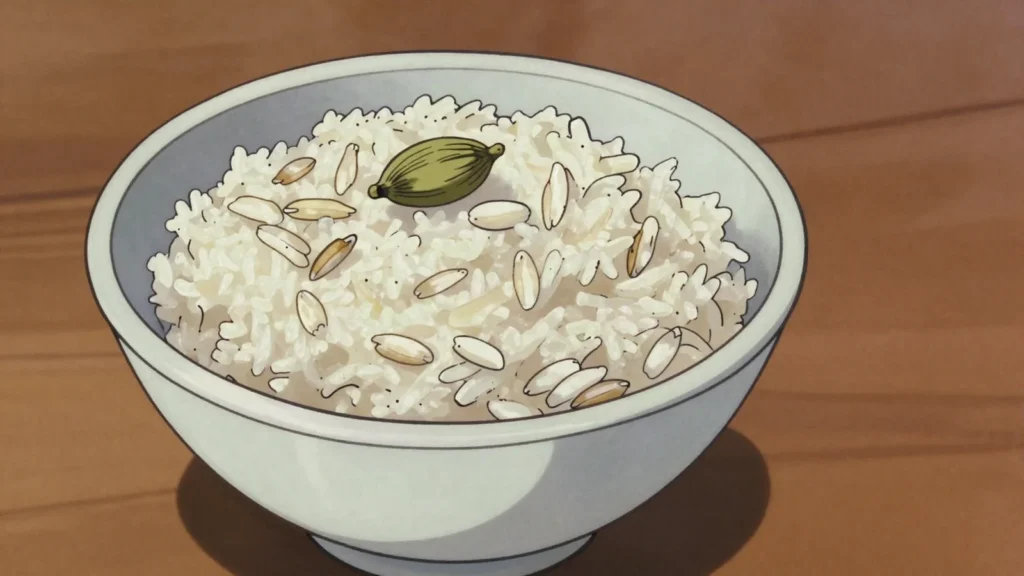
- Let it stand covered for ten minutes. It also lets the grains firm up. Lift and separate rather than stirring. Remove the whole onion and any spices. The grains should be separate and fluffy. Cool cooked rice quickly and refrigerate it. Rice left warm can grow harmful bacteria. Add a splash of coconut milk when reheating.
Technique
- The two pressings of coconut milk are the whole method. The rice cooks in the thin second milk and the thick first milk goes in near the end, because thick coconut milk splits with long cooking and makes the rice greasy. Swahili cooks do this as a matter of course.
- You can split a tin the same way: do not shake it, open it, and scoop the thick cream off the top, leaving the thin liquid underneath. This works with full-fat tins; light coconut milk does not separate and gives a thin, disappointing result.
- Use slightly less liquid than for plain rice, because the thick milk added later brings more. Too much liquid gives a wet mushy result.
- Fork the thick milk through gently rather than stirring it in. Vigorous stirring breaks the grains and makes the rice gluey.
- Let it stand covered for ten minutes off the heat. That resting finishes the cooking evenly and firms the grains, and skipping it gives wetter rice.
- The coconut should be a background note, not the point. Over-coconutted rice is cloying, and restraint is the mark of a good wali wa nazi.
- Cool leftover rice within an hour and refrigerate it. Bacillus cereus spores survive cooking and multiply in rice left at room temperature, producing a toxin that reheating does not destroy. Reheat thoroughly and only once. That applies to all cooked rice.
- The mbuzi, a low stool with a serrated blade that you sit on to scrape coconut halves, is the standard Swahili tool. The name means goat, for its shape.
- The cardamom, cinnamon and cloves that appear in coastal cooking arrived through centuries of monsoon trade with Arabia, Persia and India. That clove economy on Zanzibar rested on enslaved labour, and the atlas records that alongside the trade.
Substitutions
- Tinned full-fat coconut milk replaces freshly pressed; separate the thick cream from the thin liquid rather than shaking the tin.
- Basmati or any long grain rice works; basmati gives the most separate grains.
- Cardamom, cinnamon and a whole onion are all optional; the plainest version is coconut, rice and salt.
- A knob of ghee or a splash of oil enriches the rice slightly, though it is not needed.
- Pandan leaf or a few peppercorns are used in some coastal households.
- Plain water replaces the thin milk if you only have one tin; use the thick cream at the end as usual.
Variations
- Wali wa nazi na maharagwe serves the rice with a coconut bean curry, doubling the coconut, which is entirely normal on the coast.
- Pilau, spiced with cumin, cardamom and cloves and cooked with meat, is the festive coastal rice.
- Biriani on the Swahili coast is a distinct layered rice dish, closer to its Indian relative.
- A version with a little turmeric gives a yellow rice served at some gatherings.
- Wali wa kukaanga, fried rice, is the everyday alternative when coconut is short.
- Related coconut rices are made across the Indian Ocean, in the Comoros, Madagascar and Sri Lanka.
History
Rice cooked in coconut milk rather than plain water, developed along Tanzania’s Indian Ocean coast and the nearby Zanzibar archipelago, where coconut palms grow abundantly and coconut milk became a defining ingredient across much of the region’s Swahili coastal cooking, itself shaped by centuries of Arab, Persian, Indian and African trade and cultural exchange along the same coastline. Its name directly describes the dish: wali, rice, and nazi, coconut, without reference to any more elaborate story. It is traditionally paired with fish or meat curries also built on coconut milk, reflecting a broader coastal Tanzanian and Zanzibari cooking style in which coconut serves as a unifying base ingredient across many different dishes within the same meal rather than appearing in just one component.
Frequently asked questions
What is Wali wa nazi?
Wali wa nazi is a salad & side from Tanzania: fragrant coconut rice paired with fish or bean curries. Rice cooked in coconut milk rather than plain water, developed along Tanzania’s Indian Ocean coast and the nearby Zanzibar archipelago, where coconut palms grow abundantly and coconut milk became a defining ingredient across much of the region’s Swahili coastal cooking, itself shaped by centuries of Arab, Persian, Indian and African trade and cultural exchange along the same coastline. Its name directly describes the dish: wali, rice, and nazi, coconut, without reference to any more elaborate story. It is traditionally paired with fish or meat curries also built on coconut milk, reflecting a broader coastal Tanzanian and Zanzibari cooking style in which coconut serves as a unifying base ingredient across many different dishes within the same meal rather than appearing in just one component.
How long does Wali wa nazi take to make?
Wali wa nazi takes 15 minutes of preparation and 25 minutes of cooking. The recipe makes serves 6. It is rated easy to make.
What can I substitute in Wali wa nazi?
Yes, within limits. Tinned full-fat coconut milk replaces freshly pressed; separate the thick cream from the thin liquid rather than shaking the tin. Basmati or any long grain rice works; basmati gives the most separate grains. Cardamom, cinnamon and a whole onion are all optional; the plainest version is coconut, rice and salt. A knob of ghee or a splash of oil enriches the rice slightly, though it is not needed. Pandan leaf or a few peppercorns are used in some coastal households. Plain water replaces the thin milk if you only have one tin; use the thick cream at the end as usual.
What is the most important thing to get right in Wali wa nazi?
Crack a mature coconut over a bowl. Never chop at a coconut on a board. Put it in a clean cloth or a fine sieve. Add a little warm water to it. Squeeze the cloth hard over a bowl. That first thick pressing is tui la kwanza. Set that first milk aside separately. Squeeze again for the second pressing.