
Ingredients
The batter
- 250 gplain flour
- 500 mlwater
- or milk and water mixed
- a pinch of salt
- 1 tablespoonoil
- optional, to stop sticking
To serve
- runny honey
- 1 clovegarlic
- peeled, whole
- and a small knife
- or crushed garlic in a dish
Sometimes served with
- walnuts, whole
- a segment of apple
- a little salt
Equipment
- a wafer iron
- electric or stovetop
- or a pizzelle iron
- a small ladle
- a clean cloth
Directions
- Whisk the flour with the salt. Add the water gradually while whisking. Whisk until completely smooth. Lumps will show in a thin wafer. Sieve it if any lumps still remain. The batter should be very thin indeed. Add the oil if you are using it. It helps release the wafer from the plates.
- Let the batter rest for twenty minutes. Whisk it again briefly before using it. Heat it thoroughly before the first wafer. An under-heated iron gives a pale soft wafer.
- Use a cloth with a little oil on it. Do not use too much or it fries. Ladle a small amount onto the hot plate. The batter spreads out very thin.
- Trim that off with a knife afterwards. Cook for about one to two minutes. Steam will escape from the sides at first. When the steam stops, it is nearly done. Steam escapes from the sides during cooking. Keep your hands clear of the edges.
- Use a cloth or gloves to open it. A stovetop iron is hot all over. Set it on a heatproof surface. Keep children well away from it. Use a knife tip or a wooden spatula. Never use a metal implement on the plates.
- Lay the wafer flat on a clean cloth. Do not stack them while they are warm. Put a sheet of paper between each one. They break extremely easily when cold.
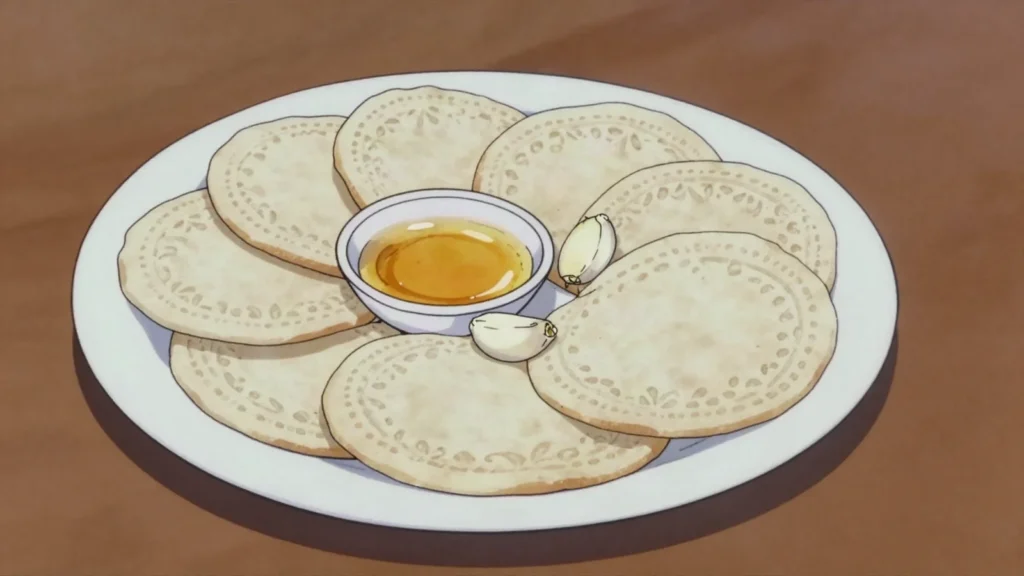
- Keep them somewhere genuinely dry. Damp air makes them go soft and leathery. Bring the whole wafer to the table. Set out a dish of runny honey. Set out a peeled clove of garlic. Set out a small knife for spreading. Then they take a small slice of garlic. Whisk it well before using it again.
Technique
- Honey and garlic together sounds very strange and it is entirely deliberate. The honey stands for sweetness and health, the garlic for strength and protection against illness. The atlas records that as the belief and symbolism it is, and makes no health claim. The two together are the point.
- You cannot make these without a wafer iron. A pizzelle iron is the closest widely available substitute — smaller and patterned but perfectly workable. A waffle iron will not do at all, since it presses far too thick and too deep. Slovak and Czech shops sell ready-made wafers through December, which is what most households buy.
- Keep the batter very thin, like single cream. Thick batter gives a thick chewy wafer instead of the brittle sheet you want, and lumps show badly in something this thin.
- Whisk the batter again before each use. The flour settles to the bottom while it stands.
- When steam stops escaping from the sides of the iron, the wafer is nearly done. That is a reliable indicator and better than watching the clock.
- Take them out pale. Oblátky should be almost white; browning makes them taste toasted, which is not what they are.
- Wafer irons get extremely hot all over and steam escapes from the sides while cooking. Keep hands clear of the edges, use a cloth to open it, and keep children away.
- Do not stack them warm — they stick and bend. They are floppy when hot and brittle within a minute of cooling. Store them flat with paper between each one, somewhere genuinely dry, since damp makes them leathery and that is irreversible.
- The wafers are the same kind of thing as communion wafers, traditionally made by parishes and pressed with religious images, often nativity scenes. Households have long bought rather than made them.
Substitutions
- A pizzelle iron replaces a proper oblátky iron and is far easier to buy.
- Ready-made wafers from a Slovak or Czech shop replace homemade entirely and are what most households use.
- Milk mixed with the water gives a slightly richer wafer, though water alone is traditional.
- A little oil in the batter helps release without changing the wafer much; traditional versions use none.
- Any runny honey works; a strongly flavoured one such as forest honey stands up better to the garlic.
- Some households offer crushed garlic in a dish rather than a whole clove and a knife.
Variations
- Czech and Polish households share almost identical Christmas wafer traditions, with regional variations in what accompanies them.
- Polish opłatek is shared in the same way but usually without garlic, with wishes exchanged as pieces are broken.
- Some Slovak households add a walnut and a segment of apple after the wafer.
- Wafers layered with a walnut or poppy seed cream make a simple no-bake cake eaten through the season.
- Children eat the wafers plain or with jam through December as an ordinary snack.
- Some regions rub the garlic directly onto the wafer rather than eating it separately.
History
Shared at the start of the Slovak Štedrý večer supper, pressed with religious images.
Frequently asked questions
What is Vianočné oblátky?
Vianočné oblátky is a snack from Slovakia: thin unleavened wafers eaten with honey and garlic on Christmas Eve. Shared at the start of the Slovak Štedrý večer supper, pressed with religious images.
How long does Vianočné oblátky take to make?
Vianočné oblátky takes 20 minutes of preparation and 30 minutes of cooking. The recipe makes makes about 12 large wafers. It is rated medium to make.
What can I substitute in Vianočné oblátky?
Yes, within limits. A pizzelle iron replaces a proper oblátky iron and is far easier to buy. Ready-made wafers from a Slovak or Czech shop replace homemade entirely and are what most households use. Milk mixed with the water gives a slightly richer wafer, though water alone is traditional. A little oil in the batter helps release without changing the wafer much; traditional versions use none. Any runny honey works; a strongly flavoured one such as forest honey stands up better to the garlic. Some households offer crushed garlic in a dish rather than a whole clove and a knife.
What is the most important thing to get right in Vianočné oblátky?
Use a cloth with a little oil on it. Do not use too much or it fries. Ladle a small amount onto the hot plate. The batter spreads out very thin.