
Ingredients
The pork
- 800 gpork neck
- or pork collar or shoulder
- well marbled with fat
- cut into steaks 1 cm thick
The seasoning
- coarse salt
- black pepper, coarsely ground
- 2 tablespoonsoil
- optional, to rub
Sometimes added
- 3 clovesgarlic, crushed
- a little sweet paprika
- a splash of mineral water
- a pinch of dried oregano
- or savoury
To serve
- raw onion, chopped or sliced
- ajvar, roasted pepper relish
- kajmak, clotted milk cream
- lepinja or somun bread
- urnebes, spicy cheese spread
- chopped chillies
For the grill
- charcoal or hardwood
- a grill with adjustable height
- long tongs
- a wire brush
Directions
- Grill restaurants exist everywhere in Serbia. It refers to hanging meat up to dry. Cut them about a centimetre thick. Thin is deliberate rather than a compromise. Cut across the grain of the muscle.
- Salt and pepper is the traditional treatment. That water is said to keep the meat moist. Take it out of the fridge beforehand. Give it thirty minutes at room temperature.
- Grill outdoors in open air only. Never use petrol or spirit to light charcoal. Use a chimney starter or proper firelighters.
- Oil them lightly or oil the meat. Get the grill genuinely hot before starting. Lay the steaks on the hot bars. You should hear an immediate sharp sizzle.
- Turn them once with tongs, not a fork. Give them two or three minutes on the second side.
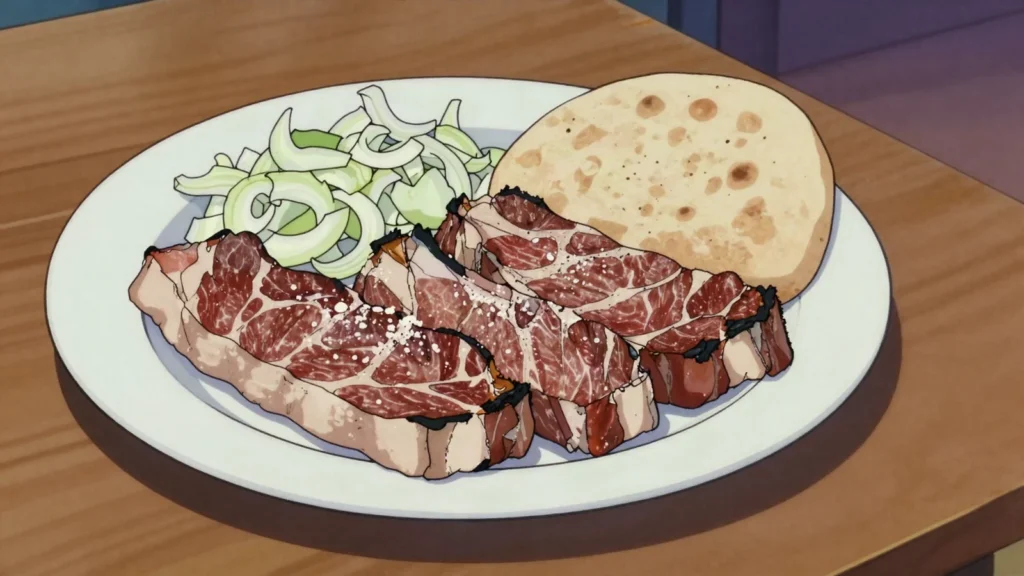
- Cover them loosely over with foil. Serve them hot, straight from the grill. Pile them on a plate or a wooden board. Scatter chopped raw onion generously over.
- Serve lepinja or somun bread alongside. That is a soft flat leavened bread.
Technique
- Pork neck or collar, never loin or fillet. The marbled fat is what bastes thin steaks and keeps them juicy over fierce heat; a lean cut is ruined in minutes on a grill.
- Salt well ahead or salt at the last moment, but never ten minutes before. Salting early draws moisture out and lets it be reabsorbed, seasoning the meat through; salting at the last moment leaves a dry surface that chars. The middle ground leaves the surface wet and it will not char at all.
- Wait for the flames to die and the coals to grey over. Grilling over flames burns the outside and deposits soot, which tastes acrid rather than smoky. That waiting is the step people rush most.
- Charcoal produces carbon monoxide, which has no colour, smell or taste and kills in enclosed spaces. Grill outdoors only, never in a garage, tent or shed, and never bring a used grill inside. Never light charcoal with petrol or spirit — use a chimney starter or firelighters.
- Turn with tongs, never a fork. A fork pierces the meat and loses the juice.
- Do not move the steaks at first. They need contact time to mark and char, and moving them early tears the surface.
- Pork must be cooked through, and with steaks this thin that happens quickly and naturally. But overcooked pork neck is dry and tough, so the window is narrow — watch them rather than the clock.
- The seasoning is deliberately minimal. Salt and pepper alone is traditional, because the pork and the smoke are the flavour and a heavy marinade covers both.
- Raw onion is not a garnish. It is served with every roštilj dish and its sharpness is what cuts the fat.
- The name relates to hanging meat up to cure, and cured vešalica is a different, dried product that still exists. The grilled fresh version is what a roštilj menu means by the word.
Substitutions
- Pork shoulder replaces neck and works nearly as well; both are marbled.
- A gas grill or a very hot ridged griddle pan replaces charcoal at the cost of the smoke, which is genuinely part of the dish.
- Garlic, paprika or a pinch of dried savoury can be rubbed on, though the plainest version is salt and pepper alone.
- Any soft flatbread replaces lepinja or somun.
- Thick soured cream or a mild cream cheese stands in for kajmak, though neither is really the same.
- Shop-bought ajvar is widely sold and is what many households use outside the autumn making season.
Variations
- Cured and dried vešalica, hung rather than grilled, is the older meaning of the name and a quite different product.
- Vešalica wrapped around kajmak before grilling is a restaurant variation.
- Ćevapi, pljeskavica and ražnjići are the other pillars of Serbian roštilj and are grilled alongside.
- A version wrapped in bacon is made in some grill houses and is richer still.
- Related grilled pork neck dishes are made across Bosnia, Croatia, Montenegro and North Macedonia.
- Some cooks marinate briefly in mineral water and oil, which is said to keep the meat moist.
History
Named from hanging the cured neck to dry; now a roštilj classic beside pljeskavica and ćevapi.
Frequently asked questions
What is Vesalica?
Vesalica is a main from Serbia: thin pork neck steaks grilled over embers, salted and eaten with onion. Named from hanging the cured neck to dry; now a roštilj classic beside pljeskavica and ćevapi.
How long does Vesalica take to make?
Vesalica takes 20 minutes plus resting of preparation and 15 minutes of cooking. The recipe makes serves 4. It is rated easy to make.
What can I substitute in Vesalica?
Yes, within limits. Pork shoulder replaces neck and works nearly as well; both are marbled. A gas grill or a very hot ridged griddle pan replaces charcoal at the cost of the smoke, which is genuinely part of the dish. Garlic, paprika or a pinch of dried savoury can be rubbed on, though the plainest version is salt and pepper alone. Any soft flatbread replaces lepinja or somun. Thick soured cream or a mild cream cheese stands in for kajmak, though neither is really the same. Shop-bought ajvar is widely sold and is what many households use outside the autumn making season.
What is the most important thing to get right in Vesalica?
Grill restaurants exist everywhere in Serbia. It refers to hanging meat up to dry. Cut them about a centimetre thick. Thin is deliberate rather than a compromise. Cut across the grain of the muscle.