
Ingredients
Clams
- 1 kgsmall clams (amêijoas), live, in shell
- 2 tbspcoarse salt, for purging
The pan
- 6 tbspolive oil
- 6 clovesgarlic, thinly sliced
- 120 mldry white wine
- 1large bunch coriander, leaves and fine stalks chopped
- 1lemon, halved
- black pepper
To serve
- good bread
Directions
- Put the clams in a bowl of cold water with the coarse salt and leave 1 hour so they spit out their grit. Lift them out of the water rather than pouring off, so the sand stays behind. Discard any that are broken or that stay open when tapped.
- Warm the olive oil in a wide pan over medium heat and cook the garlic gently for 2 minutes until it is pale gold and fragrant. It must not brown — burnt garlic ruins the whole dish and there is nowhere for it to hide.
- Raise the heat, add the clams and the wine, and cover at once.
- Cook 3–4 minutes, shaking the pan, until the shells open. Take the pan off the heat the moment most are open; the last few will open in the residual heat and the rest are not worth overcooking everything for.
- Discard any clam that stays firmly shut. Stir in most of the coriander and a good grind of pepper, and squeeze in half the lemon.
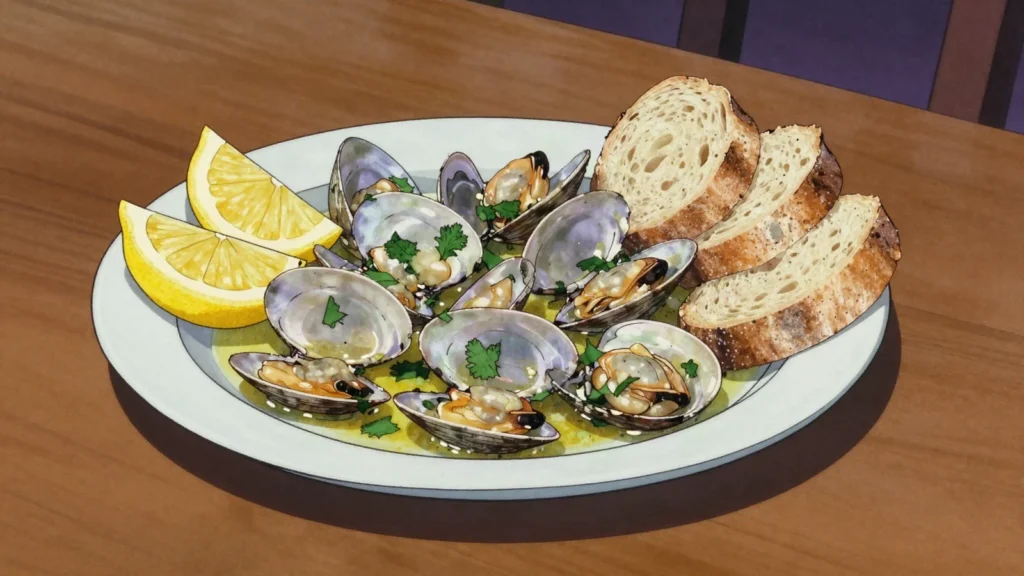
- Serve immediately in the pan with the remaining coriander scattered over and bread to mop the liquid, which is the best part. No salt is added — the clams bring their own.
Technique
- This dish is garlic, coriander, wine and clam liquor and nothing else. Every addition people are tempted to make — cream, chilli, onion — takes it further from what it is.
- Do not salt the pan. Clam liquor is already saline, and the dish is frequently over-salted for this reason.
- Timing is everything: a clam is perfect for about ninety seconds and rubbery after three minutes.
Substitutions
- Cockles or small vongole work the same way, with a minute less cooking.
- Flat-leaf parsley if you dislike coriander, though the dish is then simply clams in garlic and wine.
Variations
- A version finished with a knob of butter, which some Lisbon restaurants do and purists object to.
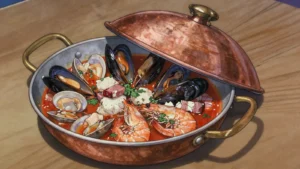
- Amêijoas na cataplana, the same clams cooked in the domed copper pan with sausage and tomato.
History
Clams, quickly cooked in a sauce of olive oil, garlic, white wine and fresh coriander, documented across Portugal as one of the country’s most iconic simple seafood dishes, named after Raimundo António de Bulhão Pato, a 19th-century Portuguese poet reputed to have particularly enjoyed this specific preparation of clams. Its quick cooking time and reliance on just a handful of fresh, high-quality ingredients reflects a broader Portuguese culinary preference for simple preparations that highlight the freshness of good seafood rather than obscuring it with elaborate sauce or seasoning. Amêijoas à Bulhão Pato remains one of Portugal’s most beloved and widely ordered seafood starters, commonly served with fresh bread to soak up the flavourful cooking liquid.
Frequently asked questions
What is Amêijoas à Bulhão Pato?
Amêijoas à Bulhão Pato is a snack from Portugal: clams in garlic, coriander and white wine. Clams, quickly cooked in a sauce of olive oil, garlic, white wine and fresh coriander, documented across Portugal as one of the country’s most iconic simple seafood dishes, named after Raimundo António de Bulhão Pato, a 19th-century Portuguese poet reputed to have particularly enjoyed this specific preparation of clams. Its quick cooking time and reliance on just a handful of fresh, high-quality ingredients reflects a broader Portuguese culinary preference for simple preparations that highlight the freshness of good seafood rather than obscuring it with elaborate sauce or seasoning. Amêijoas à Bulhão Pato remains one of Portugal’s most beloved and widely ordered seafood starters, commonly served with fresh bread to soak up the flavourful cooking liquid.
How long does Amêijoas à Bulhão Pato take to make?
Amêijoas à Bulhão Pato takes 15 min plus 1 hr purging of preparation and 8 min of cooking. The recipe makes 2 as a main, 4 to share. It is rated easy to make.
What can I substitute in Amêijoas à Bulhão Pato?
Yes, within limits. Cockles or small vongole work the same way, with a minute less cooking. Flat-leaf parsley if you dislike coriander, though the dish is then simply clams in garlic and wine.
What is the most important thing to get right in Amêijoas à Bulhão Pato?
Put the clams in a bowl of cold water with the coarse salt and leave 1 hour so they spit out their grit. Lift them out of the water rather than pouring off, so the sand stays behind. Discard any that are broken or that stay open when tapped.