
Ingredients
The syrup
- 500 gsugar
- 300 mlwater
- juice of half a lemon
- a strip of lemon peel
- made first and chilled thoroughly
The batter
- 250 mlwater
- 60 mlsunflower oil
- 1 tablespoonsugar
- half a teaspoon salt
- 150 gplain flour
- 3eggs, at room temperature
- beaten lightly
- 1 tablespoonsemolina
- or cornflour, optional
For frying
- 1 litreneutral oil
- or enough for 6 cm depth
Equipment
- a piping bag
- a large star nozzle
- a heavy deep pan
- a cooking thermometer
- scissors, to cut the batter
- a slotted spoon
To serve
- cold, in a bowl
- with Turkish coffee
- or with tea
Directions
- Put the sugar and water in a heavy pan. Add the strip of lemon peel to it. Heat it gently until the sugar dissolves. Do not let it boil before it dissolves. Boil it for about eight to ten minutes. It should thicken slightly but stay pourable. Add the lemon juice at the end of boiling. The acid stops it crystallising in the jar.
- Take it off and let it cool completely. There is a safety point about hot syrup. Cool it for a full twenty minutes. Keep children well away from the pan. Put the water, oil, sugar and salt in a pan. Bring it to a full rolling boil. Take it off the heat immediately.
- Tip in all of the flour at once. Beat it hard with a wooden spoon. Return the pan to a low heat again. Beat it for another two or three minutes. The dough should pull from the pan sides.
- Tip the dough into a large bowl. Let it cool for about ten minutes. It should be warm but not hot to touch. Add a little and beat it in fully. Keep beating until it is smooth again. You may well not need all of the egg.
- Add the semolina now if you are using it. Fill the bag with the warm dough. Fill it no more than one third full. Never leave hot oil unattended at all. Keep a well fitting lid within reach. If it catches fire, turn off the heat. Start at about one hundred and forty degrees.
- Cut each one off with kitchen scissors. Make them about four centimetres long. Bring it up to about one hundred and seventy. Dropped into hot oil they brown outside at once.
- Fry them for eight to ten minutes in total. They should be deep golden and hard-crisp. Turn them as they fry to colour them evenly. Lift them out with a slotted spoon. Now drop them straight into the cold syrup. Leave them in the syrup for two minutes. Lift them out with a slotted spoon. Put them on a rack or a serving dish.
- Continue with the remaining batter. Let the oil cool back down between batches. Let them cool completely before eating. They are served cold and never warm. Serve them in a bowl with a little syrup. They keep two days at room temperature.
Technique
- Cold syrup, hot pastry. That temperature difference is the whole technique: the crisp shell stays crisp while the inside soaks. Hot syrup on hot pastry gives something soggy throughout, and cold on cold does not soak at all. Make the syrup first and chill it properly.
- Start the frying in cool oil at around 140 degrees and raise the heat gradually. It is unusual and it matters: it lets the pastries expand and cook through. Dropped into hot oil they brown outside while the inside stays raw, and they can burst and throw hot oil.
- Fry them until deep golden and genuinely hard-crisp. Pale ones collapse as soon as they meet the syrup.
- Two minutes in the syrup and no longer. Left in, they go soggy right through.
- Let the cooked dough cool to warm before the eggs go in. Hot dough scrambles them, which is the most common mistake in any choux-type batter.
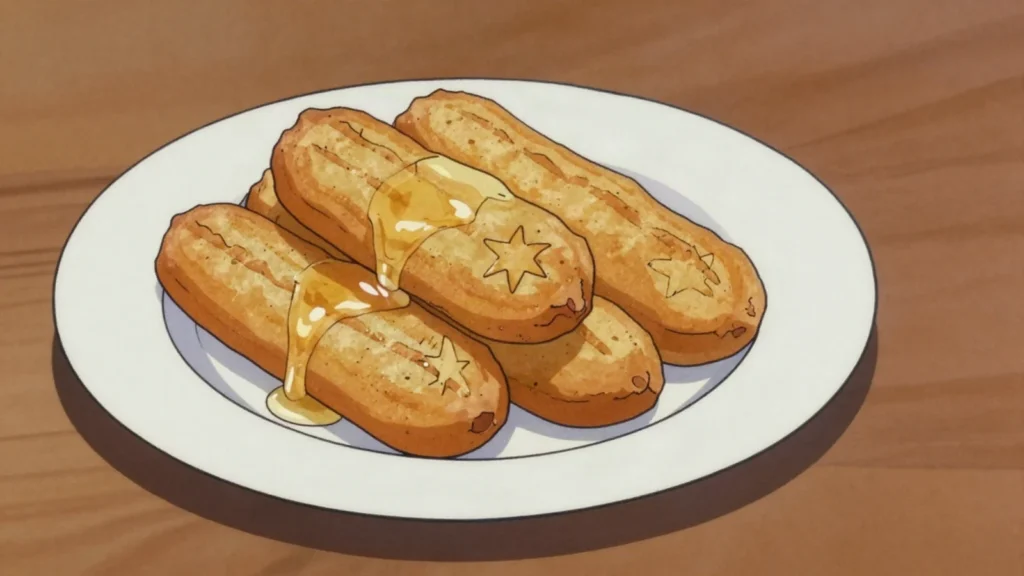
- The star nozzle is not decorative. The grooves add surface area for crispness and hold syrup in their channels; a plain nozzle gives a different sweet.
- Boiling sugar syrup burns worse than boiling water because it is hotter and it sticks. Never taste it from the pan; cool any splash under running water for a full twenty minutes.
- The sweet is Ottoman — tulumba in Turkish — and near-identical versions run from Greece and the Balkans through to Iran and Egypt. Bulgaria’s tolumbichki is the same thing under another name. Empires spread sweets, the empires ended, and the sweets became local. The atlas records the family and adjudicates no origin claim.
Substitutions
- Butter replaces the oil in the batter for a richer pastry.
- Orange peel and juice replace lemon in the syrup for a rounder flavour.
- Semolina or cornflour in the batter gives a slightly crisper shell; both are optional.
- A little honey stirred into the cooled syrup adds depth, though it is not traditional.
- Any neutral high-smoke-point oil suits the frying; sunflower is standard in the region.
- Rosewater or vanilla in the syrup points the sweet towards its neighbours’ versions.
Variations
- Bulgarian tolumbichki are the same sweet under another name, made by the identical method.
- Turkish tulumba is the direct ancestor and is usually made a little larger.
- Iranian bamieh is shorter and rounder and is particularly associated with Ramadan.
- Balah el sham in Egypt and the Levant is essentially the same pastry again.
- Some Macedonian shops dust them with ground walnuts after syruping.
- A version with a little yoghurt worked into the batter is softer and is made in some households.
History
An Ottoman sweet sold in Macedonian slastičarnica shops and at village fairs.
Frequently asked questions
What is Tulumbi?
Tulumbi is a dessert from North Macedonia: grooved fried batter pieces steeped in syrup, eaten cold. An Ottoman sweet sold in Macedonian slastičarnica shops and at village fairs.
How long does Tulumbi take to make?
Tulumbi takes 30 minutes of preparation and 30 minutes, plus cooling of cooking. The recipe makes makes about 30. It is rated medium to make.
What can I substitute in Tulumbi?
Yes, within limits. Butter replaces the oil in the batter for a richer pastry. Orange peel and juice replace lemon in the syrup for a rounder flavour. Semolina or cornflour in the batter gives a slightly crisper shell; both are optional. A little honey stirred into the cooled syrup adds depth, though it is not traditional. Any neutral high-smoke-point oil suits the frying; sunflower is standard in the region. Rosewater or vanilla in the syrup points the sweet towards its neighbours’ versions.
What is the most important thing to get right in Tulumbi?
Put the sugar and water in a heavy pan. Add the strip of lemon peel to it. Heat it gently until the sugar dissolves. Do not let it boil before it dissolves. Boil it for about eight to ten minutes. It should thicken slightly but stay pourable. Add the lemon juice at the end of boiling. The acid stops it crystallising in the jar.