
Ingredients
What to buy
- Tiroler Graukäse PDO
- a small piece
- it is strongly flavoured
- ask how ripe it is
To dress it, the usual way
- 1onion, sliced very thinly
- 4 tablespoonscider vinegar
- or wine vinegar
- 2 tablespoonsoil
- salt and black pepper
- a handful of chives, chopped
To serve
- dark rye bread
- or Schüttelbrot
- butter
- a glass of most, apple cider
- or beer
To cook with
- crumbled into Kaspressknödel
- the flattened cheese dumplings
- or into a soup
Directions
- Butter was the valuable product on a Tyrolean farm. It uses what would otherwise be wasted.
- Keep it wrapped and in a sealed box. Butter and milk pick it up within hours. A ripe one is soft, translucent and very strong.
- Cut the cheese into slices or chunks. Lay them in a shallow dish.
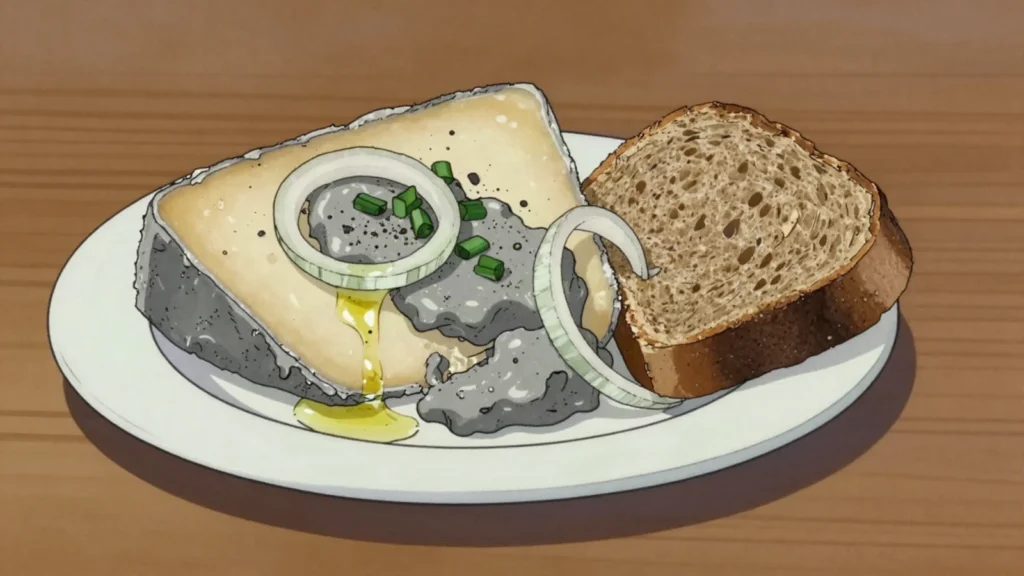
- Slice it as thinly as you can. Scatter it over. Whisk the vinegar and oil with salt and pepper. Pour it over.
- Let it stand thirty minutes. An hour is better. Scatter chives over. Serve dark bread and butter.
- Butter with a fat-free cheese may seem odd. It is what is done.
- Keep it refrigerated. Advice on soft and surface-ripened cheeses in pregnancy varies by country. Keep it sealed away from other food.
Technique
- The atlas gives no method for making this cheese, deliberately. It holds a protected designation granted in 1996, and it is a sour-milk cheese ripened with specific moulds and bacteria in controlled conditions — an uncontrolled sour-milk ripening at home is unpredictable and can go wrong in ways that are not safe.
- Keep it sealed in a box away from everything else. The smell transfers, and butter and milk pick it up within hours. That is a genuine practical warning rather than a nicety.
- Buy less than you think. It is genuinely pungent and eaten in small quantities.
- Dress it with onion and sharp vinegar and let it stand thirty minutes to an hour. The vinegar cuts the pungency, the onion gives sweetness and bite, and the dressing is what makes the cheese approachable. It is deliberately far sharper than a salad dressing.
- Ask how ripe it is. A young one is mild and crumbly; a ripe one is soft, translucent and very strong. A single piece often has both, ripening inward from a grey-green rind, and that gradient is characteristic.
- Cooking mellows it considerably into something savoury rather than pungent — Kaspressknödel is the route in for anyone who finds it too strong raw.
- It does not melt smoothly. With almost no fat it crumbles and softens rather than flowing.
- This is a cheese of thrift, made from the skimmed milk left after butter making, which is why it is almost fat-free and why it is sharp. Whole-milk cheese was the luxury; this used what would otherwise be wasted.
- It is made without rennet, set by acid alone, which gives it a quite different texture from a rennet cheese.
- It keeps a week or two refrigerated but goes on ripening — it gets stronger, not milder.
- Advice on soft and surface-ripened cheeses in pregnancy varies by country, with many authorities advising avoiding them unless cooked through. The atlas records that the question exists, makes no medical claim, and leaves it to a doctor or midwife.
Substitutions
- Harzer or Handkäse from Germany are the closest lean sour-milk relatives.
- Quark is far milder and does not substitute for the flavour, only the leanness.
- Any strong washed-rind cheese gives comparable pungency with far more fat.
- Cider vinegar or wine vinegar both serve for the dressing.
- Most, the cloudy apple cider, is the traditional drink; beer substitutes.
- Cooking it into dumplings mellows it for anyone finding it too strong.
Variations
- Kaspressknödel are the flattened cheese dumplings made with it.
- Harzer and Handkäse in Germany are made on the same lean sour-milk principle.
- Vorarlberger Bergkäse is the rich alpine cheese from the same region and its opposite.
- Graukäse dressed with onion and vinegar is the standard tavern preparation.
- Brettljause, the cold board, sometimes carries it alongside Speck.
- Steirerkäse is a related Styrian sour-milk cheese.
History
Made from skimmed sour milk left after butter making in Tyrolean farmhouses; the PDO granted in 1996 preserves an unusually lean mountain cheese.
Frequently asked questions
What is Tiroler Graukäse?
Tiroler Graukäse is a cheese & dairy from Austria: grey sour-milk cheese, almost fat-free and sharply pungent. Made from skimmed sour milk left after butter making in Tyrolean farmhouses; the PDO granted in 1996 preserves an unusually lean mountain cheese.
How long does Tiroler Graukäse take to make?
Tiroler Graukäse takes 10 minutes of preparation and none of cooking. The recipe makes buy 50 g per person. It is rated easy to make.
What can I substitute in Tiroler Graukäse?
Yes, within limits. Harzer or Handkäse from Germany are the closest lean sour-milk relatives. Quark is far milder and does not substitute for the flavour, only the leanness. Any strong washed-rind cheese gives comparable pungency with far more fat. Cider vinegar or wine vinegar both serve for the dressing. Most, the cloudy apple cider, is the traditional drink; beer substitutes. Cooking it into dumplings mellows it for anyone finding it too strong.
What is the most important thing to get right in Tiroler Graukäse?
Butter was the valuable product on a Tyrolean farm. It uses what would otherwise be wasted.