
Ingredients
Chestnuts
- 1 kgsweet chestnuts, in the shell
Equipment
- a small sharp knife
- a perforated chestnut pan, or a heavy baking tray
- a clean cloth
- paper cones, for serving
Nothing is added
- no salt, no oil, no sugar
Directions
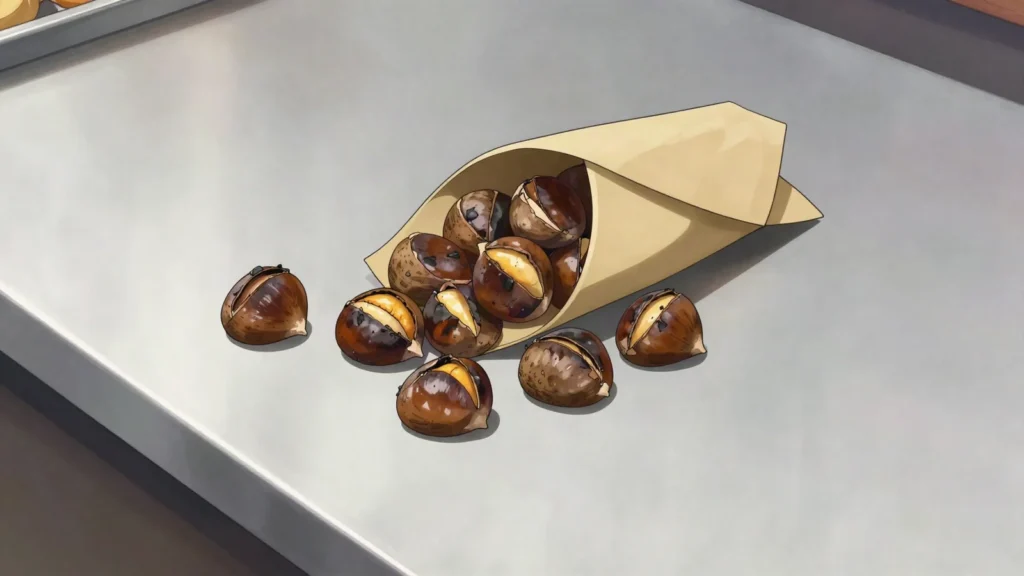
- Squeeze each one gently: it should feel full, not hollow. Scoring them is the step that must never be skipped. Cut a deep cross or a long slit through the shell of every single nut. Cut through the leathery brown skin beneath as well. Cut on the flat side, which is easier to hold steady.
- Use a small sharp knife and cut away from your hand. Soaking them briefly helps the peeling later. Put the scored nuts in warm water for twenty minutes. This helps the steam build and loosens the inner skin.
- Drain them and pat them dry before roasting. Put the nuts in a single layer, scored side up. Shake the pan every couple of minutes.
- Roast them for twenty-five to thirty-five minutes. Heat the oven to 200C in good time. Spread the scored nuts on a heavy tray, cut side up. Roast them for twenty-five to thirty minutes.
- Shake the tray twice during that time. Judging when they are done takes one test. Take one out and try to peel it. The shell and the inner skin should both come away easily.
- Tip the hot nuts into a clean cloth. Wrap them up tightly and squeeze the bundle. Let them sit wrapped for five minutes. Peeling them is done hot and this matters.
- Peel them while they are still too hot to hold comfortably. Peel only as many as you will eat immediately. Serve them hot in a paper cone, unpeeled. They are eaten outdoors in the cold, which is much of the appeal.
Technique
- Score every single nut deeply, since an unscored chestnut explodes when heated.
- Sweet chestnuts are edible and horse chestnuts are toxic; be certain which you have.
- Wrap them in a cloth for five minutes after roasting, which loosens the skins.
Substitutions
- A heavy baking tray and an oven in place of a chestnut pan.
- Vacuum-packed cooked chestnuts, though they are a poor substitute.
Variations
- Roasted over an open fire for a smokier result.
- Boiled rather than roasted, which is softer.
- Served with a glass of Sturm, the young wine sold at the same season.
History
Viennese Maroni stands open each autumn beside potato-fritter sellers, marking the start of winter in the city.
Frequently asked questions
What is Maroni?
Maroni is a street food from Austria: sweet chestnuts roasted in a drum and sold in paper cones. Viennese Maroni stands open each autumn beside potato-fritter sellers, marking the start of winter in the city.
How long does Maroni take to make?
Maroni takes 20 min of preparation and 35 min of cooking. The recipe makes 1 kg. It is rated easy to make.
What can I substitute in Maroni?
Yes, within limits. A heavy baking tray and an oven in place of a chestnut pan. Vacuum-packed cooked chestnuts, though they are a poor substitute.
What is the most important thing to get right in Maroni?
Squeeze each one gently: it should feel full, not hollow. Scoring them is the step that must never be skipped. Cut a deep cross or a long slit through the shell of every single nut. Cut through the leathery brown skin beneath as well. Cut on the flat side, which is easier to hold steady.