
Ingredients
Milk
- 8 litreswhole cow’s milk, not UHT, ideally raw from a trusted dairy; buffalo milk is the Samegrelo original
- ¼ tspmesophilic starter culture, or 200 ml live natural yoghurt
- 2 mlliquid rennet, diluted in 50 ml cool unchlorinated water
- 10 mlcalcium chloride solution, only if the milk is pasteurised
Brine
- 2 litrescooled whey or water
- 360 gfine salt, for an 18 per cent brine
Optional smoking
- Alder or hornbeam wood chips
Directions
- Warm the milk slowly to 32–34°C (90–95°F), stir in the starter and hold 45 minutes for the acidity to begin building.
- Stir in the diluted rennet with 20 up-and-down strokes, still the milk and leave it undisturbed 40–45 minutes until it gives a clean break on a knife.
- Cut the curd into 1.5 cm cubes and rest 5 minutes, then stir gently while raising the temperature to 36–38°C (95–100°F) over 20 minutes, until the cubes shrink and feel springy.
- Drain off the whey, keeping 2 litres back, and let the curd knit into a slab under its own weight.
- Now mature the curd at 32–34°C (90–95°F) for 3–6 hours, turning it occasionally, until the pH falls to about 5.0–5.2. Test it: drop a strip in water at 75°C (165°F) and pull; when it stretches into a long shiny ribbon without tearing, it is ready. Too early it crumbles, too late it goes short and greasy.
- Slice the ripe curd into finger-width strips. Heat the reserved whey to 70–75°C (160–165°F) and work the strips in it with a wooden spoon until they fuse into one glossy, elastic mass.
- Fold the hot mass over on itself repeatedly, like kneading toffee, then tuck the edges under to make a smooth ball with no seams and press it into a bowl to form a flat disc about 15 cm across.
- Drop the disc into cold whey or iced water for 30 minutes to firm the skin and hold the shape.
- Float it in the 18 per cent brine at 10–12°C (50–55°F) for 12–24 hours, turning once. Young sulguni is eaten from here: springy, squeaky and mildly sour.
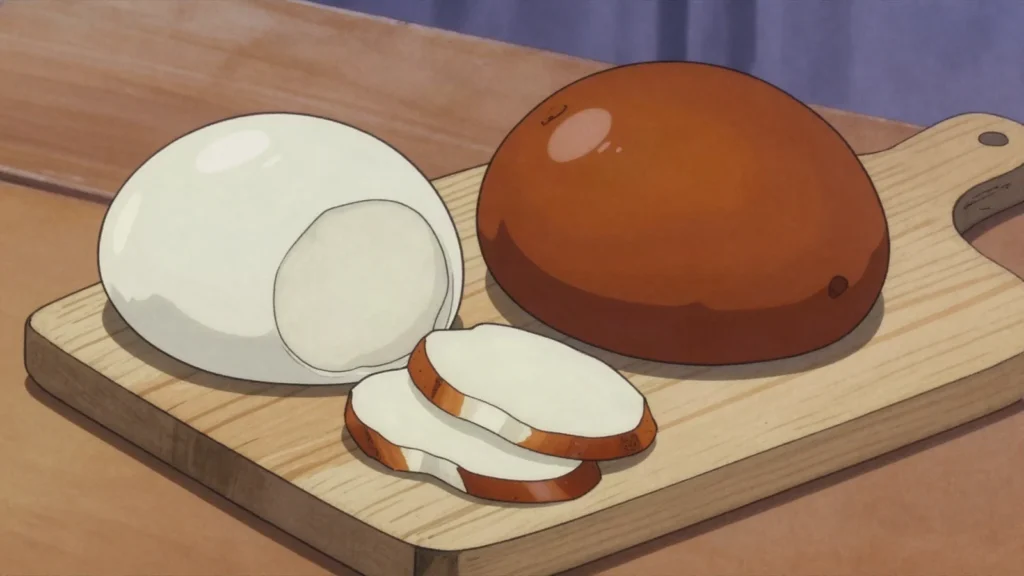
- For the smoked version, dry the surface a day in the fridge, then cold-smoke over alder or hornbeam at under 30°C (85°F) for 4–6 hours until amber.
Technique
- Sulguni is a pasta filata cheese, cousin to mozzarella and kashkaval. The single decisive variable is curd acidity at stretching, which is why cheesemakers test a strip in hot water rather than watching the clock.
- Raw milk carries a genuine risk of listeria, salmonella and E. coli. Use milk from a dairy you trust, or pasteurise at 63°C (145°F) for 30 minutes and add calcium chloride to restore the set.
- Keep the brine at 18 per cent and cold, and change it if it turns cloudy or ropey; weak brine softens the rind and lets spoilage bacteria in.
- Overworking the hot curd squeezes out butterfat and gives a tough, rubbery cheese that will never melt properly.
Substitutions
- For a vegetarian cheese use microbial or fig-derived rennet at the same dose; the set is a touch softer and the flavour slightly more bitter with long ageing.
- No starter culture: 200 ml live yoghurt or a cup of clean whey from a previous batch will acidify the milk, just more slowly.
Variations
- Fresh young sulguni, brined a day and eaten within the week.
- Smoked sulguni from Samegrelo, hung above the hearth until amber and firm.
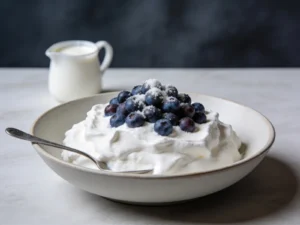
- Sulguni in matsoni or sour cream, a Megrelian breakfast, and the melting cheese inside elarji and khachapuri.
History
Kneaded pulled-curd cheese of Samegrelo and Svaneti; the melting heart of Megrelian khachapuri and of elarji.
Frequently asked questions
What is Sulguni?
Sulguni is a cheese & dairy from Georgia: springy brined cheese from Samegrelo, often smoked, melted into breads. Kneaded pulled-curd cheese of Samegrelo and Svaneti; the melting heart of Megrelian khachapuri and of elarji.
How long does Sulguni take to make?
Sulguni takes 1 hr of preparation and 8 hr, plus 24 hr in brine of cooking. The recipe makes about 1 kg cheese. It is rated hard to make.
What can I substitute in Sulguni?
Yes, within limits. For a vegetarian cheese use microbial or fig-derived rennet at the same dose; the set is a touch softer and the flavour slightly more bitter with long ageing. No starter culture: 200 ml live yoghurt or a cup of clean whey from a previous batch will acidify the milk, just more slowly.
What is the most important thing to get right in Sulguni?
Sulguni is a pasta filata cheese, cousin to mozzarella and kashkaval. The single decisive variable is curd acidity at stretching, which is why cheesemakers test a strip in hot water rather than watching the clock.