Ingredients
The meat
- 700 gbeef sirloin or rump
- or 700 g lamb leg
- cut into 2 cm cubes
- trimmed but with some fat
The fat
- 3 tablespoonsniter kibbeh
- spiced clarified butter
- or 3 tablespoons ghee
- plus a pinch of ground cardamom
- or 3 tablespoons oil
The aromatics
- 2onions, sliced thickly
- 4 clovesgarlic, chopped
- a thumb of ginger, chopped
- 2green chillies, sliced
- or to taste
- 1tomato, chopped
- optional
The seasoning
- 1 tablespoonberbere
- Eritrean chilli spice blend
- or 1 teaspoon for a milder dish
- half a teaspoon ground cardamom
- salt and black pepper
- a splash of water or stock
To finish
- a squeeze of lemon
- chopped rosemary
- a small sprig only
- chopped coriander
To serve
- injera flatbread
- or bread
- sliced raw onion
- green chillies, whole
- a bowl of yoghurt or ayib cheese
Directions
- Butter is melted and simmered with spices. The result keeps for months without refrigeration. Taste yours before deciding how much to use. Start with less if you do not know the blend. You cannot take heat back out of a pan. Cut the meat into cubes about two centimetres. Keep them roughly even so they cook evenly.
- Leave some fat on, since it carries flavour. Pat the cubes dry with kitchen paper. Take the meat out of the fridge beforehand. Cold meat drops the pan temperature sharply. Add the niter kibbeh and let it melt. Add the meat in a single layer in the pan. Do not crowd it or it will not sear.
- Cook in two batches if the pan is small. Leave it undisturbed for a full minute. It needs contact time to form a crust. Sear it for about four to five minutes total. The meat should be browned but still pink inside.
- Lift the meat out onto a plate for now. Add the sliced onions to the same pan. Use thick slices rather than fine ones. Thick onion keeps some bite in the finished dish. Fry them hard for about five minutes. They should soften and char at the edges. Add the garlic, ginger and green chillies. Fry them for another two minutes.
- Add the chopped tomato if you are using it. Some cooks include it and some do not. Stir them into the hot fat for thirty seconds. Do not let the berbere burn in the pan. Add a splash of water or stock now. Tibsi should be nearly dry, not saucy. Return the meat and its resting juices. Toss everything together over a high heat.
- Cook it for another three to four minutes. The meat should be just cooked through. Season with salt and plenty of black pepper. Add a small amount of chopped rosemary. Use it sparingly, since it dominates easily.
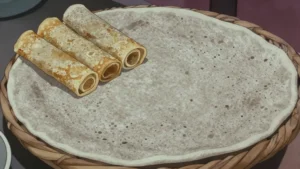
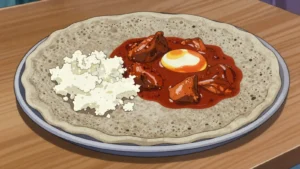
- Squeeze over a little lemon at the very end. Scatter chopped coriander over the top. Serve it immediately while still sizzling. It keeps sizzling all through the meal. Serve tibsi on injera, the sour flatbread. Eating is done with the right hand only.
Technique
- Use a tender cut. Tibsi is fast, hot cooking, and stewing beef simply turns tough — twenty minutes in a hot pan is nowhere near what a stewing cut needs. Sirloin, rump or lamb leg are right.
- Niter kibbeh is spiced clarified butter, made to keep for months without refrigeration, and it carries much of the dish’s character. Ghee with a pinch of cardamom is the nearest substitute and it is not the same thing. Buy it from an Eritrean or Ethiopian grocer if you can.
- Berbere blends vary enormously in heat. Taste yours before deciding how much to use, and start low — you cannot take heat back out of a pan.
- Restaurants serve tibsi in a clay dish set over hot coals so it keeps sizzling. Burning charcoal indoors produces carbon monoxide, which has no colour, smell or taste. Do not set up coals in a closed home kitchen; a very hot cast-iron pan on a wooden board gives the same effect safely.
- Sear the meat undisturbed rather than stirring it constantly. It needs contact time with the pan to form a crust, and constant stirring gives grey steamed meat instead.
- The dish is shared across Eritrea and Ethiopia, where it is called tibs, and the atlas records it as shared rather than assigning it to one side of a contested border.
- Asmara’s modernist architecture is UNESCO listed and it was built under an Italian colonial rule that was brutal and racially ordered, with Eritreans barred from parts of their own city. The atlas records both, not just the buildings.
Substitutions
- Ghee with a pinch of ground cardamom replaces niter kibbeh; plain oil works but loses a great deal.
- Lamb leg replaces beef directly and is equally traditional.
- A milder dish is made with a teaspoon of berbere rather than a tablespoon, or with paprika and a little chilli in its place.
- Bread replaces injera if teff flatbread is not available, though the sour flavour of injera is part of the balance.
- Yoghurt replaces ayib cheese as the cooling element.
- The tomato is optional; leaving it out gives a drier, sharper dish that some households prefer.
Variations
- Zilzil tibsi uses long strips of meat rather than cubes and is a common restaurant version.
- Derek tibsi is the dry version, cooked without tomato or added liquid until the meat is almost crisp.
- Awaze tibsi is finished with awaze, a thick paste of berbere and wine or water, giving a much hotter dish.
- Shekla tibsi arrives at the table in a clay dish over live coals and keeps sizzling throughout the meal.
- Chicken and goat versions are both made, with goat particularly for celebrations.
- A liver version, cooked the same way and served very rare, is eaten in both Eritrea and Ethiopia.
History
Cooked in Eritrean homes for guests and feast days, and a fixture of Asmara restaurants since the Italian era.
Frequently asked questions
What is Tibsi?
Tibsi is a main from Eritrea: beef or lamb cubes seared with onion, chilli and clarified butter, served sizzling. Cooked in Eritrean homes for guests and feast days, and a fixture of Asmara restaurants since the Italian era.
How long does Tibsi take to make?
Tibsi takes 20 minutes of preparation and 25 minutes of cooking. The recipe makes serves 4. It is rated easy to make.
What can I substitute in Tibsi?
Yes, within limits. Ghee with a pinch of ground cardamom replaces niter kibbeh; plain oil works but loses a great deal. Lamb leg replaces beef directly and is equally traditional. A milder dish is made with a teaspoon of berbere rather than a tablespoon, or with paprika and a little chilli in its place. Bread replaces injera if teff flatbread is not available, though the sour flavour of injera is part of the balance. Yoghurt replaces ayib cheese as the cooling element. The tomato is optional; leaving it out gives a drier, sharper dish that some households prefer.
What is the most important thing to get right in Tibsi?
Butter is melted and simmered with spices. The result keeps for months without refrigeration. Taste yours before deciding how much to use. Start with less if you do not know the blend. You cannot take heat back out of a pan. Cut the meat into cubes about two centimetres. Keep them roughly even so they cook evenly.