
Ingredients
Cake
- 250 gground almonds
- 250 gcaster sugar
- 4eggs
- grated zest of 1 lemon
- 1 tspground cinnamon
- a pinch of salt
- 1 tbspsweet wine or brandy, optional
To finish
- icing sugar
- a paper stencil of the Cross of Saint James
Optional base
- 1 sheetshortcrust pastry, for the version with a base
To serve
- with coffee
- or a glass of orujo
Directions
- Use good ground almonds, and grind them yourself from whole blanched almonds if you can. Grind them fairly coarsely rather than to a fine powder, which gives a better texture. Do not grind them to a paste, since releasing too much oil makes the cake heavy.
- Beat them for a good five minutes until pale, thick and considerably increased in volume. The mixture should fall from the whisk in a thick ribbon that holds its shape for a moment. Add the wine or brandy if you are using it.
- Fold gently with a spatula rather than stirring, and stop as soon as they are incorporated. Every extra stroke knocks out the air you have just spent five minutes beating in, and a deflated batter bakes into a dense flat cake.
- Bake at 180°C (355°F) for 35 to 40 minutes. It is done when the top is golden brown, the edges have shrunk slightly from the tin, and a skewer comes out with just a few moist crumbs.
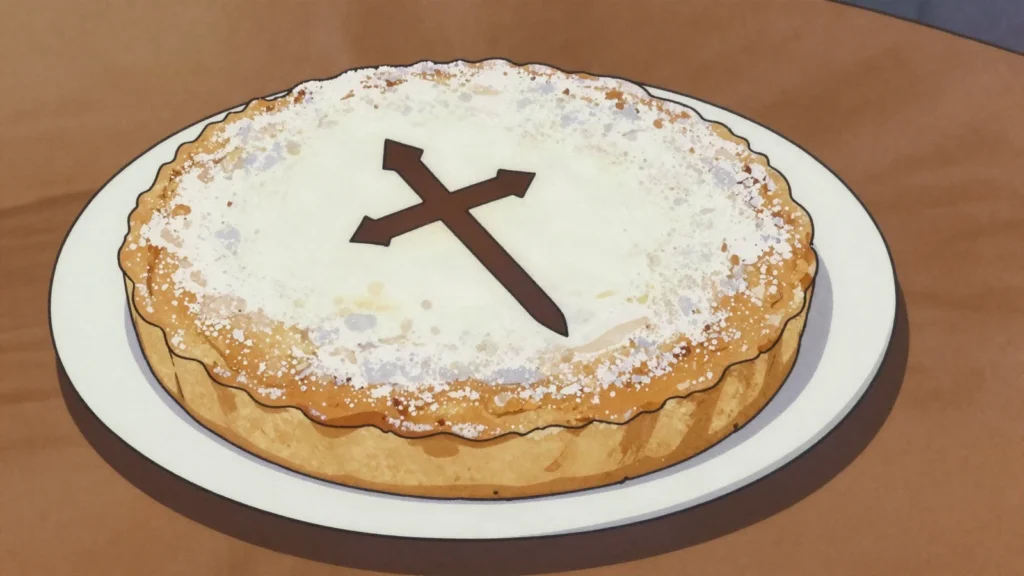
- Cool it completely in the tin. It must be completely cold before the stencil goes on, since icing sugar dissolves on a warm surface. Cut a stencil of the Cross of Saint James from paper, or buy one, and lay it flat on the cake. Hold the stencil flat against the surface so sugar cannot creep underneath.
- Sift it from a height and cover the surface completely, since a thin dusting gives a faint ghost of a cross rather than a sharp white one. Lift it vertically in one movement. The cross should stand out as a clean shape against white sugar.
- Serve it in wedges with coffee, or with a small glass of orujo. It keeps four or five days in a tin and it is arguably better on the second day.
Technique
- It holds EU protected geographical status as Tarta de Santiago.
- The 1924 stencil is a documented modern addition to a much older cake.
- It is naturally gluten free.
Substitutions
- Whole blanched almonds ground at home, which is better than shop-bought.
- Orange zest in place of lemon, which some bakeries use.
Variations
- With a shortcrust pastry base.
- With a splash of sweet wine or brandy.
- Made with a proportion of hazelnuts, which is not traditional.
History
Almond cake documented in Galicia since 1577; the Cross of Saint James stencilled in icing sugar was added by a Santiago baker in 1924.
Frequently asked questions
What is Tarta de Santiago?
Tarta de Santiago is a dessert from Spain: almond cake stenciled with the cross of Saint James. Almond cake documented in Galicia since 1577; the Cross of Saint James stencilled in icing sugar was added by a Santiago baker in 1924.
How long does Tarta de Santiago take to make?
Tarta de Santiago takes 20 min of preparation and 40 min of cooking. The recipe makes 10 servings. It is rated easy to make.
What can I substitute in Tarta de Santiago?
Yes, within limits. Whole blanched almonds ground at home, which is better than shop-bought. Orange zest in place of lemon, which some bakeries use.
What is the most important thing to get right in Tarta de Santiago?
Use good ground almonds, and grind them yourself from whole blanched almonds if you can. Grind them fairly coarsely rather than to a fine powder, which gives a better texture. Do not grind them to a paste, since releasing too much oil makes the cake heavy.