
Ingredients
Squid
- 600 gcleaned squid tubes, cut into rings 1 cm wide
- 250 mlmilk, for soaking
- 150 gplain flour, or fine durum wheat flour
- 1 tspfine salt
- olive oil, for deep frying
To serve
- 4crusty white rolls, about 20 cm long
- 1lemon, cut into wedges
- alioli, optional and not traditional
Directions
- Rinse the squid rings and dry them very thoroughly between sheets of kitchen paper. Wet squid spits violently in hot oil and steams its own coating loose.
- If you have time, soak the rings in the milk for 20 minutes, then drain and dry them again. The milk both softens the squid slightly and helps the flour cling in an even film.
- Pour olive oil into a deep pan to a depth of at least 5 cm and heat it to 190°C (375°F). The rings need to float freely rather than sit on the bottom.
- Season the flour with the salt, toss a handful of rings through it, then lift them into a sieve and shake hard. The Madrid coating is a thin dry dusting, not a batter, and every loose speck of flour left clinging will burn in the oil.
- Fry in small batches for 60 to 90 seconds, until the coating is pale gold and crisp. Squid is either cooked in under two minutes or braised for forty; there is nothing usable in between, and the second minute is where it turns to rubber.
- Lift the rings onto a wire rack rather than kitchen paper, so the steam escapes underneath instead of softening the crust, and salt them at once.
- Let the oil come back up to temperature between batches. A crashed oil temperature is the single most common reason for greasy calamares.
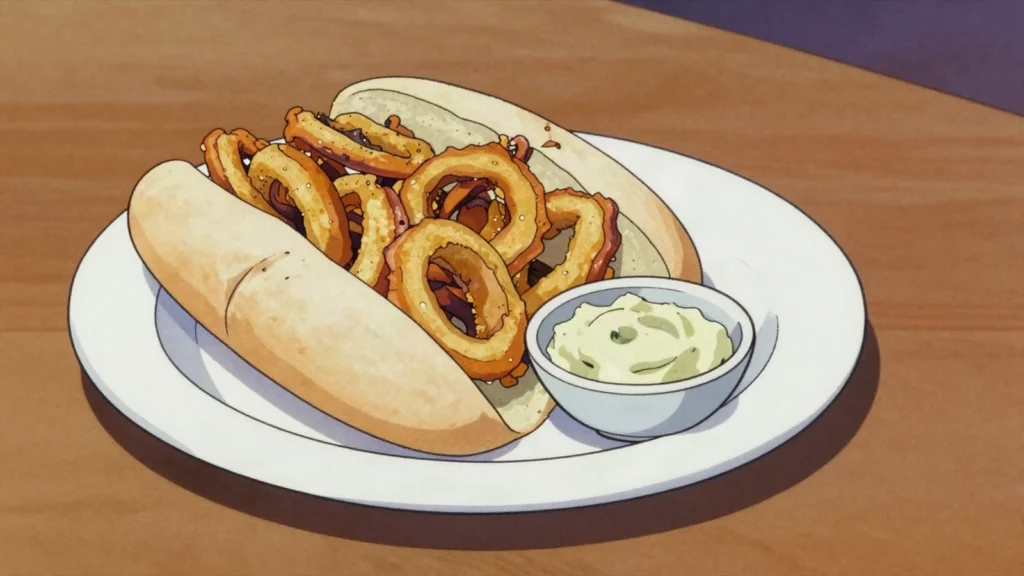
- Split the rolls lengthways without cutting all the way through. Add no butter and no mayonnaise: the classic Plaza Mayor bocadillo is bread and squid and nothing else.
- Pile the rings in while they are still crackling and eat immediately, with a lemon wedge squeezed over at the table rather than in the kitchen.
Technique
- Madrid is about as far from the sea as anywhere in Spain, and the sandwich exists because rail and ice brought Mediterranean squid inland. Nobody there finds it odd.
- The bread matters as much as the squid. It needs a crust that shatters and a crumb dry enough not to go soggy.
- Fry to pale gold, not deep brown. Colour here means overcooked squid underneath.
Substitutions
- Sunflower oil, which is what most Madrid bars actually use for volume frying.
- Chipirones, small whole squid, fried whole instead of cut into rings.
Variations
- With alioli, common now though purists object.
- In a squid-ink roll, a modern variation sold around La Latina.
- Andalusian style, coated in coarser semolina flour for a rougher crust.
History
A Madrid speciality despite the city lying far inland; rail and refrigeration brought Mediterranean squid to the bars around the Plaza Mayor.
Frequently asked questions
What is Bocadillo de calamares?
Bocadillo de calamares is a street food from Spain: fried squid rings stuffed in a baguette, Madrid classic. A Madrid speciality despite the city lying far inland; rail and refrigeration brought Mediterranean squid to the bars around the Plaza Mayor.
How long does Bocadillo de calamares take to make?
Bocadillo de calamares takes 20 min of preparation and 10 min of cooking. The recipe makes 4 sandwiches. It is rated easy to make.
What can I substitute in Bocadillo de calamares?
Yes, within limits. Sunflower oil, which is what most Madrid bars actually use for volume frying. Chipirones, small whole squid, fried whole instead of cut into rings.
What is the most important thing to get right in Bocadillo de calamares?
Pour olive oil into a deep pan to a depth of at least 5 cm and heat it to 190°C (375°F). The rings need to float freely rather than sit on the bottom.