
Ingredients
The meat
- 1.5 kggoat shoulder or mutton
- bone-in, cut into large pieces
- see the notes on the traditional meat
- 3 litrescold water
- 1whole onion, halved
- 6 clovesgarlic
- a thumb of ginger, sliced
The seasoning paste
- 3 tablespoonsdoenjang
- Korean fermented soybean paste
- 1 tablespoongochugaru
- Korean coarse chilli flakes
- 4 clovesgarlic, crushed
- 2 tablespoonsperilla seed powder
- or 2 tablespoons ground sesame
- 2 tablespoonssoy sauce
The greens
- 300 gspring onions
- cut into long lengths
- 200 gfresh perilla leaves
- or 200 g young chard leaves
- 150 gdried taro stems
- soaked overnight and boiled
- or 150 g bracken fern, prepared
- or 200 g leeks, sliced
To finish
- 2 tablespoonsperilla oil
- or toasted sesame oil
- ground black pepper
- extra gochugaru, to taste
- salt, to taste
To serve
- steamed short-grain rice
- kimchi
- a dish of coarse salt
- extra chilli flakes
Directions
- Start by preparing the meat for the broth. Rinse the goat or mutton under cold running water. Put it in a large pot and cover with cold water. Bring it slowly up to a rolling boil. Boil it hard for about five full minutes. Drain the meat and discard all of that water. Rinse the pot and rinse the meat pieces too.
- Return the rinsed meat to the cleaned pot. Add three litres of fresh cold water to it. Add the halved onion and the whole garlic cloves. Add the sliced ginger to the pot as well. Bring it to a boil and then lower the heat. Keep it at a bare simmer, barely bubbling. Simmer it gently for about two and a half hours. The meat should become genuinely fork tender.
- Skim any foam off the surface as it appears. Skim the fat too if there is a great deal. Some fat should stay for flavour and richness. Drain them and boil them for thirty minutes. Drain again and rinse them under cold water.
- Cut them into finger lengths once softened. There is a real safety point about taro stems. Wash the perilla leaves and leave them whole. Cut the spring onions into long finger lengths. Let it cool until you can handle it safely. Strain the broth through a sieve into a clean pot.
- Discard the onion, garlic and ginger pieces. Pull the meat off the bones with your fingers. Tear it into shreds rather than cutting it. Put the torn meat into a large mixing bowl. Add the doenjang and the chilli flakes to the meat.
- Add the crushed garlic and the soy sauce next. Add the perilla seed powder or ground sesame. Mix everything through the meat with your hands. Wear gloves if the chilli bothers your skin. Let the seasoned meat stand for fifteen minutes.
- Bring the strained broth back up to a simmer. Stir the seasoned meat back into the hot broth. Add the prepared taro stems or bracken now. Simmer everything together for twenty minutes. Taste it and adjust the salt and the chilli. It should be strongly savoury and clearly hot.
- Add the spring onions in the last five minutes. They should soften but keep some of their bite. Add the perilla leaves in the final minute only. They wilt almost instantly in the hot broth.
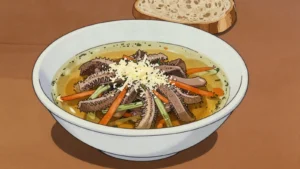
- Stir in the perilla oil off the heat at the end. Grind over plenty of black pepper to finish. Ladle the soup into deep individual bowls. Make sure each bowl gets meat, greens and broth. Serve it with a bowl of steamed short-grain rice. The soup is eaten very hot despite the weather.
- Add a splash of water if it has thickened too far. Add fresh perilla leaves again when reheating it. Freeze it without the leaves and add them later.
Technique
- The traditional meat of tangogi guk is dog. The atlas records that plainly because the dish is real and widely documented, but it gives no sourcing or butchery guidance: the trade is illegal in most countries, including throughout the EU, the UK and the US, South Korea legislated a ban in 2024 that is being phased in, and meat outside any inspection system carries genuine safety risks. The method here uses goat or mutton and is labelled as a substitution rather than presented as the original.
- Everything else in the soup — the doenjang and gochugaru seasoning, the perilla seed thickening, the taro stems, the long-cut spring onions, the perilla oil finish — is the authentic structure of the dish and is unchanged.
- Perilla seed powder, deulkkae garu, is the ingredient that gives this soup its particular nutty body. Ground sesame is a fair substitute but it is noticeably thinner.
- Taro stems must be bought dried, soaked overnight and boiled thoroughly. Raw taro carries calcium oxalate crystals that sharply irritate the mouth and throat. The same caution applies to bracken fern, which needs its own soaking and boiling; buy it ready prepared if you are unsure.
- The initial hard boil and full drain is not optional. It is what separates a clean broth from a muddy, strongly muttony one.
- Eating a fiercely hot soup in the hottest weeks of summer is the point. The same reasoning sits behind samgyetang, the chicken and ginseng soup eaten on the same days.
Substitutions
- Goat shoulder is the closest substitute in texture and in strength of flavour. Mutton is the easier one to buy and works well.
- Beef shin or brisket makes a milder soup that still carries the seasoning properly.
- Ground toasted sesame replaces perilla seed powder, though the body will be thinner.
- Leeks replace taro stems or bracken entirely, and give a simpler soup that is still recognisable.
- Young chard or spinach replaces perilla leaves, though the fragrance is quite different. Add them just as briefly.
- Toasted sesame oil replaces perilla oil directly.
Variations
- Boshintang is the closely related South Korean soup, made and named differently, and now the subject of the phased 2024 ban on the trade.
- Samgyetang, chicken stuffed with ginseng, rice and jujube, is the other great sambok stamina soup and is eaten on the same hottest days.
- Goat soup made in this style, with doenjang, perilla and long-cut spring onions, is a common dish in its own right across the peninsula.
- Some cooks add a handful of soaked mung bean sprouts near the end for texture.
- A thicker version, closer to a stew than a soup, is made by reducing the broth further and doubling the perilla seed powder.
- Restaurant versions in Pyongyang are reported to serve the meat separately from the broth, with a dish of salt alongside.
History
Officially promoted in North Korea as a national dish, with state-run Pyongyang restaurants specialising in it.
Frequently asked questions
What is Tangogi Guk?
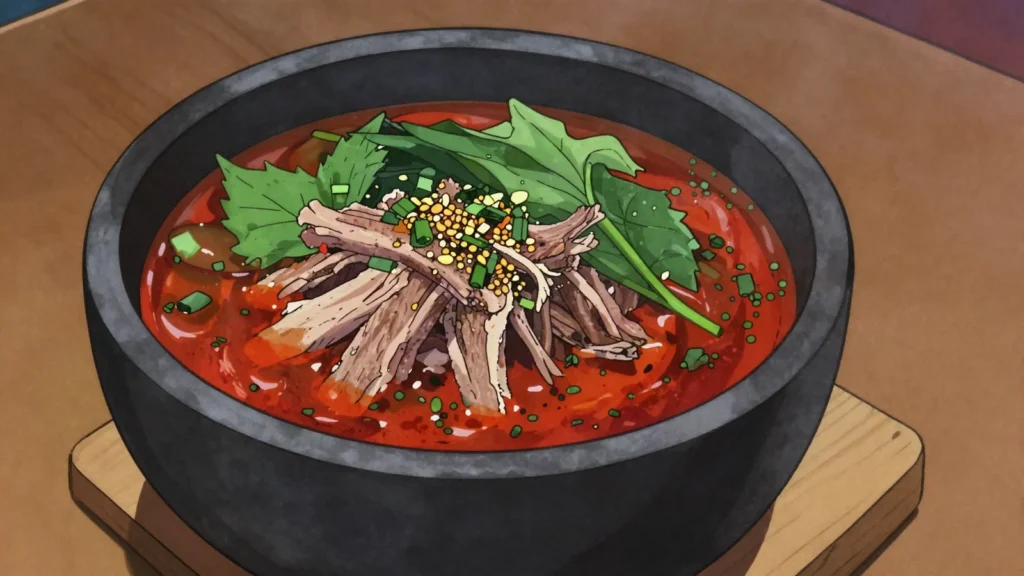
Tangogi Guk is a soup & stew from North Korea: dog-meat soup with perilla and greens, eaten as a summer stamina dish. Officially promoted in North Korea as a national dish, with state-run Pyongyang restaurants specialising in it.
How long does Tangogi Guk take to make?
Tangogi Guk takes 30 minutes of preparation and 3 hours of cooking. The recipe makes serves 6. It is rated medium to make.
What can I substitute in Tangogi Guk?
Yes, within limits. Goat shoulder is the closest substitute in texture and in strength of flavour. Mutton is the easier one to buy and works well. Beef shin or brisket makes a milder soup that still carries the seasoning properly. Ground toasted sesame replaces perilla seed powder, though the body will be thinner. Leeks replace taro stems or bracken entirely, and give a simpler soup that is still recognisable. Young chard or spinach replaces perilla leaves, though the fragrance is quite different. Add them just as briefly. Toasted sesame oil replaces perilla oil directly.
What is the most important thing to get right in Tangogi Guk?
Return the rinsed meat to the cleaned pot. Add three litres of fresh cold water to it. Add the halved onion and the whole garlic cloves. Add the sliced ginger to the pot as well. Bring it to a boil and then lower the heat. Keep it at a bare simmer, barely bubbling. Simmer it gently for about two and a half hours. The meat should become genuinely fork tender.