
Ingredients
Drink
- 60 mlLicor 43
- 30 mlfreshly pulled hot espresso (a single ristretto-length shot)
- Ice cubes, large and hard, for shaking and for the glass
Glass and garnish
- 1old fashioned or short highball glass, chilled
- 1wide strip of orange peel, or 3 coffee beans (optional)
Directions
- Chill the glass by filling it with ice and a splash of water while you work, or keep it in the freezer.
- Fill a cocktail shaker two-thirds with hard, cold ice cubes. Wet or shattered ice will over-dilute the drink in seconds.
- Pour the Licor 43 over the ice and shake vigorously for 8–10 seconds, until the outside of the tin frosts. Shaking the liqueur alone chills it and whips air into it, which is what carries the espresso foam later.
- Empty the serving glass, refill it with two or three large fresh cubes, and strain the shaken liqueur over them.
- Pull the espresso now, at the last possible moment, so it arrives hot and with a thick crema still intact.
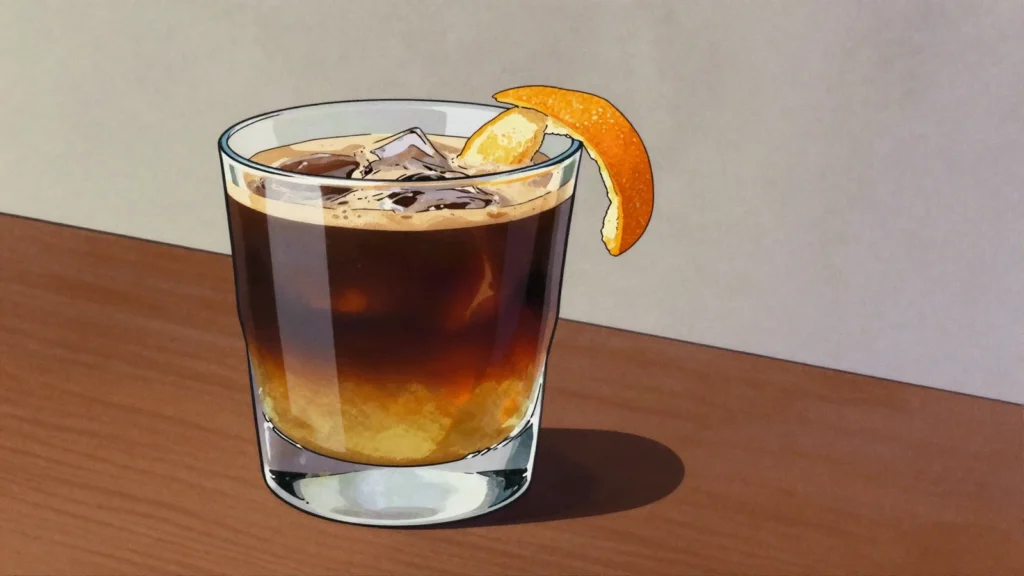
- Pour the hot shot slowly over the back of a bar spoon held just above the surface, so it layers and floats in a caramel band over the cold liqueur before it sinks.
- Serve immediately, with the layers still visible and a tan head of crema on top. Twist the orange peel over the surface and drop it in if you like.
- Drink it while the contrast of hot coffee and cold liqueur is still there. Stirred and left standing it becomes an ordinary iced coffee liqueur.
Technique
- The Mexican carajillo is not the Spanish one. In Spain a carajillo is coffee laced with brandy, rum or anis; in Mexico it is specifically Licor 43 with espresso, served on ice, and it has become the standard after-dinner order in restaurants across the country.
- Licor 43 is a Spanish vanilla-and-citrus liqueur at 31 percent ABV, sweet and low-strength, which is why the ratio runs liqueur-heavy at roughly two to one. Substituting a spirit at 40 percent throws the balance out completely.
- Some Mexico City bars shake the espresso and the liqueur together over ice for a uniformly cold, foamy drink. The layered hot-over-cold build given here is the older restaurant service.
- Espresso, not brewed coffee. You need the concentration and the crema; a long filter coffee simply dilutes the drink.
Substitutions
- No espresso machine: 30 ml of very strong stovetop moka coffee is the standard home substitute and gives a similar body.
- No Licor 43: a vanilla-forward liqueur such as Tuaca, or Galliano cut with a little vanilla syrup, is the nearest match, though neither has the same citrus note.
Variations
- Carajillo Torino uses vermouth alongside the coffee, a Mexico City bar riff.
- A frozen version, blended with ice into a slush, is common in Cancun and coastal restaurants.
- Some serve it in a small snifter without ice, straight liqueur topped with espresso, closer to the Spanish original.
History
Spanish in origin, adopted wholesale by Mexico City restaurants where it is now the standard after-dinner drink.
Frequently asked questions
What is Carajillo?
Carajillo is a cocktail from Mexico: licor 43 shaken over ice and topped with a shot of hot espresso. Spanish in origin, adopted wholesale by Mexico City restaurants where it is now the standard after-dinner drink.
How long does Carajillo take to make?
Carajillo takes 3 min of preparation and 1 min to pull the espresso of cooking. The recipe makes 1 cocktail. It is rated easy to make.
What can I substitute in Carajillo?
Yes, within limits. No espresso machine: 30 ml of very strong stovetop moka coffee is the standard home substitute and gives a similar body. No Licor 43: a vanilla-forward liqueur such as Tuaca, or Galliano cut with a little vanilla syrup, is the nearest match, though neither has the same citrus note.
What is the most important thing to get right in Carajillo?
Pull the espresso now, at the last possible moment, so it arrives hot and with a thick crema still intact.