
Ingredients
Bread
- 8thick slices of pa de pagès, or a rustic open-crumb loaf
Tomato
- 4very ripe tomatoes, ideally tomàquet de penjar
To finish
- 1 clovegarlic, halved, optional
- good extra virgin olive oil
- flaky salt
Often served with
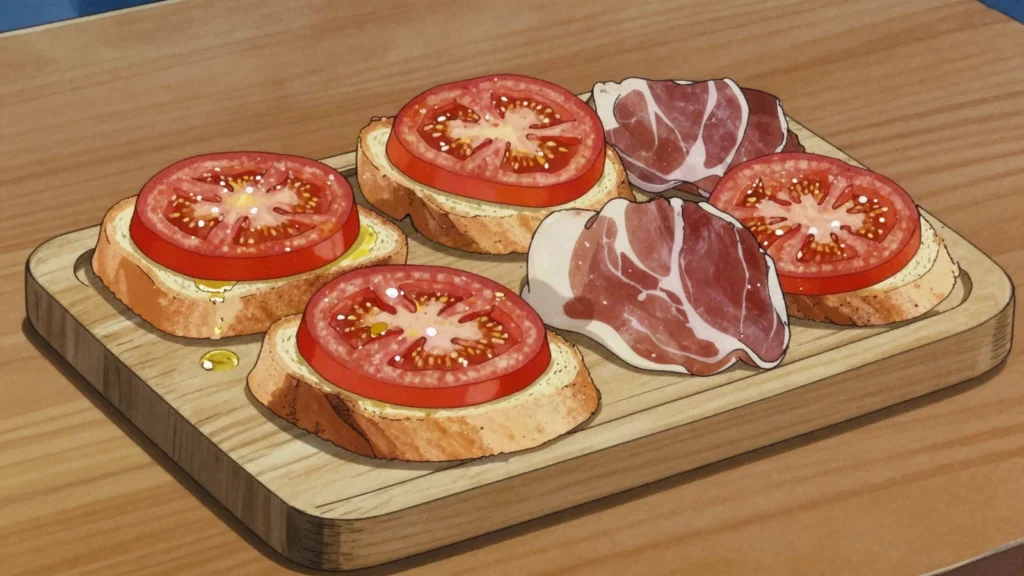
- jamón
- anchovies
- manchego
- botifarra
Directions
- Use bread with a proper open crumb and a real crust, and slightly stale bread is better than fresh. The dish exists because it was a way of reviving stale bread in nineteenth-century Catalan farmhouses, and that is still what it does best.
- Toast the bread over a fire, on a griddle or under a grill until it is golden and crisp on both sides.
- Toast it properly. Soft bread tears under the tomato instead of grating it, and the rough toasted surface is what does the work.
- Press firmly and work in circles. The toast grates the flesh out and leaves the skin in your hand, which is exactly what should happen.
- Pour olive oil over generously and be far more generous than seems reasonable.
- Finish with flaky salt, and salt it at the last moment.
- Salt draws water out of the tomato, so salting early gives a soggy slice. Eat it immediately, within a minute or two.
Technique
- The Andalusian version blends the tomato into a pulp and spoons it on, which Catalans consider a different thing.
- Winter is when the hanging tomatoes are at their best, which is why it is not only a summer dish.
- Day-old country bread is genuinely better than fresh.
Substitutions
- Any ripe, juicy tomato, halved and rubbed.
- Sourdough or any open-crumb rustic loaf.
Variations
- Without garlic, which is the more common Catalan way.
- Topped with anchovies, jamón or cured sausage.
- The Andalusian version, with grated tomato pulp.
History
Toasted bread, rubbed with fresh garlic and ripe tomato and drizzled generously with olive oil and salt, documented across Spain, particularly Catalonia, as one of the country’s most essential and simple traditional dishes, commonly eaten for breakfast or as an accompaniment to a larger meal. Its extremely simple preparation, relying on just bread, tomato, garlic, olive oil and salt, reflects a broader Catalan and wider Spanish culinary philosophy of allowing a few high-quality, fresh ingredients to define a dish rather than relying on elaborate technique. Pan con tomate remains deeply tied to Catalan culinary identity specifically, though it is now eaten and appreciated across Spain as a whole.
Frequently asked questions
What is Pan con tomate?
Pan con tomate is a breakfast from Spain: toasted bread rubbed with tomato, garlic, olive oil. Toasted bread, rubbed with fresh garlic and ripe tomato and drizzled generously with olive oil and salt, documented across Spain, particularly Catalonia, as one of the country’s most essential and simple traditional dishes, commonly eaten for breakfast or as an accompaniment to a larger meal. Its extremely simple preparation, relying on just bread, tomato, garlic, olive oil and salt, reflects a broader Catalan and wider Spanish culinary philosophy of allowing a few high-quality, fresh ingredients to define a dish rather than relying on elaborate technique. Pan con tomate remains deeply tied to Catalan culinary identity specifically, though it is now eaten and appreciated across Spain as a whole.
How long does Pan con tomate take to make?
Pan con tomate takes 10 min of preparation and 5 min of cooking. The recipe makes 4 servings. It is rated easy to make.
What can I substitute in Pan con tomate?
Yes, within limits. Any ripe, juicy tomato, halved and rubbed. Sourdough or any open-crumb rustic loaf.
What is the most important thing to get right in Pan con tomate?
Toast it properly. Soft bread tears under the tomato instead of grating it, and the rough toasted surface is what does the work.