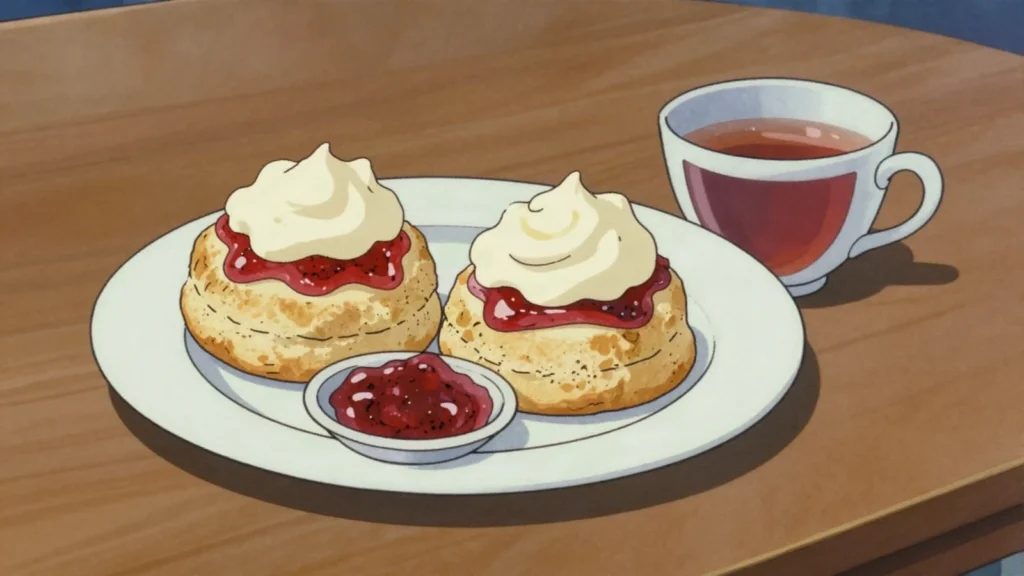

Ingredients
Dough
- 450 gself-raising flour, or plain flour with 4 tsp baking powder
- 80 gcold butter, cubed
- 50 gcaster sugar
- ½ tspsalt
- 250 mlcold milk
- 1 tsplemon juice, optional
Optional
- 100 gsultanas
- grated zest of 1 lemon
To glaze
- 1egg beaten with a little milk
To serve
- clotted cream
- strawberry jam
- a pot of tea
Equipment
- a 6 cm round cutter
Directions
- Keep everything cold, and use butter straight from the fridge. Cold butter is what makes a scone rise. Rub the cubed butter into the flour, sugar and salt with your fingertips until it looks like coarse breadcrumbs.
- Work quickly and lift your hands high as you rub, which cools the mixture as it falls. Leave some pieces of butter the size of small peas rather than rubbing it all in.
- Add the lemon juice to the milk and let it stand a minute, which sours it slightly. Bring it together with a knife, using a cutting motion rather than stirring.
- Use a knife rather than your hands and stop the moment it comes together into a shaggy mass. The dough should look rough and untidy and be slightly sticky. Tip it onto a floured surface and pat it out with your hands. Pat it to at least 2.5 cm thick, and thicker if you want tall scones.
- Dip the cutter in flour and press straight down without twisting. Never twist the cutter. Set them close together on a lined tray. Brush the tops with egg wash, keeping it off the sides.
- Keep the glaze off the cut sides for the same reason as the cutter: it glues the layers and stops them rising. Bake at 220°C (430°F) for 12 to 15 minutes until well risen and golden on top. A hot oven, always.
- Cool them on a rack, wrapped loosely in a clean tea towel. The cloth traps a little steam and keeps them soft.
Technique
- Buttermilk in place of milk gives a noticeably lighter scone.
- Cheese and savoury scones are made the same way with the sugar reduced.
- They freeze well baked and are refreshed briefly in a hot oven.
Substitutions
- Buttermilk or soured milk in place of fresh milk.
- Plain flour with baking powder, if you have no self-raising.
Variations
- Fruit scones, with sultanas.
- Cheese scones, savoury with mustard powder.
- Griddle scones, cooked on a hot plate as the older bannock.
History
A small, slightly sweet baked good, made from a simple dough of flour, butter and milk, traditionally served split and topped with clotted cream and jam as part of a British afternoon tea, documented across the United Kingdom for many generations, with its specific origin genuinely debated among food historians, several tracing early versions back to Scotland during the 1500s, developed from an earlier flatbread tradition using oats rather than wheat flour. Its preparation, requiring cold butter worked quickly into the flour to create a light, crumbly texture, is considered essential to a properly made scone, and the correct order for topping a scone with cream and jam remains a long-running, good-natured regional debate within the United Kingdom itself. The scone remains a defining centerpiece of traditional British afternoon tea.
Frequently asked questions
What is Scone?
Scone is a bread & pastry from United Kingdom: small quick bread split with clotted cream and jam. A small, slightly sweet baked good, made from a simple dough of flour, butter and milk, traditionally served split and topped with clotted cream and jam as part of a British afternoon tea, documented across the United Kingdom for many generations, with its specific origin genuinely debated among food historians, several tracing early versions back to Scotland during the 1500s, developed from an earlier flatbread tradition using oats rather than wheat flour. Its preparation, requiring cold butter worked quickly into the flour to create a light, crumbly texture, is considered essential to a properly made scone, and the correct order for topping a scone with cream and jam remains a long-running, good-natured regional debate within the United Kingdom itself. The scone remains a defining centerpiece of traditional British afternoon tea.
How long does Scone take to make?
Scone takes 15 min of preparation and 15 min of cooking. The recipe makes 10 scones. It is rated easy to make.
What can I substitute in Scone?
Yes, within limits. Buttermilk or soured milk in place of fresh milk. Plain flour with baking powder, if you have no self-raising.
What is the most important thing to get right in Scone?
Work quickly and lift your hands high as you rub, which cools the mixture as it falls. Leave some pieces of butter the size of small peas rather than rubbing it all in.