
Ingredients
Vegetables
- 4potatoes, peeled and cubed
- 200 gcauliflower florets
- 150 ggreen peas
- 2carrots, diced
- 1green pepper, chopped
Base
- 150 gbutter
- 3onions, finely chopped
- 6tomatoes, chopped
- 1 tbspginger garlic paste
- 3 tbsppav bhaji masala
- 1 tspred chilli powder, or Kashmiri chilli for colour
- ½ tspturmeric
- salt
To finish
- juice of 1 lemon
- 1 bunchcoriander, chopped
- more butter
Pav
- 12pav, soft square rolls
- butter, for toasting
- a pinch of pav bhaji masala
To serve
- finely chopped raw onion
- lemon wedges
Directions
- Boil the potatoes, cauliflower, carrots and peas together until very soft, about 15 minutes. Cook the vegetables well past tender, because they are going to be mashed and firm ones will not break down. Drain them, keeping a cup of the cooking water. Mash them roughly and set them aside.
- Melt a generous knob of the butter in a wide heavy pan or on a flat tawa. A wide flat pan matters more than it sounds, because the mashing and the frying happen together across the surface.
- Fry the onions until soft and golden, about 10 minutes, then add the ginger garlic paste. Add the chopped tomatoes and cook them right down, mashing them as they go, for 10 minutes.
- Cook the tomatoes until they collapse completely and the mixture darkens and thickens. Add the green pepper, then the pav bhaji masala, chilli powder, turmeric and salt.
- Mash everything together in the pan with a potato masher, working continuously for 10 minutes. Keep adding small splashes of water and keep mashing and scraping. Let it catch very slightly on the base and scrape it up, which builds depth. The bhaji should end up smooth but not a purée, with a few recognisable pieces left.
- Add the butter in stages rather than all at once, so it emulsifies into the bhaji rather than sitting on top. Finish with lemon juice and most of the coriander. Taste it: it should be tangy, buttery and clearly spiced, and hotter than seems polite.
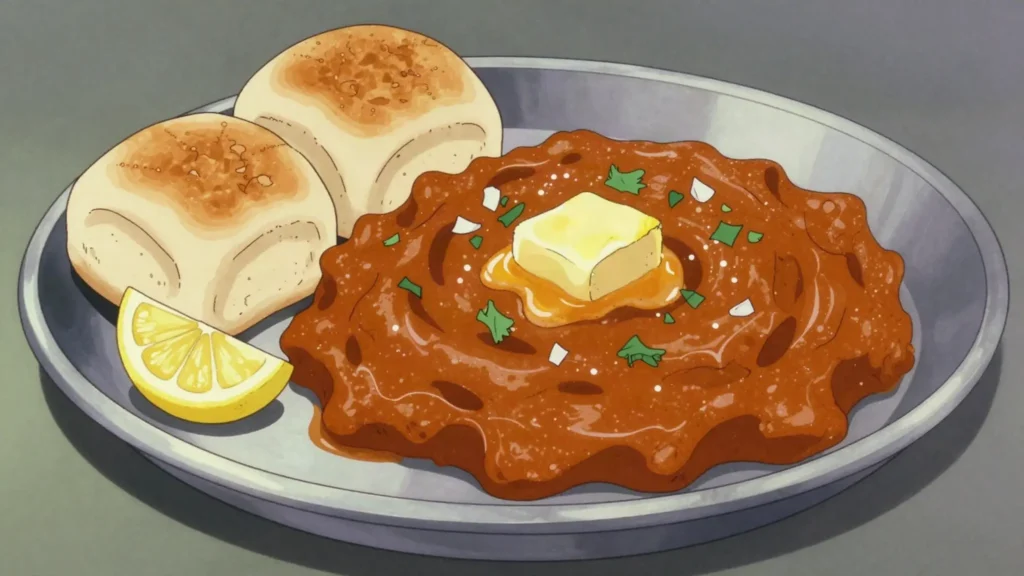
- Melt butter on the tawa, sprinkle a pinch of the masala into it, and press the cut faces down into it. Toast until golden and crisp on the cut faces only. Serve the bhaji in a bowl with a final knob of butter melting on top, the toasted pav alongside, and raw onion, coriander and lemon on the side.
Technique
- The vegetables are flexible and using up whatever is in the house is the original spirit of the dish.
- Beetroot is added by some vendors for colour, which is a Mumbai habit.
- It reheats well with a splash of water and a fresh knob of butter.
Substitutions
- Soft burger buns or dinner rolls in place of pav.
- A homemade blend of garam masala, amchur, fennel and coriander, which is close but not the same.
Variations
- Cheese pav bhaji, with grated cheese melted over.
- Jain pav bhaji, made without onion, garlic or potato.
- Khada pav bhaji, left chunky rather than mashed.
History
A thick, spiced vegetable mash served with soft, butter-toasted bread rolls called pav, invented in Mumbai, then Bombay, in the 1850s or 1860s as a fast, filling meal for millworkers, whose short lunch breaks in the city’s booming textile mills left little time for a full traditional meal. The pav bread itself reflects Portuguese colonial influence on Indian baking, since pão, the Portuguese word for bread, and the soft, yeasted roll it describes were introduced through Portuguese presence on India’s western coast, distinguishing pav from more traditional Indian flatbreads. What began specifically as inexpensive millworker street food spread over the following century into one of Mumbai’s most widely recognized street foods, now eaten across all classes rather than remaining tied to its working-class origin.
Frequently asked questions
What is Pav Bhaji?
Pav Bhaji is a street food from India: buttery mashed vegetable curry with toasted buns, Mumbai beach food. A thick, spiced vegetable mash served with soft, butter-toasted bread rolls called pav, invented in Mumbai, then Bombay, in the 1850s or 1860s as a fast, filling meal for millworkers, whose short lunch breaks in the city’s booming textile mills left little time for a full traditional meal. The pav bread itself reflects Portuguese colonial influence on Indian baking, since pão, the Portuguese word for bread, and the soft, yeasted roll it describes were introduced through Portuguese presence on India’s western coast, distinguishing pav from more traditional Indian flatbreads. What began specifically as inexpensive millworker street food spread over the following century into one of Mumbai’s most widely recognized street foods, now eaten across all classes rather than remaining tied to its working-class origin.
How long does Pav Bhaji take to make?
Pav Bhaji takes 25 min of preparation and 40 min of cooking. The recipe makes 6 servings. It is rated easy to make.
What can I substitute in Pav Bhaji?
Yes, within limits. Soft burger buns or dinner rolls in place of pav. A homemade blend of garam masala, amchur, fennel and coriander, which is close but not the same.
What is the most important thing to get right in Pav Bhaji?
Add the butter in stages rather than all at once, so it emulsifies into the bhaji rather than sitting on top. Finish with lemon juice and most of the coriander. Taste it: it should be tangy, buttery and clearly spiced, and hotter than seems polite.