
Ingredients
Dough
- 500 gplain flour
- 1 tspfine salt
- 60 gvegetable shortening or softened butter, for the dough
- 250 mlwarm water
- 1 tbspwhite vinegar
For laminating
- 180 gvegetable shortening or clarified butter, soft but not melted
Filling
- 400 gdulce de membrillo, cut into 2 cm squares 1 cm thick
- or the same in dulce de batata
Frying and glaze
- 1.2 litressunflower oil
- 200 gsugar dissolved in 100 ml water with a strip of lemon peel
- coloured sugar sprinkles (grana), optional
Directions
- Work the flour, salt, the 60 g of fat, the vinegar and enough warm water into a smooth, elastic dough, then knead 8 minutes until it is silky. Rest it covered for 30 minutes.
- Roll the dough out as thin as you can on a lightly floured bench, ideally under 2 mm, until you can see the bench through it.
- Smear the laminating fat over the whole sheet with your hand, fold it in three like a letter, turn 90 degrees, roll out thin again and repeat the fold twice more. Rest for 30 minutes in the fridge between the second and third fold.
- Roll the rested block out to 2 mm one final time and cut it into 8 cm squares. You need two squares per pastelito.
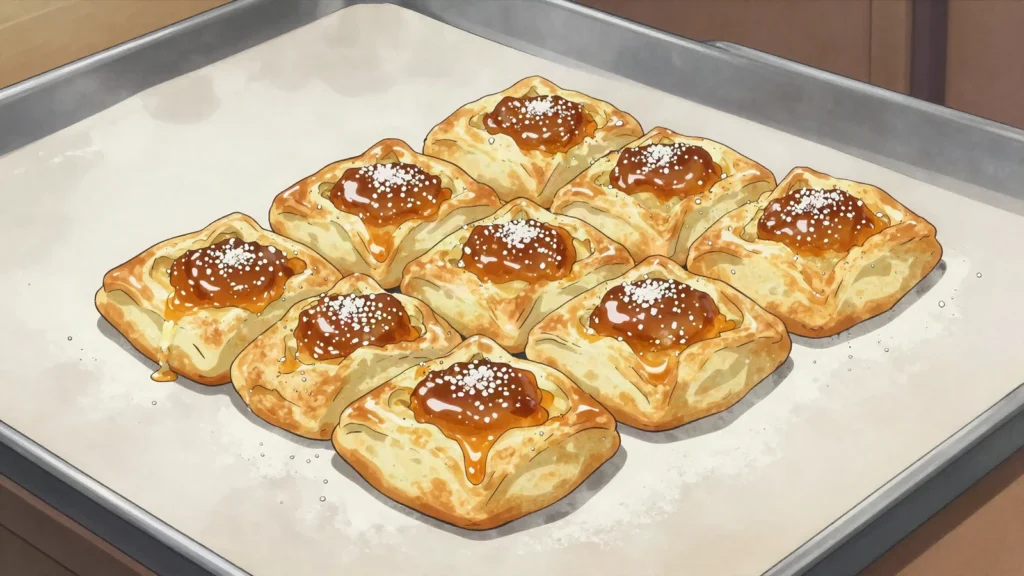
- Brush the centre of one square with water, set a square of quince paste on it, and lay the second square on top rotated 45 degrees so the points make an eight-pointed star. Press firmly all around the filling to seal, then pinch and lift each point upward.
- Heat the oil to 150°C (300°F) and fry three or four at a time for about 3 minutes, spooning hot oil over the tops so the points open out into petals.
- Lift them into a second pan of oil at 180°C (350°F) for 1 to 2 minutes, until deep gold and crisp; the two-temperature fry is what makes the layers separate and stand up.
- Drain briefly, then dip each pastelito into the hot sugar syrup, turn to coat, and set on a rack. Scatter sprinkles while the glaze is tacky, and eat within a few hours.
Technique
- Pastelitos criollos are the pastry of the patriotic dates, eaten on 25 May and 9 July, and the eight points are said to echo the sun on the flag. That symbolism is folkloric rather than documented.
- The traditional laminating fat is rendered animal fat (grasa), which shatters more sharply than butter; solid vegetable shortening is the closest meat-free match and behaves almost identically. Butter alone browns faster and gives softer layers.
- Sealing matters. Any gap and the quince leaks into the oil, burns and darkens the whole batch.
Substitutions
- In a hurry, use two 8 cm squares of all-butter puff pastry rolled a little thinner than sold; the shape and glaze work, the layers are less fine.
Variations
- Pastelitos de batata swap the quince for sweet potato paste and are typical of the Litoral.
- In parts of the interior they are dusted with icing sugar instead of being dipped in syrup.
History
Small, flaky, deep-fried pastries, filled with quince or sweet potato paste and finished with a sugar glaze, documented across Argentina as a traditional treat particularly associated with the country’s national holidays, especially Argentina’s Independence Day celebrations in May and July. Its flaky, layered pastry dough, achieved through a specific rolling and folding technique, reflects Spanish colonial-era pastry-making tradition carried to Argentina and adapted with the addition of quince paste, called dulce de membrillo, a fruit preserve especially significant across Argentine and wider Southern Cone dessert-making. Pastelitos remain closely tied to Argentine patriotic celebrations specifically, commonly sold from street vendors during those national holidays.
Frequently asked questions
What is Pastelitos?
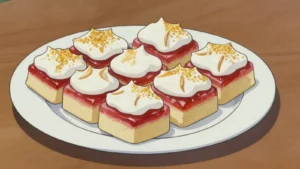
Pastelitos is a bread & pastry from Argentina: fried laminated squares with quince, syrup-glazed; patriotic holidays. Small, flaky, deep-fried pastries, filled with quince or sweet potato paste and finished with a sugar glaze, documented across Argentina as a traditional treat particularly associated with the country’s national holidays, especially Argentina’s Independence Day celebrations in May and July. Its flaky, layered pastry dough, achieved through a specific rolling and folding technique, reflects Spanish colonial-era pastry-making tradition carried to Argentina and adapted with the addition of quince paste, called dulce de membrillo, a fruit preserve especially significant across Argentine and wider Southern Cone dessert-making. Pastelitos remain closely tied to Argentine patriotic celebrations specifically, commonly sold from street vendors during those national holidays.
How long does Pastelitos take to make?
Pastelitos takes 1 hr plus 1 hr resting of preparation and 25 min of cooking. The recipe makes about 20 pastelitos. It is rated hard to make.
What can I substitute in Pastelitos?
Yes, within limits. In a hurry, use two 8 cm squares of all-butter puff pastry rolled a little thinner than sold; the shape and glaze work, the layers are less fine.
What is the most important thing to get right in Pastelitos?
Smear the laminating fat over the whole sheet with your hand, fold it in three like a letter, turn 90 degrees, roll out thin again and repeat the fold twice more. Rest for 30 minutes in the fridge between the second and third fold.