
Ingredients
Scald
- 300 gfine yellow maize flour
- 500 mlboiling water
- 1 tspsalt
Dough
- 200 grye flour
- 150 gstrong white flour
- 5 ginstant yeast
- 150 mlwarm water
- 1½ tsp salt
To finish
- extra maize flour, for dusting
Directions
- Put the maize flour and salt in a large bowl and pour the boiling water over it all at once, stirring hard with a wooden spoon until it comes together as a stiff paste. This scald is not optional: maize has no gluten and will not hydrate properly in cold water, and skipping it gives a loaf that crumbles into sand.
- Cover the bowl and leave it until it has dropped to blood heat, about 40 minutes.
- Whisk the yeast into the warm water and leave it for 10 minutes until it froths.
- Work the rye flour, white flour, salt and the yeast liquid into the cooled maize paste. It will stay heavy and tacky and it will never become the smooth elastic dough you would get from wheat, which is correct and not a fault.
- Knead for 10 minutes as best you can, using a dough scraper and wet hands rather than more flour.
- Cover and prove for 2 hours. It rises slowly and only somewhat, because there is very little gluten in it to hold the gas.
- Shape it into a single high dome on a floured tray, dust the top heavily with maize flour, and prove for a further 45 minutes.
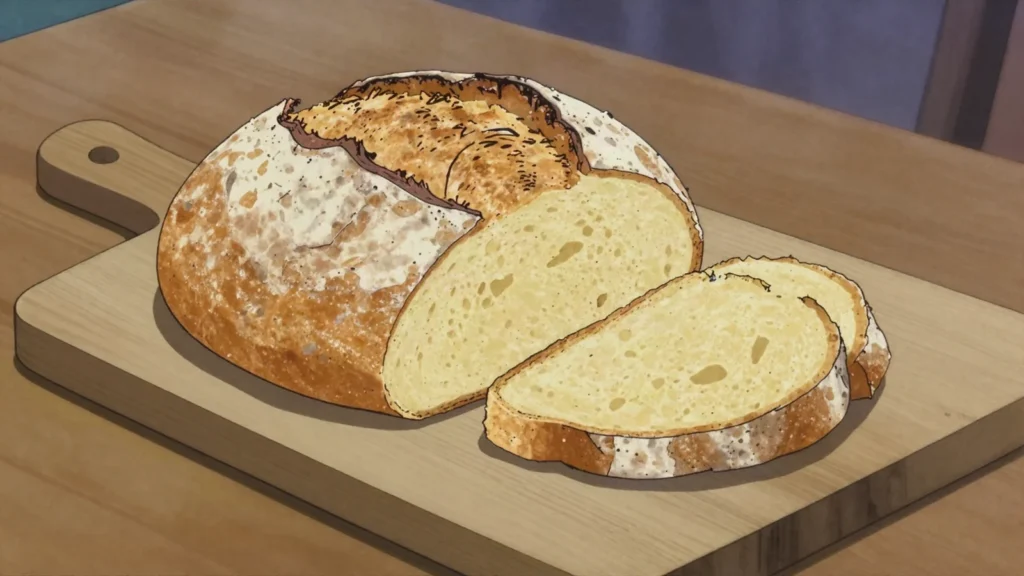
- Bake at 220°C (425°F) for 15 minutes, then lower to 200°C (400°F) and give it another 45 minutes. The crust should be thick and deeply cracked and the base should sound hollow.
- Cool completely on a rack for at least 4 hours before cutting. Broa cut warm is gummy inside, and this is the most common disappointment with it.
- Eat with caldo verde, with grilled sardines, or with chouriço and a glass of red.
Technique
- Maize reached Portugal from the Americas in the sixteenth century and this bread spread through the north with it, which is why the rye is still there underneath.
- The scald and the long cool are the two steps people skip, and they are the two that matter most.
- It keeps far better than wheat bread, staying good for the best part of a week.
Substitutions
- All maize flour with the white flour and no rye, which is lighter and slightly sweeter.
- A spoonful of a rye sourdough starter in place of some of the yeast, for a longer and better-flavoured rise.
Variations
- Broa de Avintes, very dark, dense and slow-baked with a long-fermented starter.
- Baked as several small loaves, which suits the crust well.
- Broa de milho, made entirely from maize, which is coarser again.
History
Dense maize-and-rye bread that spread through northern Portugal after maize arrived from the Americas in the sixteenth century.
Frequently asked questions
What is Broa?
Broa is a bread & pastry from Portugal: dense cornmeal-rye country bread. Dense maize-and-rye bread that spread through northern Portugal after maize arrived from the Americas in the sixteenth century.
How long does Broa take to make?
Broa takes 30 min plus 3 hr rising of preparation and 1 hr of cooking. The recipe makes 1 large loaf. It is rated medium to make.
What can I substitute in Broa?
Yes, within limits. All maize flour with the white flour and no rye, which is lighter and slightly sweeter. A spoonful of a rye sourdough starter in place of some of the yeast, for a longer and better-flavoured rise.
What is the most important thing to get right in Broa?
Put the maize flour and salt in a large bowl and pour the boiling water over it all at once, stirring hard with a wooden spoon until it comes together as a stiff paste. This scald is not optional: maize has no gluten and will not hydrate properly in cold water, and skipping it gives a loaf that crumbles into sand.